
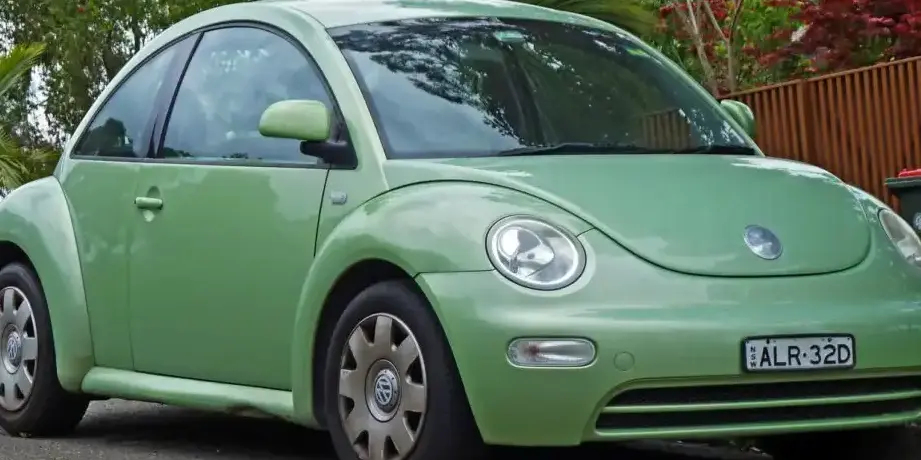
The Volkswagen New Beetle 1.6, produced between 2000 and 2005, represented the entry point into the “9C” generation of the iconic reimagining of the classic Volkswagen Beetle. Positioned as a stylish and accessible option, this variant combined a 1.6-liter inline-four engine with a four-speed automatic transmission. It was primarily marketed towards buyers seeking a fashionable and easy-to-drive vehicle, particularly in Europe and other markets where manual transmissions weren’t as universally preferred. While not the sportiest iteration of the New Beetle, the 1.6 Automatic offered a comfortable and practical driving experience, appealing to a broad demographic.
Technical Specifications
| Brand | Volkswagen |
| Model | Beetle |
| Generation | NEW Beetle (9C) |
| Type (Engine) | 1.6 (102 Hp) Automatic |
| Start of production | 2000 year |
| End of production | 2005 year |
| Powertrain Architecture | Internal Combustion engine |
| Body type | Hatchback |
| Seats | 4 |
| Doors | 3 |
| Fuel consumption (economy) – urban | 11.5 l/100 km (20.5 US mpg, 24.6 UK mpg, 8.7 km/l) |
| Fuel consumption (economy) – extra urban | 6.5 l/100 km (36.2 US mpg, 43.5 UK mpg, 15.4 km/l) |
| Fuel consumption (economy) – combined | 8.3 l/100 km (28.3 US mpg, 34 UK mpg, 12 km/l) |
| Fuel Type | Petrol (Gasoline) |
| Acceleration 0 – 100 km/h | 13.2 sec |
| Acceleration 0 – 62 mph | 13.2 sec |
| Acceleration 0 – 60 mph | 12.5 sec |
| Maximum speed | 175 km/h (108.74 mph) |
| Weight-to-power ratio | 12.8 kg/Hp, 78 Hp/tonne |
| Weight-to-torque ratio | 8.8 kg/Nm, 113.1 Nm/tonne |
| Power | 102 Hp @ 5600 rpm |
| Power per litre | 63.9 Hp/l |
| Torque | 148 Nm @ 3800 rpm (109.16 lb.-ft. @ 3800 rpm) |
| Engine layout | Front, Transverse |
| Engine Model/Code | AYD, BFS |
| Engine displacement | 1595 cm3 (97.33 cu. in.) |
| Number of cylinders | 4 |
| Engine configuration | Inline |
| Cylinder Bore | 81 mm (3.19 in.) |
| Piston Stroke | 77.4 mm (3.05 in.) |
| Compression ratio | 10.5:1 |
| Number of valves per cylinder | 2 |
| Fuel injection system | Multi-port manifold injection |
| Engine aspiration | Naturally aspirated engine |
| Valvetrain | OHC |
| Engine oil capacity | 4.5 l (4.76 US qt | 3.96 UK qt) |
| Coolant | 5 l (5.28 US qt | 4.4 UK qt) |
| Kerb Weight | 1308 kg (2883.65 lbs.) |
| Max. weight | 1650 kg (3637.63 lbs.) |
| Max load | 342 kg (753.98 lbs.) |
| Trunk (boot) space – minimum | 209 l (7.38 cu. ft.) |
| Trunk (boot) space – maximum | 769 l (27.16 cu. ft.) |
| Fuel tank capacity | 55 l (14.53 US gal | 12.1 UK gal) |
| Length | 4081 mm (160.67 in.) |
| Width | 1724 mm (67.87 in.) |
| Height | 1498 mm (58.98 in.) |
| Wheelbase | 2508 mm (98.74 in.) |
| Front track | 1508 mm (59.37 in.) |
| Rear (Back) track | 1494 mm (58.82 in.) |
| Minimum turning circle | 10.9 m (35.76 ft.) |
| Drivetrain Architecture | Front wheel drive |
| Drive wheel | Front wheel drive |
| Number of gears and type of gearbox | 4 gears, automatic transmission |
| Front suspension | Coil spring |
| Rear suspension | Coil spring |
| Front brakes | Ventilated discs |
| Rear brakes | Disc |
| Assisting systems | ABS (Anti-lock braking system) |
| Steering type | Steering rack and pinion |
| Power steering | Hydraulic Steering |
| Tires size | 195/65 R15 |
| Wheel rims size | 15 |
Powertrain & Engine Architecture
The heart of the New Beetle 1.6 Automatic was the 1.6-liter, inline-four cylinder engine, designated with engine codes AYD or BFS depending on the specific production year and market. This engine was a relatively simple design, utilizing a single overhead camshaft (OHC) and two valves per cylinder. Fuel delivery was handled by a multi-port fuel injection system, providing adequate, though not exceptional, performance. The engine produced 102 horsepower at 5600 rpm and 148 Nm (109 lb-ft) of torque at 3800 rpm. This power was then channeled through a traditional four-speed automatic transmission. This transmission, while providing convenience, was known for its relatively slow shift times and limited number of gears compared to more modern automatics. The engine’s design prioritized fuel efficiency and reliability over outright performance.
Driving Characteristics
The driving experience in the New Beetle 1.6 Automatic was characterized by smooth, but unhurried, acceleration. The 0-60 mph time of around 12.5 seconds and a top speed of 108.74 mph were indicative of its modest power output. Compared to the more powerful 1.8T or diesel variants, the 1.6 felt noticeably slower, particularly when overtaking or climbing hills. The four-speed automatic transmission contributed to this, lacking the close gear ratios found in manual transmissions or more advanced automatics. However, the automatic transmission made it a very easy car to drive in city traffic, and the relatively light weight of the vehicle helped to mitigate the lack of power. The gear ratios were tuned for fuel economy rather than spirited driving.
Equipment & Trim Levels
The 1.6 Automatic trim typically included basic features such as power windows, central locking, and an AM/FM radio. Air conditioning was often an optional extra. Interior upholstery was usually cloth, with a simple dashboard layout. Higher trim levels, available as options, could add features like alloy wheels, upgraded audio systems, and more premium interior materials. The New Beetle’s interior design was a key selling point, echoing the retro styling of the original Beetle but with modern comforts. The 1.6 Automatic was often seen as a base model, with buyers able to customize it with various option packages.
Chassis & Braking
The New Beetle 1.6 Automatic utilized a relatively simple chassis design, with coil springs and dampers at all four corners. Front brakes were ventilated discs, providing adequate stopping power, while rear brakes were solid discs. Anti-lock Braking System (ABS) was standard, enhancing safety. The suspension was tuned for comfort rather than sporty handling, resulting in a smooth ride but limited cornering ability. The car’s weight of approximately 1308 kg (2883.65 lbs) contributed to its somewhat sluggish handling characteristics.
Market Reception & Comparison
The New Beetle 1.6 Automatic received mixed reviews. Critics generally praised its styling and ease of use, but often criticized its lack of power and the dated feel of the four-speed automatic transmission. Compared to the 1.8T models, which offered significantly more performance, the 1.6 Automatic was seen as a compromise. However, it was more affordable and offered better fuel economy than the higher-powered variants. The 1.9 TDI diesel version, popular in Europe, provided even better fuel economy and more torque, but at a higher initial cost. The 1.6 Automatic appealed to buyers who prioritized style and convenience over performance.
Legacy
The Volkswagen New Beetle 1.6 Automatic, while not the most sought-after version of the 9C generation, remains a relatively reliable and affordable classic. The 1.6-liter engine is known for its durability, and the automatic transmission, while not particularly sophisticated, is generally dependable. Today, these cars can be found on the used car market at reasonable prices. They are often appreciated for their unique styling and nostalgic appeal. While maintenance costs are generally low, finding parts for older models can sometimes be a challenge. The New Beetle 1.6 Automatic represents a unique blend of retro design and modern technology, offering a charming and accessible entry point into the world of the New Beetle.
