
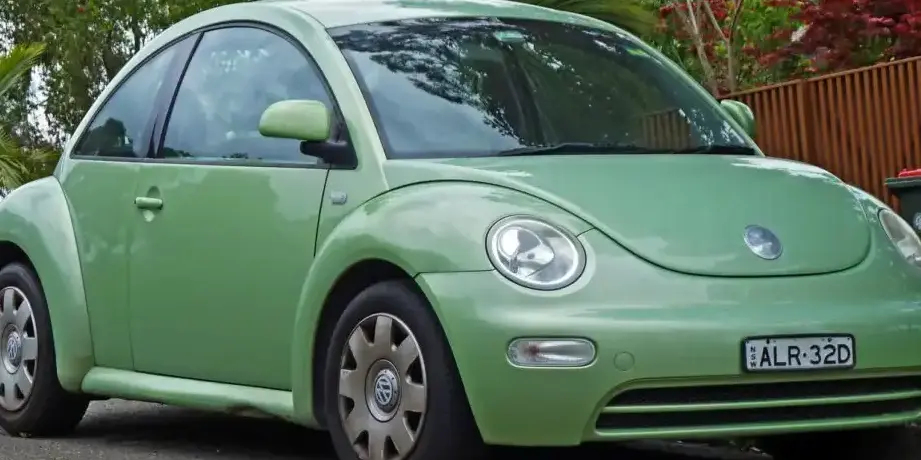
The Volkswagen New Beetle, internally designated the 9C, represented a nostalgic reimagining of the iconic original Beetle. Production spanned from 1997 to 2010, with the 2.0-liter (116 horsepower) variant being a significant offering in the North American market, particularly from 1998 onwards. This model occupied a mid-range position within the New Beetle lineup, slotting between the base 1.8L engine and the more performance-oriented trims. It aimed to provide a balance of affordability, reasonable performance, and the distinctive New Beetle styling that appealed to a broad demographic.
Technical Specifications
| Brand | Volkswagen |
| Model | Beetle |
| Generation | NEW Beetle (9C) |
| Type (Engine) | 2.0 (116 Hp) |
| Start of production | October, 1997 |
| End of production | 2005 |
| Powertrain Architecture | Internal Combustion engine |
| Body type | Hatchback |
| Seats | 4 |
| Doors | 3 |
| Fuel consumption (urban) | 11.5 l/100 km (20.5 US mpg) |
| Fuel consumption (extra urban) | 6 l/100 km (39.2 US mpg) |
| Fuel consumption (combined) | 8.7 l/100 km (27 US mpg) |
| Fuel Type | Petrol (Gasoline) |
| Acceleration 0 – 100 km/h | 10 sec |
| Acceleration 0 – 62 mph | 10 sec |
| Acceleration 0 – 60 mph | 9.5 sec |
| Maximum speed | 185 km/h (114.95 mph) |
| Weight-to-power ratio | 10.6 kg/Hp |
| Weight-to-torque ratio | 7.2 kg/Nm |
| Power | 116 Hp @ 5200 rpm |
| Torque | 170 Nm @ 2400 rpm (125.39 lb.-ft. @ 2400 rpm) |
| Engine layout | Front, Transverse |
| Engine Model/Code | APK, AQY |
| Engine displacement | 1984 cm3 (121.07 cu. in.) |
| Number of cylinders | 4 |
| Engine configuration | Inline |
| Compression ratio | 10:1 |
| Number of valves per cylinder | 2 |
| Fuel injection system | Multi-port manifold injection |
| Engine aspiration | Naturally aspirated engine |
| Valvetrain | OHC |
| Engine oil capacity | 4 l (4.23 US qt | 3.52 UK qt) |
| Coolant capacity | 5 l (5.28 US qt | 4.4 UK qt) |
| Kerb Weight | 1230 kg (2711.69 lbs) |
| Max. weight | 1650 kg (3637.63 lbs) |
| Max load | 420 kg (925.94 lbs) |
| Trunk (boot) space – minimum | 209 l (7.38 cu. ft) |
| Trunk (boot) space – maximum | 525 l (18.54 cu. ft) |
| Fuel tank capacity | 55 l (14.53 US gal | 12.1 UK gal) |
| Length | 4081 mm (160.67 in) |
| Width | 1725 mm (67.91 in) |
| Height | 1500 mm (59.06 in) |
| Wheelbase | 2508 mm (98.74 in) |
| Front track | 1508 mm (59.37 in) |
| Rear track | 1494 mm (58.82 in) |
| Minimum turning circle | 10.9 m (35.76 ft) |
| Drivetrain Architecture | Front wheel drive |
| Number of gears | 5 gears, manual transmission |
| Front suspension | Coil spring |
| Rear suspension | Coil spring |
| Front brakes | Disc |
| Rear brakes | Disc |
| Assisting systems | ABS (Anti-lock braking system) |
| Steering type | Steering rack and pinion |
| Power steering | Hydraulic Steering |
| Tires size | 205/55 R16 |
| Wheel rims size | 6.5J x 16 |
Powertrain & Engine Architecture
The 2.0-liter inline-four engine, identified by engine codes APK and AQY, was a naturally aspirated unit featuring multi-port fuel injection. This engine was part of Volkswagen’s EA827 family, known for its relative simplicity and durability. The engine utilized a single overhead camshaft (OHC) design with two valves per cylinder. The 116 horsepower output was achieved at 5200 rpm, while peak torque of 170 Nm (125 lb-ft) arrived at 2400 rpm. The engine’s characteristics were geared towards providing adequate power for everyday driving rather than outright performance. The five-speed manual transmission was the standard offering, providing a fairly conventional gear ratio spread.
Driving Characteristics
The 2.0-liter New Beetle offered a comfortable, if not particularly sporty, driving experience. Acceleration from 0-60 mph took around 9.5 seconds, making it competitive with other compact hatchbacks of the era. The engine felt reasonably responsive in normal driving conditions, but lacked the punch of the more powerful 1.8T turbocharged engine. The five-speed manual transmission allowed for decent control, but the gear ratios weren’t optimized for aggressive driving. Compared to the base 1.8L engine, the 2.0L provided a noticeable improvement in mid-range torque, making it easier to maintain speed on highway inclines and during overtaking maneuvers. However, it didn’t offer the same level of refinement or performance as the higher-end trims.
Equipment & Trim Levels
The 2.0-liter New Beetle typically came equipped with features such as air conditioning, power windows and locks, and an AM/FM stereo. Interior upholstery was generally cloth, with options for upgraded materials available. Trim levels varied depending on the market, but generally included base models and slightly more upscale versions with features like alloy wheels, upgraded audio systems, and a sunroof. Optional extras included leather upholstery, heated seats, and a premium sound system. The dashboard layout was characterized by its retro-inspired circular design, echoing the original Beetle’s interior.
Chassis & Braking
The New Beetle utilized a front-wheel-drive platform with independent coil spring suspension at all four corners. The front suspension featured MacPherson struts, while the rear employed a multi-link setup. This configuration provided a comfortable ride quality, although handling wasn’t particularly sharp. Brakes were disc brakes on all four wheels, providing adequate stopping power for the vehicle’s weight and performance. Anti-lock Braking System (ABS) was standard, enhancing safety. The suspension tuning was geared towards comfort rather than sporty handling, with a focus on absorbing bumps and providing a stable ride.
Market Reception & Comparison
The 2.0-liter New Beetle was generally well-received by critics as a practical and stylish option within the New Beetle range. It offered a good balance of performance and fuel economy, making it an attractive choice for buyers seeking a unique and retro-inspired vehicle. Compared to the base 1.8L engine, the 2.0L provided a noticeable improvement in performance, but at a slightly higher price point. Fuel economy was respectable, averaging around 27 mpg in combined driving. Reliability was generally good, although some owners reported issues with the engine’s cooling system and electrical components.
Legacy
The 2.0-liter New Beetle powertrain has proven to be relatively durable over the long term, with many examples still on the road today. While not known for exceptional performance, the engine is generally considered reliable and relatively easy to maintain. In the used car market, the 2.0-liter New Beetle represents a good value proposition, offering a unique and stylish vehicle at an affordable price. However, potential buyers should be aware of potential issues with the cooling system and electrical components, and should ensure that the vehicle has been properly maintained. The New Beetle, in all its trims, remains a popular choice for those seeking a nostalgic and distinctive vehicle.
