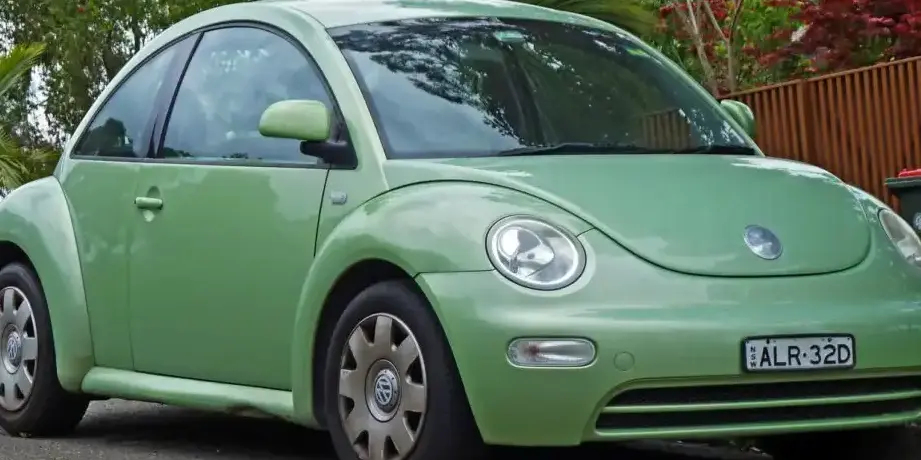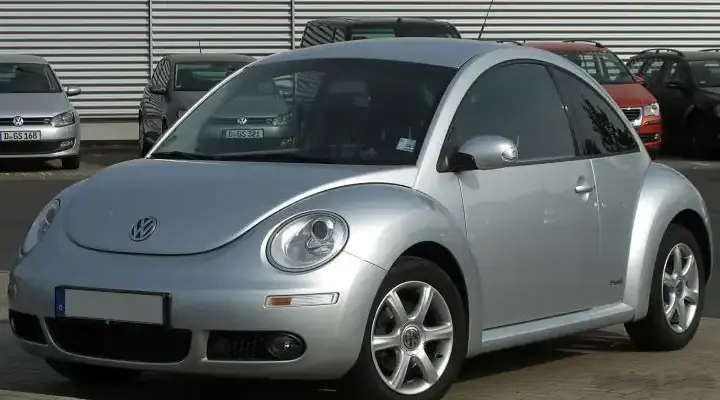
The Volkswagen New Beetle (9C) 1.9 TDI, produced from 2005 to 2006, represented a significant offering within the New Beetle range, particularly in European markets. This variant, powered by the EA188 series of diesel engines, aimed to provide a balance of fuel efficiency and reasonable performance within the retro-styled hatchback. It was positioned as a more economical alternative to the gasoline-powered models, appealing to buyers prioritizing lower running costs. The 2005 facelift (9C) brought subtle styling revisions and improvements to the interior, enhancing the New Beetle’s appeal. This specific 1.9 TDI 105 hp version occupied a mid-range position in the lineup, slotting below the more powerful TDI variants and above the base gasoline engines.
Technical Specifications
| Brand | Volkswagen |
| Model | Beetle |
| Generation | NEW Beetle (9C, facelift 2005) |
| Type (Engine) | 1.9 TDI (105 Hp) |
| Start of production | 2005 |
| End of production | 2006 |
| Powertrain Architecture | Internal Combustion engine |
| Body type | Hatchback |
| Seats | 4 |
| Doors | 3 |
| Fuel consumption (urban) | 6.8 l/100 km (34.6 US mpg, 41.5 UK mpg, 14.7 km/l) |
| Fuel consumption (extra urban) | 4.6 l/100 km (51.1 US mpg, 61.4 UK mpg, 21.7 km/l) |
| Fuel consumption (combined) | 5.4 l/100 km (43.6 US mpg, 52.3 UK mpg, 18.5 km/l) |
| CO2 emissions | 143 g/km |
| Fuel Type | Diesel |
| Acceleration 0 – 100 km/h | 11.5 sec |
| Acceleration 0 – 62 mph | 11.5 sec |
| Acceleration 0 – 60 mph | 10.9 sec |
| Maximum speed | 180 km/h (111.85 mph) |
| Emission standard | Euro 4 |
| Weight-to-power ratio | 12.3 kg/Hp, 81.3 Hp/tonne |
| Weight-to-torque ratio | 5.4 kg/Nm, 185.9 Nm/tonne |
| Power | 105 Hp @ 4000 rpm |
| Power per litre | 55.4 Hp/l |
| Torque | 240 Nm @ 1800 rpm (177.01 lb.-ft. @ 1800 rpm) |
| Engine layout | Front, Transverse |
| Engine Model/Code | EA188 / BSW |
| Engine displacement | 1896 cm3 (115.7 cu. in.) |
| Number of cylinders | 4 |
| Engine configuration | Inline |
| Cylinder Bore | 79.5 mm (3.13 in.) |
| Piston Stroke | 95.5 mm (3.76 in.) |
| Compression ratio | 19:1 |
| Number of valves per cylinder | 4 |
| Fuel injection system | Pump-nozzle (Unit Injector) |
| Engine aspiration | Turbocharger, Intercooler |
| Valvetrain | SOHC |
| Kerb Weight | 1291 kg (2846.17 lbs.) |
| Max. weight | 1720 kg (3791.95 lbs.) |
| Max load | 429 kg (945.78 lbs.) |
| Trunk (boot) space – minimum | 209 l (7.38 cu. ft.) |
| Trunk (boot) space – maximum | 769 l (27.16 cu. ft.) |
| Fuel tank capacity | 55 l (14.53 US gal, 12.1 UK gal) |
| Max. roof load | 50 kg (110.23 lbs.) |
| Permitted trailer load with brakes (12%) | 1000 kg (2204.62 lbs.) |
| Permitted trailer load without brakes | 600 kg (1322.77 lbs.) |
| Permitted towbar download | 75 kg (165.35 lbs.) |
| Length | 4129 mm (162.56 in.) |
| Width | 1721 mm (67.76 in.) |
| Height | 1498 mm (58.98 in.) |
| Wheelbase | 2515 mm (99.02 in.) |
| Front track | 1507 mm (59.33 in.) |
| Rear (Back) track | 1487 mm (58.54 in.) |
| Ride height (ground clearance) | 130 mm (5.12 in.) |
| Drag coefficient (Cd) | 0.38 |
| Drivetrain Architecture | The Internal combustion engine (ICE) drives the front wheels of the vehicle. |
| Drive wheel | Front wheel drive |
| Number of gears and type of gearbox | 5 gears, manual transmission |
| Front suspension | Independent type McPherson |
| Rear suspension | Semi-independent, coil spring |
| Front brakes | Ventilated discs |
| Rear brakes | Disc |
| Assisting systems | ABS (Anti-lock braking system) |
| Tires size | 195/65 R15 |
| Wheel rims size | 15 |
Powertrain & Engine Architecture
The heart of this New Beetle variant is the 1.9-liter (1896 cc) inline-four cylinder diesel engine, identified by the engine code BSW, belonging to the Volkswagen EA188 family. This engine utilizes a pump-nozzle (unit injector) fuel injection system, a technology known for its precise fuel delivery and contribution to improved combustion efficiency. The engine features a single overhead camshaft (SOHC) valvetrain operating four valves per cylinder. A turbocharger with an intercooler is employed to boost power output and improve torque across the rev range. The 1.9 TDI engine is known for its durability and relatively simple mechanical design. The engine is transversely mounted at the front of the vehicle. The 5-speed manual transmission was the standard offering, designed to efficiently transfer power to the front wheels. The gear ratios were tuned for a balance of fuel economy and acceptable acceleration.
Driving Characteristics
The 1.9 TDI 105 hp New Beetle offered a practical and economical driving experience. While not particularly sporty, the engine delivered adequate performance for everyday driving. The 240 Nm (177 lb-ft) of torque, available from 1800 rpm, provided good low-end grunt, making it easy to navigate city streets and handle moderate inclines. Acceleration to 60 mph took around 10.9 seconds, and the top speed was approximately 112 mph. Compared to the more powerful TDI variants, this version felt less eager to rev, but the fuel economy benefits were substantial. The manual transmission, while not particularly engaging, was smooth and precise. The overall driving experience was comfortable, with the New Beetle’s suspension absorbing most road imperfections.
Equipment & Trim Levels
The 1.9 TDI 105 hp New Beetle typically came with a reasonable level of standard equipment. This included power windows, central locking, ABS brakes, and a basic audio system. Interior upholstery was typically cloth, with a color scheme designed to complement the retro aesthetic. Optional extras included alloy wheels, air conditioning, a sunroof, and upgraded audio systems. Trim levels varied slightly depending on the market, but generally, this variant was positioned as a mid-range offering, providing a good balance of features and affordability.
Chassis & Braking
The New Beetle’s chassis featured an independent McPherson strut suspension at the front and a semi-independent coil spring suspension at the rear. This setup provided a comfortable ride, although it wasn’t particularly sporty. The front brakes were ventilated discs, while the rear brakes were solid discs. ABS (Anti-lock Braking System) was standard, enhancing safety. The suspension was tuned to prioritize comfort over handling, resulting in a slightly softer and more forgiving ride.
Market Reception & Comparison
The 1.9 TDI 105 hp New Beetle was generally well-received by critics and consumers alike. It was praised for its fuel efficiency, reliability, and comfortable ride. However, some critics noted that the performance was somewhat underwhelming compared to the more powerful gasoline and TDI variants. In terms of fuel economy, the 1.9 TDI significantly outperformed the gasoline engines, offering a substantial cost saving for high-mileage drivers. Compared to the 1.8L gasoline engine, the TDI offered better torque and fuel efficiency, but at the expense of some refinement. The more powerful 130 hp TDI offered superior performance but came at a higher price point.
Legacy
The 1.9 TDI engine, in general, has proven to be a remarkably durable and reliable powertrain. The BSW engine code is known for its longevity, provided it receives regular maintenance. In the used car market, the New Beetle 1.9 TDI remains a popular choice for buyers seeking a stylish, economical, and reliable hatchback. However, potential buyers should be aware of the typical wear and tear associated with diesel engines, such as turbocharger issues and injector problems. Despite its age, the New Beetle 1.9 TDI continues to hold a nostalgic appeal and remains a viable option for those seeking a unique and characterful vehicle.