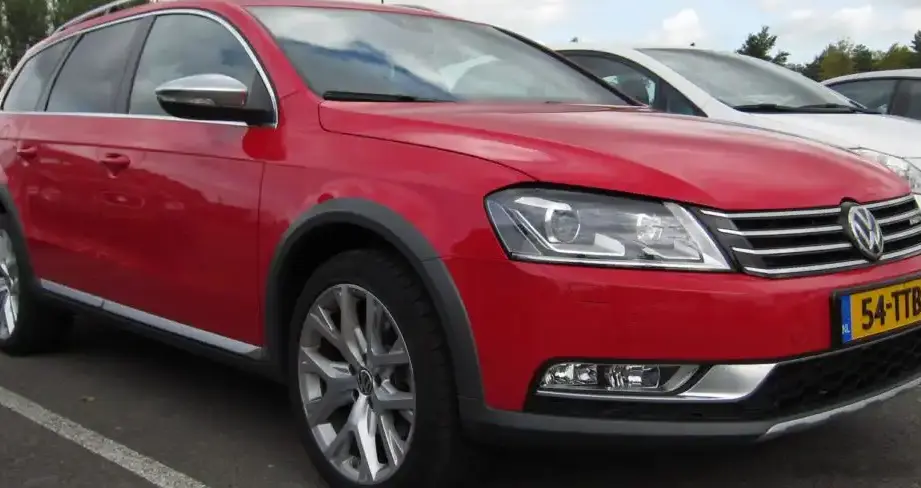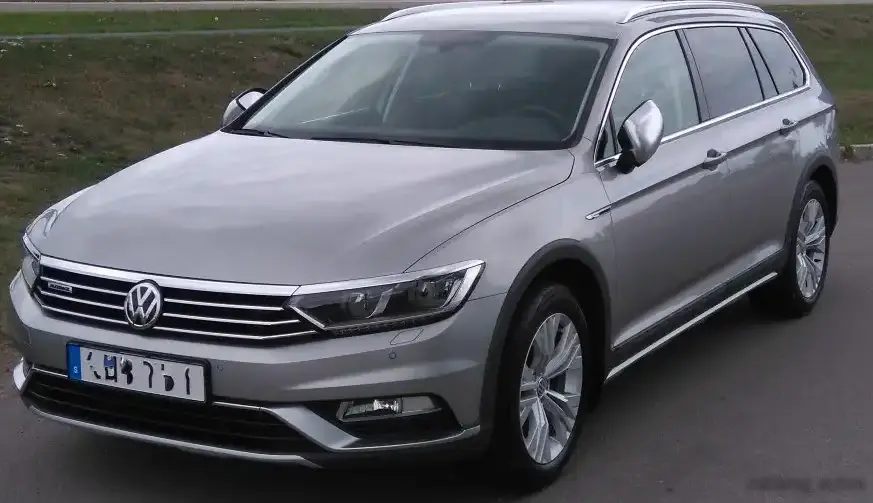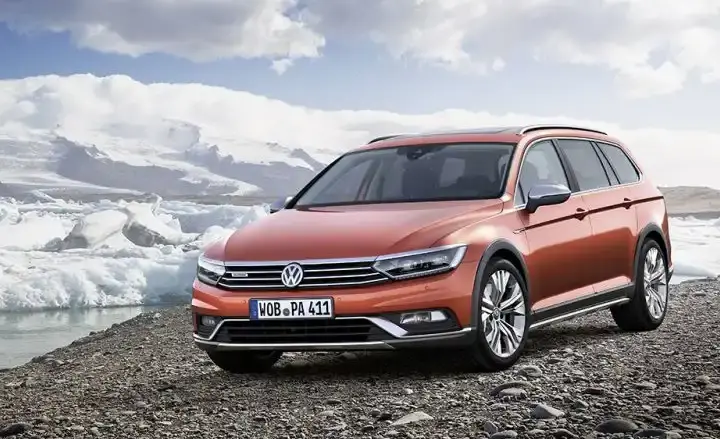
The Volkswagen Passat Alltrack (B8) 2.0 TDI 150 hp 4MOTION, produced from July 2014 to June 2019, represents Volkswagen’s entry into the crossover-estate segment, building upon the established Passat B8 platform (1HX0/A3). Positioned as a more rugged and versatile alternative to the standard Passat wagon, the Alltrack aimed to combine the practicality of an estate car with the all-weather capability of an all-wheel-drive system. This variant, equipped with the 2.0-liter TDI engine producing 150 horsepower and paired with a six-speed manual transmission, served as a popular choice for buyers seeking a balance between fuel efficiency, performance, and practicality. It was marketed primarily in Europe, where the demand for such vehicles is strong.
Technical Specifications
| Brand | Volkswagen |
| Model | Passat |
| Generation | Passat Alltrack (B8) |
| Type (Engine) | 2.0 TDI (150 Hp) 4MOTION |
| Start of production | July, 2014 |
| End of production | June, 2019 |
| Powertrain Architecture | Internal Combustion engine |
| Body type | Station wagon (estate), Crossover |
| Seats | 5 |
| Doors | 5 |
| Fuel consumption (urban) | 5.9 l/100 km (39.9 US mpg, 47.9 UK mpg, 16.9 km/l) |
| Fuel consumption (extra urban) | 4.3 l/100 km (54.7 US mpg, 65.7 UK mpg, 23.3 km/l) |
| Fuel consumption (combined) | 4.9 l/100 km (48 US mpg, 57.6 UK mpg, 20.4 km/l) |
| CO2 emissions | 130-129 g/km |
| Fuel Type | Diesel |
| Acceleration 0 – 100 km/h | 9.2 sec |
| Acceleration 0 – 62 mph | 9.2 sec |
| Acceleration 0 – 60 mph | 8.7 sec |
| Maximum speed | 205 km/h (127.38 mph) |
| Emission standard | Euro 6 |
| Weight-to-power ratio | 10.6 kg/Hp, 94 Hp/tonne |
| Weight-to-torque ratio | 4.7 kg/Nm, 213.2 Nm/tonne |
| Power | 150 Hp @ 3500-4000 rpm |
| Power per litre | 76.2 Hp/l |
| Torque | 340 Nm @ 1750-3000 rpm (250.77 lb.-ft. @ 1750-3000 rpm) |
| Engine layout | Front, Transverse |
| Engine Model/Code | CRLB, DBGA, DCYA, DFEA, DFGA |
| Engine displacement | 1968 cm3 (120.09 cu. in.) |
| Number of cylinders | 4 |
| Engine configuration | Inline |
| Number of valves per cylinder | 4 |
| Fuel injection system | Diesel Commonrail |
| Engine aspiration | Turbocharger, Intercooler |
| Engine oil capacity | 4.7 l (4.97 US qt | 4.14 UK qt) |
| Kerb Weight | 1595 kg (3516.37 lbs.) |
| Max. weight | 2260 kg (4982.45 lbs.) |
| Max load | 665 kg (1466.07 lbs.) |
| Trunk (boot) space – minimum | 639 l (22.57 cu. ft.) |
| Trunk (boot) space – maximum | 1769 l (62.47 cu. ft.) |
| Fuel tank capacity | 66 l (17.44 US gal | 14.52 UK gal) |
| Max. roof load | 100 kg (220.46 lbs.) |
| Permitted trailer load with brakes (8%) | 2200 kg (4850.17 lbs.) |
| Permitted trailer load with brakes (12%) | 2200 kg (4850.17 lbs.) |
| Permitted trailer load without brakes | 750 kg (1653.47 lbs.) |
| Permitted towbar download | 90 kg (198.42 lbs.) |
| Length | 4777 mm (188.07 in.) |
| Width | 1832 mm (72.13 in.) |
| Width including mirrors | 2083 mm (82.01 in.) |
| Height | 1506 mm (59.29 in.) |
| Wheelbase | 2789 mm (109.8 in.) |
| Front track | 1582 mm (62.28 in.) |
| Rear (Back) track | 1565 mm (61.61 in.) |
| Ride height (ground clearance) | 174 mm (6.85 in.) |
| Minimum turning circle (turning diameter) | 11.7 m (38.39 ft.) |
| Drive wheel | All wheel drive (4×4) |
| Number of gears and type of gearbox | 6 gears, manual transmission |
| Front suspension | Independent multi-link suspension |
| Rear suspension | Independent coil spring |
| Front brakes | Ventilated discs |
| Rear brakes | Disc |
| Assisting systems | ABS (Anti-lock braking system) |
| Steering type | Steering rack and pinion |
| Power steering | Electric Steering |
| Tires size | 245/45 R18; 245/40 R19 |
| Wheel rims size | 8J x 18; 8J x 19 |
Powertrain & Engine Architecture
The heart of the Passat Alltrack 2.0 TDI 150 hp is the Volkswagen Group’s EA188 series 2.0-liter four-cylinder diesel engine. Depending on the production year, this engine could be found with different codes, including CRLB, DBGA, DCYA, DFEA, and DFGA. These engines utilize a common rail direct injection system, delivering fuel at extremely high pressures for optimized combustion. A turbocharger with an intercooler is standard, providing increased air density and boosting power output. The engine features four valves per cylinder and a timing belt. The 150 hp output is achieved through careful calibration of the engine management system, balancing performance with fuel economy and emissions. The six-speed manual transmission was the standard offering, providing drivers with full control over gear selection. The 4MOTION all-wheel-drive system employs a Haldex multi-plate clutch, automatically distributing torque between the front and rear axles as needed, enhancing traction in slippery conditions.
Driving Characteristics
The 150 hp 2.0 TDI engine, coupled with the manual transmission, provided a respectable, if not exhilarating, driving experience. Acceleration from 0-60 mph took approximately 8.7 seconds, and top speed was limited to 127.38 mph. The engine’s 340 Nm (250.77 lb-ft) of torque, available from 1750-3000 rpm, provided ample pulling power for everyday driving and overtaking maneuvers. Compared to the more powerful 240 hp BiTDI variant, the 150 hp model felt less urgent, but it offered significantly better fuel economy. The manual transmission allowed for precise gear changes, and the 4MOTION system instilled confidence in challenging weather conditions. The gear ratios were tuned for a balance between fuel efficiency and responsiveness, with a relatively long final drive contributing to improved highway cruising.
Equipment & Trim Levels
The Passat Alltrack 2.0 TDI 150 hp typically came well-equipped as standard. Features included alloy wheels, roof rails, off-road-style body cladding, and a raised ride height. Inside, the cabin featured comfortable seats, often upholstered in fabric or optional leather. Standard equipment also included air conditioning, a touchscreen infotainment system, and a suite of safety features such as ABS, ESP, and multiple airbags. Optional extras included navigation, a panoramic sunroof, adaptive cruise control, and parking sensors. Trim levels varied slightly depending on the market, but generally offered progressive upgrades in terms of interior materials, technology, and comfort features.
Chassis & Braking
The Alltrack’s chassis was specifically tuned to handle both on-road comfort and light off-road capability. It utilized an independent multi-link suspension at the front and an independent coil spring suspension at the rear. The suspension setup provided a comfortable ride while maintaining good handling characteristics. Braking duties were handled by ventilated discs at the front and solid discs at the rear, providing adequate stopping power. The ABS (Anti-lock Braking System) and ESP (Electronic Stability Program) were standard, enhancing safety and control.
Market Reception & Comparison
The Passat Alltrack 2.0 TDI 150 hp was generally well-received by automotive critics. It was praised for its practicality, versatility, and fuel efficiency. Compared to the more powerful BiTDI variant, the 150 hp model offered a more affordable entry point into the Alltrack range, appealing to buyers who prioritized economy over outright performance. Its fuel economy of around 48 US mpg combined made it a competitive option in the crossover-estate segment. However, some critics noted that the 150 hp engine could feel underpowered when fully loaded or tackling steep inclines.
Legacy
The Volkswagen Passat Alltrack (B8) 2.0 TDI 150 hp 4MOTION has proven to be a relatively reliable vehicle in the used car market. The EA188 engine, while not without its issues (particularly regarding diesel particulate filter regeneration and potential EGR valve problems), is generally robust when properly maintained. The 4MOTION system has also proven to be durable. Today, these vehicles represent a good value proposition for buyers seeking a practical, versatile, and fuel-efficient estate car with all-wheel-drive capability. Their continued presence on the used car market is a testament to their build quality and enduring appeal.