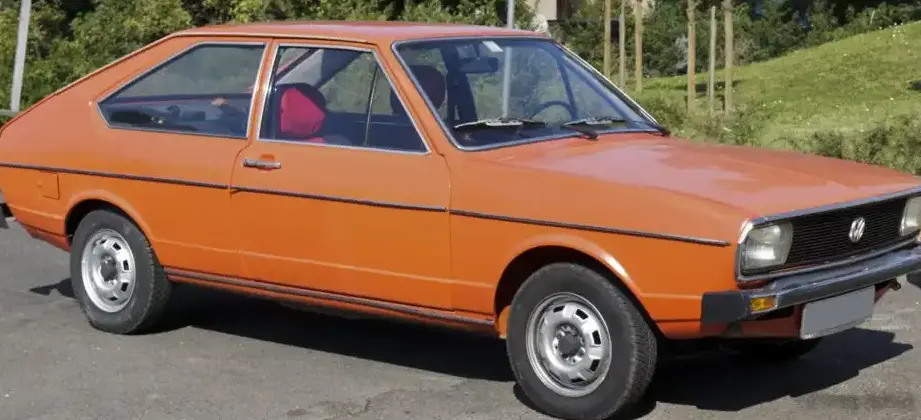
The Volkswagen Passat B1 1.5 D, produced between 1978 and 1980, represents an early foray into diesel power for the first-generation Passat. Positioned as the entry-level engine option in several European markets, this variant aimed to provide fuel economy and practicality to a broader customer base. The B1 Passat, internally designated as the 32B series, was Volkswagen’s replacement for the aging Type 4, offering a more modern and spacious design. The 1.5 D model, while not a performance leader, played a significant role in establishing the Passat as a versatile family car. It was available in both 2-door and 4-door body styles, catering to different preferences and market demands.
Technical Specifications
| Brand | Volkswagen |
| Model | Passat |
| Generation | Passat (B1) |
| Type (Engine) | 1.5 D (50 Hp) |
| Start of production | 1978 |
| End of production | 1980 |
| Powertrain Architecture | Internal Combustion engine |
| Body type | Sedan |
| Seats | 5 |
| Doors | 2-4 |
| Fuel Type | Diesel |
| Power | 50 Hp |
| Engine Model/Code | CK |
| Engine aspiration | Naturally aspirated engine |
| Engine oil capacity | 3.5 l (3.7 US qt | 3.08 UK qt) |
| Coolant capacity | 5.5 l (5.81 US qt | 4.84 UK qt) |
Powertrain & Engine Architecture
The Passat 1.5 D was powered by the CK engine, a 1479 cc inline four-cylinder diesel engine. This engine was a relatively simple design, reflecting the technology of the late 1970s. It featured a naturally aspirated intake, indirect injection, and a single overhead camshaft operating a two-valve per cylinder configuration. The indirect injection system, common for diesels of this era, involved pre-combustion chambers where fuel was initially ignited, then transferred to the main combustion chamber. This design helped with smoother combustion and reduced engine noise compared to direct injection systems. The CK engine produced 50 horsepower (37 kW) at 4,300 rpm and 86 lb-ft (117 Nm) of torque at 2,500 rpm. While modest by modern standards, this torque output provided reasonable drivability, particularly at lower speeds. The engine was paired with a four-speed manual transmission as standard, though a three-speed automatic transmission was also available, albeit less common. The automatic transmission was a conventional hydraulic torque converter type, offering ease of use but at the expense of some fuel efficiency and performance.
Driving Characteristics
The driving experience in a Passat 1.5 D was characterized by its practicality and fuel economy rather than outright performance. Acceleration was leisurely, with a 0-60 mph time estimated to be around 18-20 seconds. The engine’s torque peak at 2,500 rpm meant that it felt relatively responsive in everyday driving situations, such as merging onto highways or climbing hills. However, pushing the engine beyond this point resulted in diminishing returns. The four-speed manual transmission allowed drivers to make the most of the available power, while the three-speed automatic, while convenient, further dulled acceleration. The suspension, consisting of MacPherson struts in the front and a twist-beam rear axle, provided a comfortable ride, although it wasn’t particularly sporty. Steering was relatively light, making it easy to maneuver in urban environments. Compared to the gasoline-powered Passat variants, the 1.5 D offered significantly better fuel economy, making it an attractive option for drivers covering long distances.
Equipment & Trim Levels
The 1.5 D Passat typically represented the base trim level. Standard equipment included cloth upholstery, vinyl floor covering, and basic instrumentation. The dashboard was typically constructed from durable plastic, reflecting the car’s focus on practicality. Features like a radio, heated rear window, and front disc brakes (rear drums were also common, depending on the market) were often standard. Optional extras included upgraded upholstery, a sunroof, and power steering. The level of equipment varied depending on the specific market; German-market models generally had a higher level of standard equipment than those sold in other European countries. The interior was functional and straightforward, prioritizing durability and ease of use over luxury.
Chassis & Braking
The Passat B1 utilized a monocoque chassis construction, providing a good balance of strength and weight. The front suspension featured MacPherson struts with anti-roll bar, while the rear suspension employed a twist-beam axle. Braking systems varied depending on the market and trim level. Most models were equipped with front disc brakes and rear drum brakes. Some higher-spec models featured disc brakes all around. The braking system was hydraulically operated, providing adequate stopping power for the car’s weight and performance. Steering was a recirculating ball system, offering a relatively light and easy steering feel. The chassis was designed to provide a comfortable ride and predictable handling, prioritizing stability over sporty dynamics.
Market Reception & Comparison
The Passat 1.5 D was generally well-received as a practical and economical family car. Critics praised its fuel efficiency and durability, but noted its lack of performance. Compared to the gasoline-powered Passat variants (such as the 1.6 or 1.5), the 1.5 D offered significantly better fuel economy, but at the cost of acceleration and top speed. The 1.5 D was also often compared to other diesel-powered sedans of the era, such as the Fiat 132 Diesel and the Peugeot 504 Diesel. The Passat generally offered a more modern and spacious interior than its competitors, but its diesel engine was often considered less refined than those offered by Fiat and Peugeot. The availability of an automatic transmission was a plus for some buyers, but it further reduced the car’s performance and fuel economy.
Legacy
The Volkswagen Passat B1 1.5 D, while not the most exciting variant in the lineup, played a crucial role in establishing the Passat as a popular and versatile family car. The CK diesel engine proved to be remarkably durable, and many examples are still on the road today. However, age and mileage can lead to issues with fuel injection components and engine seals. In the used car market, the 1.5 D Passat is often sought after by enthusiasts looking for a classic Volkswagen with good fuel economy and simple mechanicals. Its relative rarity compared to the gasoline-powered models also adds to its appeal. The B1 Passat, in general, is considered a significant milestone in Volkswagen’s history, representing a move towards more modern and spacious designs. The 1.5 D variant, though modest in its specifications, contributed to the Passat’s success and enduring legacy.