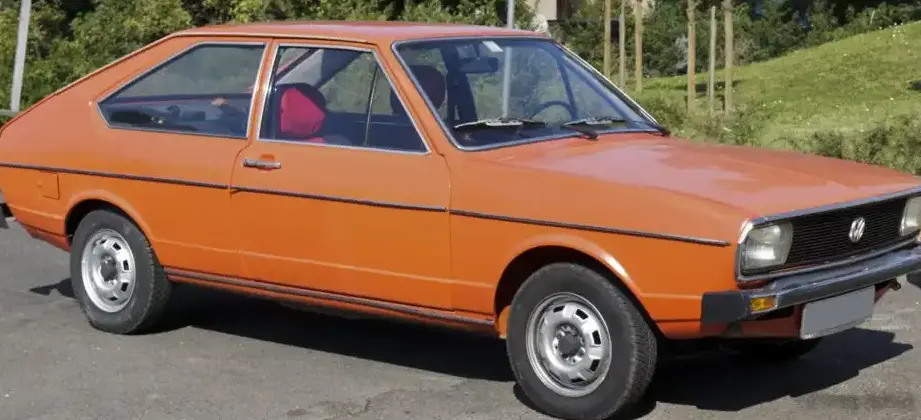
The Volkswagen Passat (B1) 1.6, producing 75 horsepower, was a pivotal model in establishing the Passat as a mainstream family car. Produced between 1973 and 1975, this variant occupied the entry-level position within the B1 Passat range, offering a more affordable alternative to the larger-engined models. It was a key component of Volkswagen’s strategy to replace the aging Type 4 and provide a modern, comfortable, and practical sedan for the European market. The B1 Passat, internally designated as the 32 series, represented a significant departure from the rear-engined Volkswagen tradition, adopting a front-engine, front-wheel-drive layout.
Technical Specifications
| Brand | Volkswagen |
| Model | Passat |
| Generation | Passat (B1) |
| Type (Engine) | 1.6 (75 Hp) |
| Start of production | 1973 |
| End of production | 1975 |
| Powertrain Architecture | Internal Combustion engine |
| Body type | Sedan |
| Seats | 5 |
| Doors | 2-4 |
| Fuel consumption (urban) | 11.3 l/100 km (20.8 US mpg, 25 UK mpg, 8.8 km/l) |
| Fuel consumption (extra urban) | 6.8 l/100 km (34.6 US mpg, 41.5 UK mpg, 14.7 km/l) |
| Fuel Type | Petrol (Gasoline) |
| Acceleration 0 – 60 mph | 13 sec |
| Maximum speed | 163 km/h (101.28 mph) |
| Weight-to-power ratio | 12.1 kg/Hp, 82.9 Hp/tonne |
| Weight-to-torque ratio | 7.5 kg/Nm, 133.7 Nm/tonne |
| Power | 75 Hp @ 5600 rpm |
| Power per litre | 47.2 Hp/l |
| Torque | 121 Nm @ 3200 rpm (89.25 lb.-ft. @ 3200 rpm) |
| Engine layout | Front, Longitudinal |
| Engine Model/Code | YN |
| Engine displacement | 1588 cm3 (96.91 cu. in.) |
| Number of cylinders | 4 |
| Engine configuration | Inline |
| Cylinder Bore | 79.5 mm (3.13 in.) |
| Piston Stroke | 80 mm (3.15 in.) |
| Compression ratio | 8.2:1 |
| Number of valves per cylinder | 2 |
| Fuel injection system | Carburettor |
| Engine aspiration | Naturally aspirated engine |
| Valvetrain | SOHC |
| Engine oil capacity | 3 l (3.17 US qt | 2.64 UK qt) |
| Coolant | 4 l (4.23 US qt | 3.52 UK qt) |
| Kerb Weight | 905 kg (1995.18 lbs.) |
| Max. weight | 1330 kg (2932.15 lbs.) |
| Max load | 425 kg (936.96 lbs.) |
| Trunk (boot) space – minimum | 473 l (16.7 cu. ft.) |
| Trunk (boot) space – maximum | 1320 l (46.62 cu. ft.) |
| Fuel tank capacity | 45 l (11.89 US gal | 9.9 UK gal) |
| Permitted trailer load with brakes (12%) | 1200 kg (2645.55 lbs.) |
| Permitted trailer load without brakes | 450 kg (992.08 lbs.) |
| Length | 4290 mm (168.9 in.) |
| Width | 1615 mm (63.58 in.) |
| Height | 1359 mm (53.5 in.) |
| Wheelbase | 2469 mm (97.2 in.) |
| Front track | 1341 mm (52.8 in.) |
| Rear (Back) track | 1349 mm (53.11 in.) |
| Ride height (ground clearance) | 107 mm (4.21 in.) |
| Minimum turning circle (turning diameter) | 10.3 m (33.79 ft.) |
| Drivetrain Architecture | The Internal combustion engine (ICE) drives the front wheels of the vehicle. |
| Drive wheel | Front wheel drive |
| Number of gears and type of gearbox | 4 gears, manual transmission |
| Front suspension | Wishbone, Transverse stabilizer |
| Rear suspension | Transverse stabilizer, Trailing arm |
| Front brakes | Disc, 238.76 mm |
| Rear brakes | Drum, 180.34 mm |
| Steering type | Steering rack and pinion |
| Wheel rims size | Front wheel rims: 5J x 13Rear wheel rims: 5J x 13 |
Powertrain & Engine Architecture
The heart of the Passat 1.6 was the YN engine, a 1588cc inline-four cylinder petrol engine. This engine featured a single overhead camshaft (SOHC) valvetrain operating two valves per cylinder. Fuel delivery was managed by a Solex carburetor, a common setup for the time, providing adequate but not exceptional performance. The engine’s longitudinal front-engine layout was a key element of the B1 Passat’s design, contributing to its improved handling compared to its rear-engined predecessors. The four-speed manual transmission was standard, offering a relatively simple and robust drivetrain. The engine produced 75 horsepower at 5600 rpm and 121 Nm (89.25 lb-ft) of torque at 3200 rpm. This configuration prioritized fuel economy and affordability over outright performance.
Driving Characteristics
The 1.6-liter engine, paired with the four-speed manual transmission, provided adequate performance for everyday driving. Acceleration to 60 mph took approximately 13 seconds, and the top speed was around 101 mph. Compared to the more powerful 1.7L and later 1.8L variants, the 1.6 felt noticeably slower, particularly when fully loaded or tackling inclines. The gear ratios were tuned for economy, meaning the engine often needed to be revved to maintain speed. However, the front-wheel-drive layout and relatively light weight (around 1995 lbs) contributed to decent handling and stability. The steering, utilizing a rack and pinion system, was reasonably precise, providing a connected feel to the driver.
Equipment & Trim Levels
The Passat 1.6 was typically equipped with basic but functional features. Standard equipment included cloth upholstery, basic instrumentation, and manually operated windows and door locks. The interior was designed with practicality in mind, offering a comfortable seating arrangement for five passengers. Optional extras included a radio, upgraded upholstery, and a sunroof. The trim level was generally quite spartan, reflecting its position as the entry-level model. The focus was on providing a reliable and affordable family car rather than luxury or advanced features.
Chassis & Braking
The B1 Passat featured an independent front suspension with wishbones and a transverse stabilizer, providing a comfortable ride and reasonable handling. The rear suspension utilized a trailing arm setup with a transverse stabilizer. Braking was accomplished via disc brakes on the front wheels and drum brakes on the rear. The braking system was adequate for the car’s weight and performance, but lacked the stopping power of more modern systems. The relatively simple suspension setup prioritized comfort and durability over outright sporting performance.
Market Reception & Comparison
The Passat 1.6 was well-received as an affordable and practical family car. Critics praised its comfortable ride, spacious interior, and improved handling compared to older Volkswagen models. However, the engine’s lack of power was a common criticism. Compared to the more expensive 1.7L and 1.8L variants, the 1.6 offered a more economical option, but at the expense of performance. Fuel economy was a strong point, making it an attractive choice for budget-conscious buyers. The 1.6 was often seen as a sensible and reliable choice for everyday transportation.
Legacy
The Volkswagen Passat (B1) 1.6, while not the most powerful or exciting variant, played a crucial role in establishing the Passat as a successful family car. The YN engine proved to be relatively reliable, and many examples are still on the road today. In the used car market, the 1.6 is often sought after by enthusiasts looking for a classic Volkswagen that is relatively affordable to maintain. Its simplicity and robust construction make it a good candidate for restoration projects. The B1 Passat, in general, is remembered as a significant milestone in Volkswagen’s history, marking its transition to a front-engine, front-wheel-drive platform.