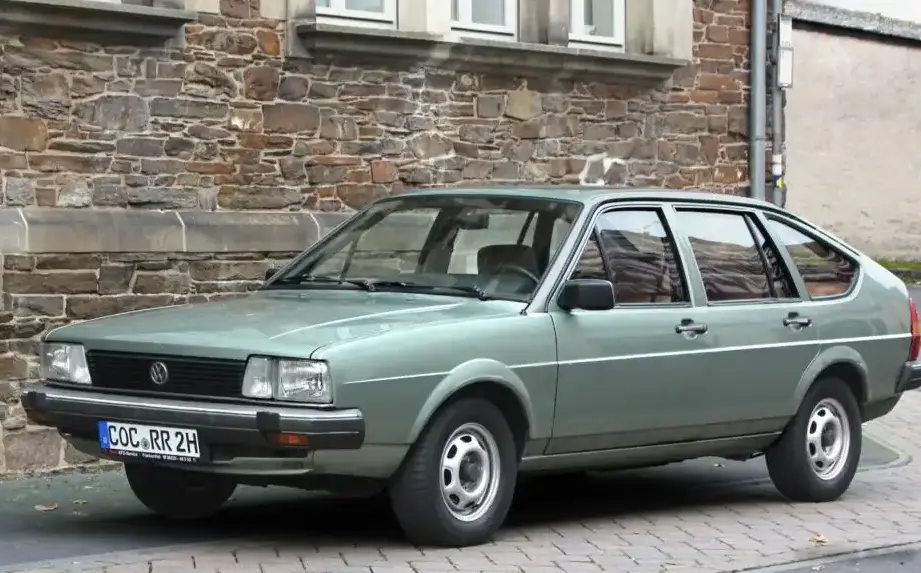
The Volkswagen Passat B2 1.6, producing 75 horsepower, was a mainstay of the Passat lineup from 1980 to 1988. Representing an entry-level option within the second-generation Passat (B2) series, it played a crucial role in making the Passat accessible to a wider range of buyers, particularly in European markets. The B2 generation, built on the updated A3 platform (internally designated 1HX0), offered a more modern and spacious alternative to the original Passat, and the 1.6-liter engine variant provided a balance of affordability and practicality. This model competed directly with other family saloons and hatchbacks like the Ford Sierra, Opel Ascona, and Fiat Croma.
Technical Specifications
| Brand | Volkswagen |
| Model | Passat |
| Generation | Passat (B2) |
| Type (Engine) | 1.6 (75 Hp) |
| Start of production | 1980 |
| End of production | 1988 |
| Powertrain Architecture | Internal Combustion engine |
| Body type | Hatchback |
| Seats | 5 |
| Doors | 5 |
| Fuel consumption (urban) | 7 l/100 km (33.6 US mpg) |
| Fuel consumption (extra urban) | 5.5 l/100 km (42.8 US mpg) |
| Fuel consumption (combined) | 6.5 l/100 km (36.2 US mpg) |
| Fuel Type | Petrol (Gasoline) |
| Acceleration 0 – 100 km/h | 14 sec |
| Acceleration 0 – 62 mph | 14 sec |
| Acceleration 0 – 60 mph | 13.3 sec |
| Maximum speed | 164 km/h (101.9 mph) |
| Weight-to-power ratio | 12.3 kg/Hp |
| Weight-to-torque ratio | 7.6 kg/Nm |
| Power | 75 Hp @ 6000 rpm |
| Power per litre | 47.2 Hp/l |
| Torque | 121 Nm @ 3200 rpm (89.25 lb.-ft. @ 3200 rpm) |
| Engine layout | Front, Longitudinal |
| Engine Model/Code | DT |
| Engine displacement | 1588 cm3 (96.91 cu. in.) |
| Number of cylinders | 4 |
| Engine configuration | Inline |
| Cylinder Bore | 79.5 mm (3.13 in.) |
| Piston Stroke | 80 mm (3.15 in.) |
| Compression ratio | 8.2:1 |
| Number of valves per cylinder | 2 |
| Engine aspiration | Naturally aspirated |
| Valvetrain | OHC |
| Engine oil capacity | 3 l (3.17 US qt | 2.64 UK qt) |
| Coolant capacity | 6 l (6.34 US qt | 5.28 UK qt) |
| Kerb Weight | 920 kg (2028.25 lbs.) |
| Max. weight | 1400 kg (3086.47 lbs.) |
| Max load | 480 kg (1058.22 lbs.) |
| Trunk (boot) space – minimum | 480 l (16.95 cu. ft.) |
| Trunk (boot) space – maximum | 1542 l (54.46 cu. ft.) |
| Fuel tank capacity | 70 l (18.49 US gal | 15.4 UK gal) |
| Length | 4435 mm (174.61 in.) |
| Width | 1685 mm (66.34 in.) |
| Height | 1385 mm (54.53 in.) |
| Wheelbase | 2550 mm (100.39 in.) |
| Front track | 1400 mm (55.12 in.) |
| Rear track | 1408 mm (55.43 in.) |
| Drivetrain Architecture | Front wheel drive |
| Number of gears | 4 |
| Gearbox type | Manual transmission |
| Front suspension | Independent type McPherson |
| Rear suspension | Coil spring |
| Front brakes | Disc |
| Rear brakes | Drum |
| Steering type | Steering rack and pinion |
| Tires size | 175/70 R13 |
| Wheel rims size | 13 |
Powertrain & Engine Architecture
The heart of the Passat B2 1.6 was the Volkswagen DT engine, a 1.6-liter inline four-cylinder petrol engine. This engine featured a single overhead camshaft (OHC) valvetrain operating two valves per cylinder. Fuel delivery was managed by a Bosch carburetor, a common setup for the time, prioritizing simplicity and cost-effectiveness over the more advanced fuel injection systems found in higher-spec Passat models. The engine’s longitudinal mounting within the engine bay contributed to a front-engine, front-wheel-drive configuration. The four-speed manual transmission was the standard offering, designed for durability and ease of use. While not particularly powerful, the DT engine was known for its reliability and relatively low maintenance requirements.
Driving Characteristics
The 75 horsepower and 89.25 lb-ft of torque produced by the 1.6-liter engine translated to modest performance. Acceleration from 0 to 60 mph took around 13.3 seconds, and top speed was approximately 101.9 mph. Compared to the more potent Passat variants, such as those equipped with the 1.8-liter or VR6 engines, the 1.6 felt noticeably slower, particularly when fully loaded or tackling inclines. The four-speed manual gearbox offered reasonable control, but the limited number of gears meant that the engine often felt strained at highway speeds. The gear ratios were optimized for fuel economy rather than outright performance. The driving experience was best described as comfortable and practical, rather than sporty or engaging.
Equipment & Trim Levels
The Passat B2 1.6 typically represented the base trim level. Standard equipment included cloth upholstery, basic instrumentation, and manual windows and door locks. Air conditioning, power windows, and upgraded audio systems were generally offered as optional extras. Interior trim was functional and durable, prioritizing practicality over luxury. The dashboard layout was straightforward, with clearly marked controls. The 1.6 models often featured steel wheels with hubcaps, while higher trims received alloy wheels and other cosmetic enhancements.
Chassis & Braking
The Passat B2 featured an independent McPherson strut front suspension and a coil spring rear suspension. This setup provided a reasonable balance of ride comfort and handling. Front disc brakes provided adequate stopping power, while the rear drums were sufficient for the vehicle’s weight and performance capabilities. The steering was rack and pinion, offering precise control. The 1.6 models typically had a simpler suspension setup compared to higher-spec variants, lacking features like rear stabilizer bars.
Market Reception & Comparison
The Passat B2 1.6 was generally well-received as an affordable and practical family car. Critics praised its spacious interior, comfortable ride, and fuel efficiency. However, the engine’s lack of power was a common criticism. Compared to the 1.8-liter models, the 1.6 offered significantly less performance, but at a lower purchase price. The 1.6 also proved to be more economical to run, with lower fuel consumption and simpler maintenance requirements. Against competitors like the Ford Sierra and Opel Ascona, the Passat B2 1.6 offered a compelling combination of value and practicality.
Legacy
The Volkswagen Passat B2 1.6, while not the most powerful or exciting variant, remains a popular choice among classic car enthusiasts. The DT engine is known for its robustness and relatively simple mechanics, making it easier to maintain and repair. Today, well-maintained examples of the B2 1.6 can be found in the used car market, often at affordable prices. Its enduring appeal lies in its blend of practicality, reliability, and classic Volkswagen styling. The B2 generation, and the 1.6 variant in particular, helped solidify the Passat’s reputation as a dependable and versatile family car.