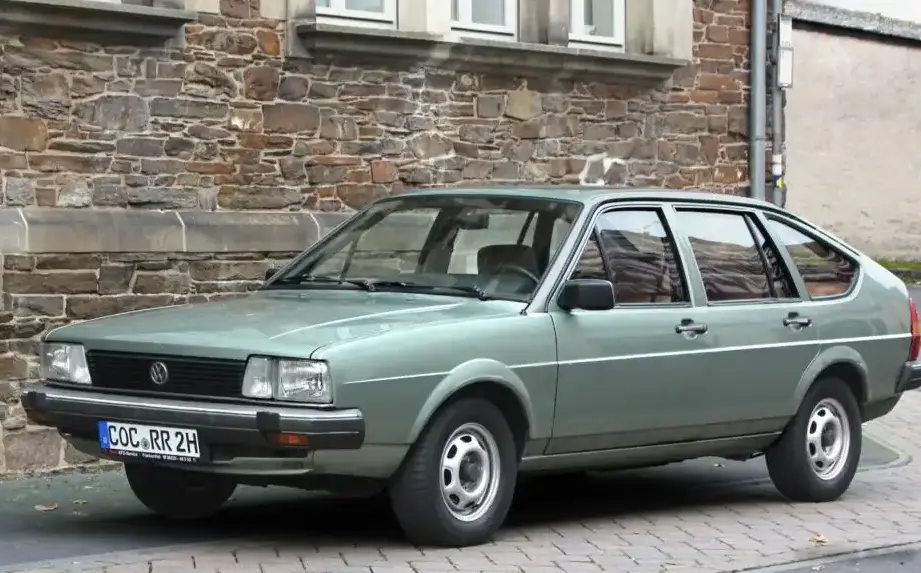
The Volkswagen Passat B2 1.6 TD (80 hp) represents a specific iteration of the second-generation Passat, produced between 1986 and 1988. This variant, powered by a turbocharged diesel engine, occupied a key position in Volkswagen’s lineup during a period focused on fuel efficiency and practicality. The B2 Passat, built on the B2 platform, aimed to offer a more modern and spacious alternative to the aging first-generation model, and the 1.6 TD trim catered to buyers prioritizing economy and reasonable performance. It was primarily sold in Europe, where diesel engines were increasingly popular due to favorable taxation and fuel costs.
Technical Specifications
| Brand | Volkswagen |
| Model | Passat |
| Generation | Passat (B2) |
| Type (Engine) | 1.6 TD (80 Hp) |
| Start of production | 1986 |
| End of production | 1988 |
| Powertrain Architecture | Internal Combustion engine |
| Body type | Hatchback |
| Seats | 5 |
| Doors | 5 |
| Fuel Type | Diesel |
| Power | 80 Hp |
| Engine Model/Code | CY |
| Engine aspiration | Turbocharger |
| Engine oil capacity | 3.5 l (3.7 US qt | 3.08 UK qt) |
| Coolant capacity | 7 l (7.4 US qt | 6.16 UK qt) |
| Trunk (boot) space – minimum | 480 l (16.95 cu. ft.) |
| Trunk (boot) space – maximum | 1542 l (54.46 cu. ft.) |
| Fuel tank capacity | 70 l (18.49 US gal | 15.4 UK gal) |
| Length | 4435 mm (174.61 in.) |
| Width | 1685 mm (66.34 in.) |
| Height | 1385 mm (54.53 in.) |
| Wheelbase | 2550 mm (100.39 in.) |
Powertrain & Engine Architecture
The heart of the Passat B2 1.6 TD was the CY engine, a 1.6-liter inline-four cylinder diesel engine equipped with a turbocharger and indirect injection. This engine produced 80 horsepower, a respectable figure for a diesel of that era, and approximately 120 lb-ft of torque. The indirect injection system, common at the time, involved pre-combustion chambers where fuel was initially ignited before being transferred to the main combustion chamber. This design contributed to quieter operation and reduced emissions compared to direct injection systems. The turbocharger, a Garrett unit in many cases, significantly boosted power output by forcing more air into the engine. The engine utilized a Bosch mechanical fuel injection pump, carefully calibrated to deliver the correct amount of fuel under varying load conditions. The engine’s valvetrain consisted of a single overhead camshaft operating two valves per cylinder. While not particularly high-revving, the engine delivered a broad torque curve, making it well-suited for relaxed cruising and everyday driving. The transmission paired with this engine was typically a four-speed automatic, designed for smooth and comfortable shifts.
Driving Characteristics
The 1.6 TD automatic Passat B2 offered a driving experience focused on comfort and fuel economy rather than outright performance. Acceleration was adequate for merging onto highways and overtaking, but it wasn’t a particularly quick car. The four-speed automatic transmission, while smooth, did sap some power from the engine. Gear ratios were optimized for fuel efficiency, resulting in a relatively relaxed cruising speed. The turbocharger provided a noticeable boost in power once it spooled up, but there was some turbo lag, a common characteristic of turbochargers of that era. Compared to the more powerful gasoline-powered Passat variants, such as the GL models, the 1.6 TD automatic was significantly slower. However, it offered superior fuel economy, making it a popular choice for drivers covering long distances. Compared to the manual transmission versions of the 1.6 TD, the automatic offered greater convenience but at the expense of some responsiveness and fuel efficiency.
Equipment & Trim Levels
The Passat B2 1.6 TD automatic typically came with a reasonable level of standard equipment. This included power steering, central locking, and a basic stereo system. Interior upholstery was usually cloth, with a durable and practical design. The dashboard layout was functional and straightforward, with clearly labeled controls. Optional extras included electric windows, a sunroof, and upgraded stereo systems. The trim level of the 1.6 TD automatic generally positioned it as a mid-range offering within the Passat B2 lineup. It was more well-equipped than the base models but lacked the luxury features found in the higher-end GL and GTI variants. The exterior styling was relatively understated, with body-colored bumpers and trim.
Chassis & Braking
The Passat B2 featured an independent suspension system at the front, utilizing MacPherson struts and stabilizer bar. The rear suspension was a semi-independent torsion beam setup. This configuration provided a good balance between ride comfort and handling. The 1.6 TD automatic models typically came equipped with disc brakes at the front and drum brakes at the rear. The braking system was adequate for the car’s weight and performance, but it lacked the stopping power of the larger disc brakes found on some of the higher-performance Passat variants. The steering was power-assisted, making it relatively easy to maneuver at low speeds. Stabilizer bars were fitted to both the front and rear axles to reduce body roll during cornering.
Market Reception & Comparison
The Passat B2 1.6 TD automatic was generally well-received by critics and buyers alike. It was praised for its fuel efficiency, comfortable ride, and spacious interior. However, some critics noted its lack of outright performance and the presence of turbo lag. Compared to other cars in its class, such as the Ford Sierra and Opel Ascona, the Passat B2 offered a compelling combination of practicality, comfort, and fuel economy. In terms of reliability, the 1.6 TD engine was generally considered to be robust and durable, although the indirect injection system could require occasional maintenance. Fuel economy was a major selling point, with the 1.6 TD automatic achieving around 45-50 mpg on the highway.
Legacy
The Volkswagen Passat B2 1.6 TD automatic has become a popular classic car among enthusiasts. The robust 1.6 TD engine is known for its longevity and relatively simple maintenance requirements. While parts availability can be a challenge, many components are still available through specialist suppliers. Today, these cars are often sought after by those looking for a reliable and fuel-efficient classic that is relatively easy to maintain. The B2 Passat, and particularly the 1.6 TD variant, represents a significant chapter in Volkswagen’s history, showcasing the company’s commitment to building practical and well-engineered cars. The 1.6 TD engine, while not the most powerful, proved to be a durable and economical workhorse, earning a loyal following among drivers who valued fuel efficiency and reliability.