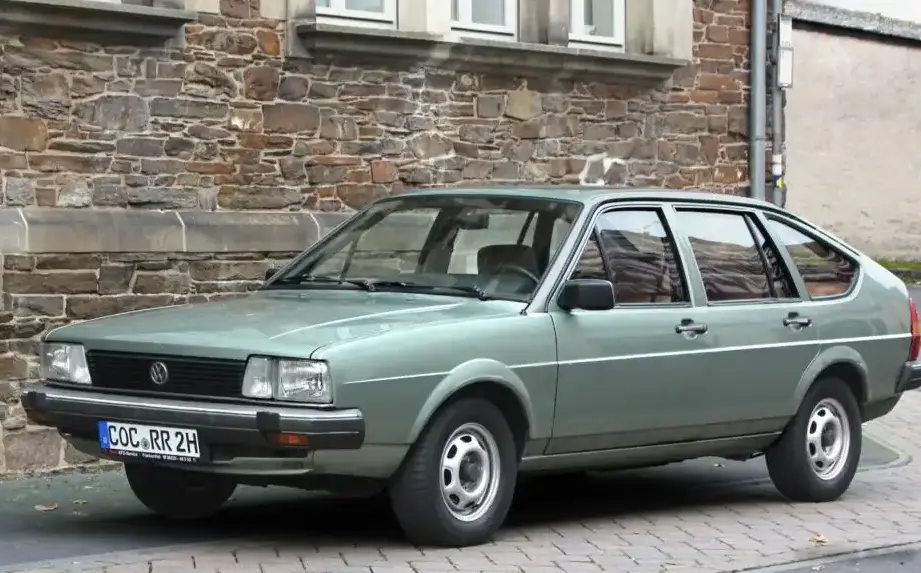
The Volkswagen Passat B2, produced between 1980 and 1988, represented a significant evolution in Volkswagen’s mid-size offerings. The 1.8-liter (112 hp) variant, available from 1983 to 1984, occupied a crucial position in the lineup, offering a balance between affordability and practicality for European buyers. This model, often overlooked in favor of its more powerful siblings, provided a comfortable and economical option within the broader B2 Passat range, which included both saloon (sedan) and estate (wagon) body styles. The 1.8L engine was primarily aimed at drivers prioritizing fuel efficiency and everyday usability over outright performance.
Technical Specifications
| Brand | Volkswagen |
| Model | Passat |
| Generation | Passat (B2) |
| Type (Engine) | 1.8 (112 Hp) |
| Start of production | 1983 |
| End of production | 1984 |
| Powertrain Architecture | Internal Combustion engine |
| Body type | Hatchback |
| Seats | 5 |
| Doors | 5 |
| Fuel Type | Petrol (Gasoline) |
| Power | 112 Hp |
| Engine Model/Code | DZ |
| Engine aspiration | Naturally aspirated engine |
| Engine oil capacity | 3 l (3.17 US qt | 2.64 UK qt) |
| Coolant capacity | 4 l (4.23 US qt | 3.52 UK qt) |
| Trunk (boot) space – minimum | 480 l (16.95 cu. ft.) |
| Trunk (boot) space – maximum | 1542 l (54.46 cu. ft.) |
| Fuel tank capacity | 70 l (18.49 US gal | 15.4 UK gal) |
| Length | 4435 mm (174.61 in.) |
| Width | 1685 mm (66.34 in.) |
| Height | 1385 mm (54.53 in.) |
| Wheelbase | 2550 mm (100.39 in.) |
Powertrain & Engine Architecture
The 1.8-liter DZ engine powering this Passat variant was a naturally aspirated, inline-four cylinder unit. It featured a single overhead camshaft (SOHC) valvetrain, operating two valves per cylinder. Fuel delivery was managed by Bosch mechanical fuel injection, a system common for the era, providing a balance between efficiency and performance. While not as sophisticated as later multi-point injection systems, it offered improved fuel atomization compared to carburetors. The engine’s relatively modest compression ratio of around 8.5:1 contributed to its ability to run on lower octane fuels, a consideration for many European markets. The engine produced 112 horsepower at approximately 5,500 rpm and 109 lb-ft of torque at 3,200 rpm. This power was transmitted to the front wheels through a four-speed automatic transmission. This transmission, while providing convenience, was known for its relatively conservative gearing, prioritizing fuel economy over rapid acceleration.
Driving Characteristics
The 1.8-liter automatic Passat B2 offered a comfortable, if not particularly sporty, driving experience. Acceleration was adequate for everyday driving, with a 0-60 mph time estimated around 12-13 seconds. The automatic transmission’s gear ratios were spaced to maximize fuel efficiency, resulting in a noticeable lack of urgency when attempting to overtake or climb hills. Compared to the five-speed manual versions of the 1.8, the automatic suffered a noticeable performance deficit. The manual transmission allowed the engine to operate within its optimal power band more effectively. The suspension, typical of the B2 Passat, provided a compliant ride, absorbing bumps and imperfections in the road surface reasonably well. However, body roll was present during cornering, reflecting the car’s focus on comfort rather than handling precision.
Equipment & Trim Levels
The 1.8-liter automatic Passat typically represented an entry-level or mid-range trim level within the B2 lineup. Standard equipment generally included cloth upholstery, basic instrumentation (speedometer, fuel gauge, temperature gauge), and a four-speaker stereo system. Power steering was often included, but air conditioning and electric windows were typically optional extras. Interior trim was relatively simple, with durable plastics and a functional dashboard layout. Optional extras could significantly enhance the vehicle’s comfort and convenience, including a sunroof, upgraded stereo systems, and alloy wheels. The specific trim level and available options varied depending on the country of sale.
Chassis & Braking
The Passat B2 utilized a MacPherson strut front suspension and a semi-independent torsion beam rear suspension. This setup provided a good balance between ride comfort and handling. Braking systems varied depending on the market and trim level. Lower-spec models, like the 1.8 automatic, often featured drum brakes on the rear wheels, while higher-spec models received disc brakes all around. Front brakes were typically ventilated discs. Power assistance was standard for the brakes, providing adequate stopping power for the vehicle’s weight and performance. Stabilizer bars were fitted to both the front and rear axles to reduce body roll during cornering.
Market Reception & Comparison
The 1.8-liter automatic Passat B2 was generally well-received as a practical and economical family car. Critics praised its comfortable ride, spacious interior, and reasonable fuel economy. However, the automatic transmission and relatively low power output were often criticized. Compared to the more powerful 1.6-liter diesel or the sporty 1.8 GTI, the 1.8 automatic offered a less engaging driving experience. The diesel provided superior fuel economy, while the GTI delivered significantly more performance. However, the 1.8 automatic offered a compelling alternative for buyers prioritizing comfort and convenience over outright performance or fuel savings. Its fuel economy was respectable for the time, averaging around 28-32 mpg in mixed driving conditions.
Legacy
The 1.8-liter DZ engine, while not known for exceptional durability, proved to be reasonably reliable with proper maintenance. The automatic transmission, however, was sometimes prone to issues, particularly if not serviced regularly. Today, the Passat B2 1.8 automatic is a relatively rare sight on the roads. Those examples that remain are often cherished by enthusiasts for their classic styling and simple mechanicals. Parts availability is generally good, although some trim-specific components can be difficult to find. The car represents a significant era in Volkswagen’s history, bridging the gap between the classic Beetle and the more modern, front-wheel-drive Passats that followed. Its affordability and practicality continue to appeal to a niche market of classic car enthusiasts.