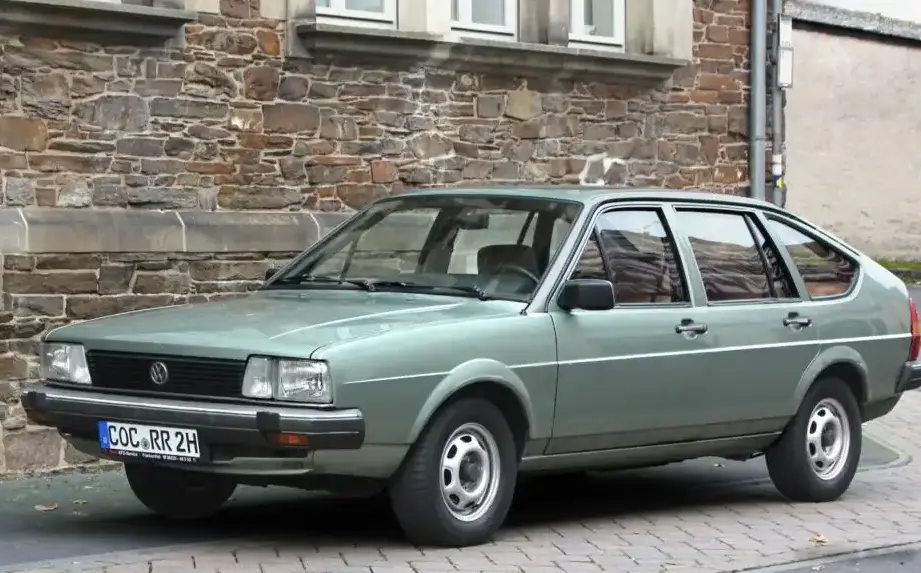
The Volkswagen Passat B2 1.8, producing 87 horsepower, was a mainstay of the Passat lineup between 1986 and 1988. Representing an entry-level option within the broader B2 generation (1981-1988), this variant aimed to provide affordable and practical transportation for families and commuters. It occupied a crucial position in the market, offering a balance between fuel efficiency and usability. The B2 Passat, a significant evolution from the original Passat, was built on the Volkswagen B2 platform, shared with the Audi 80, and represented a move towards more modern styling and engineering for the brand.
Technical Specifications
| Brand | Volkswagen |
| Model | Passat |
| Generation | Passat (B2) |
| Type (Engine) | 1.8 (87 Hp) |
| Start of production | 1986 |
| End of production | 1988 |
| Powertrain Architecture | Internal Combustion engine |
| Body type | Hatchback |
| Seats | 5 |
| Doors | 5 |
| Fuel Type | Petrol (Gasoline) |
| Power | 87 Hp |
| Engine Model/Code | RM |
| Engine aspiration | Naturally aspirated engine |
| Engine oil capacity | 3 l (3.17 US qt | 2.64 UK qt) |
| Coolant capacity | 4 l (4.23 US qt | 3.52 UK qt) |
| Trunk (boot) space – minimum | 480 l (16.95 cu. ft.) |
| Trunk (boot) space – maximum | 1542 l (54.46 cu. ft.) |
| Fuel tank capacity | 70 l (18.49 US gal | 15.4 UK gal) |
| Length | 4435 mm (174.61 in.) |
| Width | 1685 mm (66.34 in.) |
| Height | 1385 mm (54.53 in.) |
| Wheelbase | 2550 mm (100.39 in.) |
Powertrain & Engine Architecture
The Passat B2 1.8 utilized the Volkswagen RM engine, an 1.8-liter inline-four cylinder gasoline engine. This engine was a naturally aspirated unit, meaning it did not employ a turbocharger or supercharger. The RM engine featured a single overhead camshaft (SOHC) valvetrain, operating two valves per cylinder. Fuel delivery was managed by Bosch mechanical fuel injection, a system common for the era, providing a balance between cost and efficiency. While not particularly powerful by modern standards, the RM engine was known for its relative reliability and ease of maintenance. The 87 horsepower output was achieved at approximately 5,200 rpm, with peak torque of around 109 lb-ft at 3,200 rpm. This engine was typically paired with a three-speed automatic transmission, although a five-speed manual was also available. The automatic transmission, while offering convenience, was known to slightly reduce fuel economy and acceleration compared to the manual counterpart.
Driving Characteristics
The 1.8-liter automatic Passat B2 offered a comfortable, if not particularly sporty, driving experience. Acceleration was adequate for everyday driving, with a 0-60 mph time estimated around 12-14 seconds. The three-speed automatic transmission provided smooth shifts, but the limited number of gears meant the engine often operated at higher rpm during highway cruising, impacting fuel economy. The gear ratios were optimized for fuel efficiency and drivability rather than outright performance. Compared to the more powerful Passat variants, such as those equipped with the 1.8 liter 16V or the VR6 engines, the 1.8 automatic felt noticeably slower. However, it offered a more relaxed driving experience, particularly in urban environments. The suspension, tuned for comfort, absorbed bumps and imperfections in the road well, contributing to a pleasant ride quality.
Equipment & Trim Levels
The 1.8-liter automatic Passat B2 typically represented the base trim level. Standard equipment included cloth upholstery, basic instrumentation, and manual windows and door locks. Air conditioning was often an optional extra, as were power windows and a more advanced audio system. Interior trim was generally functional and durable, prioritizing practicality over luxury. The dashboard layout was straightforward and easy to use, with clearly labeled controls. Depending on the market, additional options could include a sunroof, central locking, and upgraded wheels. The overall interior ambiance was typical of European cars of the era – functional, well-built, but not overly lavish.
Chassis & Braking
The Passat B2 featured an independent suspension system at the front, utilizing MacPherson struts and stabilizer bar. The rear suspension employed a semi-independent torsion beam axle. This setup provided a good balance between ride comfort and handling. Braking duties were handled by disc brakes at the front and drum brakes at the rear. While adequate for the vehicle’s weight and performance, the rear drum brakes were less effective than disc brakes, particularly under heavy braking. The steering was a rack-and-pinion system, providing precise and responsive steering feel. The chassis was relatively lightweight, contributing to the car’s agility and fuel efficiency.
Market Reception & Comparison
The Passat B2 1.8 automatic was generally well-received as an affordable and practical family car. Critics praised its spacious interior, comfortable ride, and fuel efficiency. However, the engine’s lack of power was often noted, particularly when compared to more powerful Passat variants. In terms of fuel economy, the 1.8 automatic typically achieved around 25-30 mpg in combined driving, depending on driving style and conditions. Compared to the 1.8 16V or VR6 models, the 1.8 automatic offered significantly lower performance but also lower running costs. The 1.9 TDI diesel variant, introduced later in the B2 lifecycle, provided even better fuel economy but with a different driving experience. The 1.8 automatic appealed to buyers who prioritized affordability, practicality, and ease of use over outright performance.
Legacy
The Volkswagen Passat B2 1.8 automatic, while not the most sought-after variant, remains a relatively common sight in the used car market today. The RM engine is known for its durability and relatively simple maintenance requirements. However, age-related issues, such as corrosion and wear and tear on rubber components, are common. The automatic transmission, if not properly maintained, can be prone to issues. Despite these potential problems, the Passat B2 1.8 automatic remains a viable option for those seeking a classic European car that is affordable to purchase and maintain. Its enduring popularity is a testament to its practicality, reliability, and the overall quality of the B2 Passat platform.