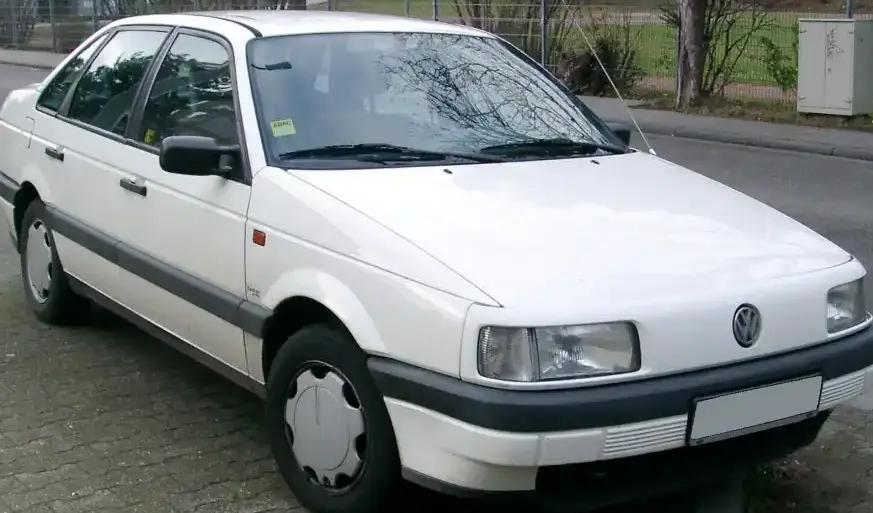
The Volkswagen Passat B3, produced from 1988 to 1993, represented a significant step forward for Volkswagen’s mid-size offering. The 1.6-liter (75 hp) variant, available throughout the B3’s production run, served as the entry point into the Passat range, particularly in European markets. Positioned below the more powerful 1.8 and 2.0-liter options, and significantly distinct from the later TDI diesel models, this version prioritized affordability and fuel economy over outright performance. It was a common sight as a family sedan, offering a practical and relatively modern alternative to older, more basic vehicles.
Technical Specifications
| Brand | Volkswagen |
| Model | Passat |
| Generation | Passat (B3) |
| Type (Engine) | 1.6 (75 Hp) |
| Start of production | 1988 |
| End of production | 1990 |
| Powertrain Architecture | Internal Combustion engine |
| Body type | Sedan |
| Seats | 5 |
| Doors | 4 |
| Fuel consumption (urban) | 9.5 l/100 km (24.8 US mpg, 29.7 UK mpg, 10.5 km/l) |
| Fuel consumption (extra urban) | 6.9 l/100 km (34.1 US mpg, 40.9 UK mpg, 14.5 km/l) |
| Fuel consumption (combined) | 8.2 l/100 km (28.7 US mpg, 34.4 UK mpg, 12.2 km/l) |
| Fuel Type | Petrol (Gasoline) |
| Acceleration 0 – 100 km/h | 15 sec |
| Acceleration 0 – 62 mph | 15 sec |
| Acceleration 0 – 60 mph | 14.3 sec |
| Maximum speed | 161 km/h (100.04 mph) |
| Weight-to-power ratio | 15.3 kg/Hp, 65.2 Hp/tonne |
| Weight-to-torque ratio | 9.2 kg/Nm, 108.7 Nm/tonne |
| Power | 75 Hp @ 5200 rpm |
| Power per litre | 47 Hp/l |
| Torque | 125 Nm @ 2750 rpm (92.2 lb.-ft. @ 2750 rpm) |
| Engine layout | Front, Transverse |
| Engine Model/Code | 1F |
| Engine displacement | 1595 cm3 (97.33 cu. in.) |
| Number of cylinders | 4 |
| Engine configuration | Inline |
| Cylinder Bore | 81 mm (3.19 in.) |
| Piston Stroke | 77.4 mm (3.05 in.) |
| Compression ratio | 9:1 |
| Number of valves per cylinder | 2 |
| Fuel injection system | Carburettor |
| Engine aspiration | Naturally aspirated |
| Engine oil capacity | 4 l (4.23 US qt | 3.52 UK qt) |
| Coolant | 5 l (5.28 US qt | 4.4 UK qt) |
| Kerb Weight | 1150 kg (2535.32 lbs.) |
| Max. weight | 1600 kg (3527.4 lbs.) |
| Max load | 450 kg (992.08 lbs.) |
| Fuel tank capacity | 70 l (18.49 US gal | 15.4 UK gal) |
| Drivetrain Architecture | The Internal combustion engine (ICE) drives the front wheels of the vehicle. |
| Drive wheel | Front wheel drive |
| Number of gears | 4 gears, manual transmission /5 |
| Front brakes | Disc |
| Rear brakes | Drum |
Powertrain & Engine Architecture
The heart of the Passat 1.6 was the 1F engine, a naturally aspirated, inline-four cylinder petrol engine displacing 1595cc. This engine utilized a relatively simple carburettor fuel injection system, a common feature for vehicles of this era aiming for cost-effectiveness. The engine featured a single overhead camshaft (SOHC) operating two valves per cylinder. Its 9:1 compression ratio was typical for the time, balancing performance and fuel efficiency. The 75 horsepower peak was achieved at 5200 rpm, while the 125 Nm (92.2 lb-ft) of torque was available at 2750 rpm. The engine’s transverse mounting and front-wheel drive configuration were standard for Volkswagen at the time, contributing to efficient packaging. While a 5-speed manual transmission was available, the 1.6 was often paired with a 4-speed automatic transmission, aimed at providing ease of use for a broader range of drivers.
Driving Characteristics
The Passat 1.6 with the automatic transmission offered a comfortable, but not particularly sporty, driving experience. Acceleration was modest, taking around 15 seconds to reach 60 mph. The automatic gearbox, while convenient, did sap some power from the engine, resulting in a noticeable difference in responsiveness compared to the manual versions. Gear ratios were optimized for fuel economy rather than rapid acceleration. The car felt most at home during relaxed cruising on highways or city streets. The relatively low power output meant that overtaking maneuvers required careful planning. Compared to the 1.8 and 2.0-liter Passats, the 1.6 felt noticeably slower, but it offered a smoother and more forgiving driving experience, particularly for less experienced drivers.
Equipment & Trim Levels
The 1.6-liter Passat typically came with a fairly basic level of equipment. Standard features generally included cloth upholstery, a simple dashboard layout, and manual windows and door locks. Power steering was often an optional extra. Air conditioning was also an optional upgrade, and not commonly found on base models. Trim levels varied slightly depending on the market, but generally focused on cosmetic enhancements such as upgraded interior fabrics or alloy wheels. The emphasis was on providing a functional and reliable vehicle at an affordable price point.
Chassis & Braking
The Passat B3 utilized a MacPherson strut front suspension and a semi-independent torsion beam rear suspension. This setup provided a reasonable balance between ride comfort and handling. The 1.6-liter models typically featured disc brakes on the front wheels and drum brakes on the rear. Stabilizer bars were often fitted to improve handling, but their thickness varied depending on the specific trim level. The suspension was tuned for comfort, prioritizing a smooth ride over sharp handling. The relatively light weight of the 1.6-liter engine helped to reduce stress on the suspension components.
Market Reception & Comparison
The Passat 1.6 was generally well-received as an affordable and practical family car. Critics praised its spacious interior, comfortable ride, and reasonable fuel economy. However, the engine’s lack of power was often cited as a drawback. Compared to the more powerful Passat variants, the 1.6 offered significantly lower performance, but it also came with a lower price tag and better fuel efficiency. The 1.8-liter models offered a noticeable performance boost, while the diesel models (particularly the later TDI versions) provided even better fuel economy. The 1.6 appealed to buyers who prioritized affordability and practicality over performance.
Legacy
The Passat B3 1.6, while not the most powerful or technologically advanced version of the B3, proved to be a reliable and durable vehicle. The 1F engine, despite its simplicity, was known for its longevity. Today, these cars are relatively rare, but well-maintained examples are sought after by enthusiasts and collectors. The automatic transmission, while not known for its sportiness, generally proved to be reliable. The Passat B3 1.6 represents a significant chapter in Volkswagen’s history, offering a glimpse into the company’s commitment to providing affordable and practical transportation to a wide range of customers. Its simple design and robust construction contribute to its continued presence on roads and in the hearts of classic car enthusiasts.