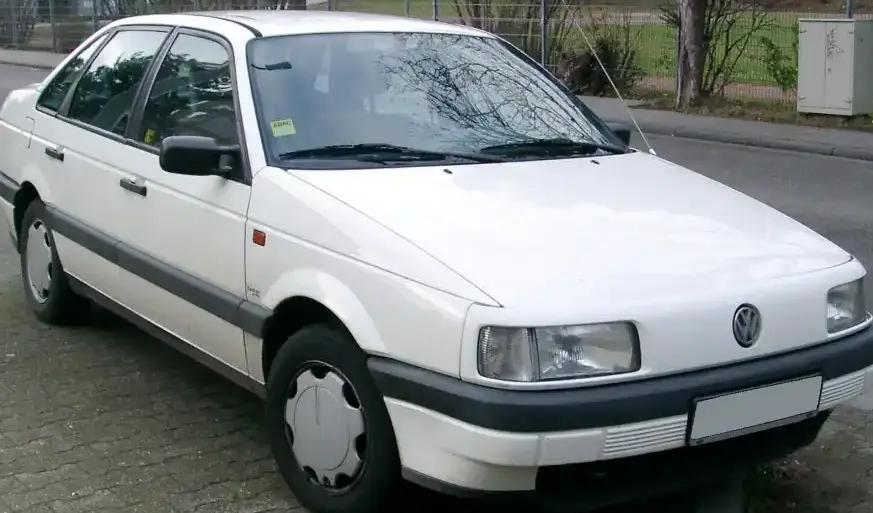
The Volkswagen Passat B3, produced between 1988 and 1993, represented a significant leap forward for Volkswagen’s mid-size offering. The 1.8-liter (75 horsepower) variant, manufactured from 1990 to 1993, served as a key entry point into the Passat range, particularly in European markets. Positioned below the more powerful 1.8 and 2.0-liter options, and significantly below the VR6, this model prioritized affordability and fuel economy over outright performance. It was a common sight as a family sedan, offering a practical and relatively modern alternative to older, more basic vehicles. The B3 generation, built on the A platform, was a departure from the angular designs of the B2, embracing a more rounded and aerodynamic aesthetic.
Technical Specifications
| Brand | Volkswagen |
| Model | Passat |
| Generation | Passat (B3) |
| Type (Engine) | 1.8 (75 Hp) |
| Start of production | 1990 |
| End of production | 1993 |
| Powertrain Architecture | Internal Combustion engine |
| Body type | Sedan |
| Fuel consumption (urban) | 9.2 l/100 km (25.6 US mpg, 30.7 UK mpg, 10.9 km/l) |
| Fuel consumption (extra urban) | 6.8 l/100 km (34.6 US mpg, 41.5 UK mpg, 14.7 km/l) |
| Fuel consumption (combined) | 7.6 l/100 km (30.9 US mpg, 37.2 UK mpg, 13.2 km/l) |
| Fuel Type | Petrol (Gasoline) |
| Power | 75 Hp @ 5000 rpm |
| Power per litre | 42.1 Hp/l |
| Torque | 140 Nm @ 2500 rpm (103.26 lb.-ft. @ 2500 rpm) |
| Engine layout | Front, Transverse |
| Engine Model/Code | AAM |
| Engine displacement | 1781 cm3 (108.68 cu. in.) |
| Number of cylinders | 4 |
| Engine configuration | Inline |
| Cylinder Bore | 81 mm (3.19 in.) |
| Piston Stroke | 86.4 mm (3.4 in.) |
| Compression ratio | 9:1 |
| Number of valves per cylinder | 2 |
| Fuel injection system | Single-point injection |
| Engine aspiration | Naturally aspirated engine |
| Valvetrain | OHC |
| Engine oil capacity | 3.8 l (4.02 US qt | 3.34 UK qt) |
| Coolant | 5 l (5.28 US qt | 4.4 UK qt) |
| Drivetrain Architecture | The Internal combustion engine (ICE) drives the front wheels of the vehicle. |
| Drive wheel | Front wheel drive |
| Front suspension | Independent type McPherson |
| Front brakes | Disc |
| Rear brakes | Drum |
Powertrain & Engine Architecture
The heart of the Passat 1.8 was the AAM engine code, a 1781cc inline four-cylinder engine. This engine utilized a single-point fuel injection system (also known as mono-point injection), where a single injector delivered fuel into the intake manifold. This was a cost-effective solution compared to multi-point injection, contributing to the lower price point of this Passat variant. The engine featured an overhead camshaft (OHC) valvetrain with two valves per cylinder. The 9:1 compression ratio was typical for the era and fuel grade available. The engine’s relatively simple design prioritized reliability and ease of maintenance. The automatic transmission offered with this engine was typically a four-speed unit, designed to provide smooth, if not particularly sporty, gear changes. It was not known for its speed, but rather its dependability.
Driving Characteristics
The 75 horsepower output and four-speed automatic transmission resulted in a driving experience focused on practicality rather than performance. Acceleration was modest, with 0-60 mph times estimated around 13-14 seconds. The automatic transmission’s gear ratios were geared towards fuel efficiency, meaning the engine often felt strained during overtaking maneuvers or when climbing hills. Compared to the five-speed manual version, the automatic noticeably reduced responsiveness. However, the automatic provided a comfortable and easy driving experience, particularly in urban environments. The torque curve, peaking at 140 Nm (103 lb-ft) at 2500 rpm, provided adequate pulling power for everyday driving, but lacked the punch of the larger-displacement engines.
Equipment & Trim Levels
The 1.8-liter automatic Passat typically represented the base trim level. Standard equipment generally included cloth upholstery, basic instrumentation, and manual windows and door locks. Air conditioning was often an optional extra, as were power windows and central locking. The interior design was functional and straightforward, prioritizing practicality over luxury. The dashboard layout was typical of early 1990s Volkswagen designs, with a clear and easy-to-read instrument cluster. Optional extras could include a basic radio/cassette player and upgraded interior trim.
Chassis & Braking
The Passat B3 featured an independent McPherson strut front suspension, providing a comfortable ride and reasonable handling. The rear suspension utilized a semi-independent torsion beam setup, which was a cost-effective solution for maintaining ride quality. Braking was comprised of disc brakes on the front wheels and drum brakes on the rear. This configuration was common for vehicles in this price range at the time. Anti-lock braking system (ABS) was typically an optional extra. The steering was power-assisted, making it relatively easy to maneuver, especially at low speeds.
Market Reception & Comparison
The 1.8-liter automatic Passat was generally well-received as an affordable and practical family sedan. Critics acknowledged its fuel efficiency and comfortable ride, but noted its lack of performance compared to the higher-spec models. Compared to the 1.8 and 2.0-liter manual versions, the automatic offered less engaging driving experience. The 1.9 TDI diesel variant, introduced later in the B3’s lifecycle, provided significantly better fuel economy and torque, but at a higher initial cost. The VR6, while offering substantially more power, was positioned as a premium option and catered to a different buyer. The 1.8 automatic found its niche among buyers prioritizing affordability, comfort, and ease of use.
Legacy
The AAM engine, while not known for being particularly powerful, proved to be remarkably durable and reliable. Passat B3s equipped with this engine and automatic transmission are still found on the roads today, often with high mileage. Maintenance is relatively straightforward due to the engine’s simple design. Common issues include wear and tear on the automatic transmission and potential oil leaks as the engine ages. In the used car market, these models are typically very affordable, making them attractive to budget-conscious buyers. They represent a solid and dependable example of 1990s German engineering, offering a classic driving experience and a relatively low cost of ownership.