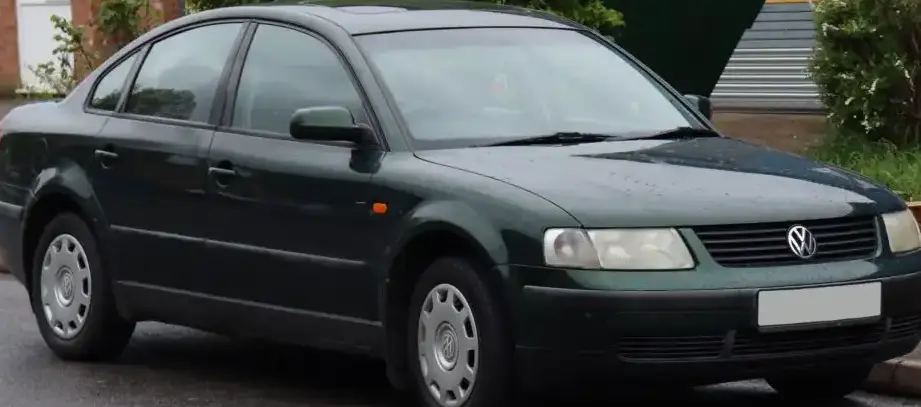
The Volkswagen Passat B5 1.9 TDI (101 hp) represents a significant iteration of Volkswagen’s mid-size offering, produced between 1999 and 2000. Positioned as a fuel-efficient and practical option within the B5 Passat range, this variant catered to drivers prioritizing economy and reliability over outright performance. It was a key model in Europe, where diesel engines dominated the market, offering a compelling alternative to gasoline-powered competitors. The B5 generation, built on the 1HX0/A3 platform, marked a substantial leap forward in terms of refinement and technology for the Passat, and the 1.9 TDI engine played a crucial role in its success.
Technical Specifications
| Brand | Volkswagen |
| Model | Passat |
| Generation | Passat (B5) |
| Type (Engine) | 1.9 TDI (101 Hp) |
| Start of production | 1999 |
| End of production | 2000 |
| Powertrain Architecture | Internal Combustion engine |
| Body type | Sedan |
| Seats | 5 |
| Doors | 4 |
| Fuel consumption (urban) | 7 l/100 km (33.6 US mpg, 40.4 UK mpg, 14.3 km/l) |
| Fuel consumption (extra urban) | 4.4 l/100 km (53.5 US mpg, 64.2 UK mpg, 22.7 km/l) |
| Fuel Type | Diesel |
| Acceleration 0 – 100 km/h | 12.4 sec |
| Acceleration 0 – 62 mph | 12.4 sec |
| Acceleration 0 – 60 mph | 11.8 sec |
| Maximum speed | 191 km/h (118.68 mph) |
| Weight-to-power ratio | 13.7 kg/Hp, 73.2 Hp/tonne |
| Weight-to-torque ratio | 5.8 kg/Nm, 173.9 Nm/tonne |
| Power | 101 Hp @ 4000 rpm |
| Power per litre | 53.3 Hp/l |
| Torque | 240 Nm @ 1800 rpm (177.01 lb.-ft. @ 1800 rpm) |
| Engine layout | Front, Longitudinal |
| Engine Model/Code | AVB |
| Engine displacement | 1896 cm3 (115.7 cu. in.) |
| Number of cylinders | 4 |
| Engine configuration | Inline |
| Cylinder Bore | 79.5 mm (3.13 in.) |
| Piston Stroke | 95.5 mm (3.76 in.) |
| Compression ratio | 19:1 |
| Number of valves per cylinder | 2 |
| Fuel injection system | Pump-nozzle (Unit Injector) |
| Engine aspiration | Turbocharger, Intercooler |
| Valvetrain | OHC |
| Engine oil capacity | 3.6 l (3.8 US qt | 3.17 UK qt) |
| Coolant | 7 l (7.4 US qt | 6.16 UK qt) |
| Kerb Weight | 1380 kg (3042.38 lbs.) |
| Max. weight | 1940 kg (4276.97 lbs.) |
| Max load | 560 kg (1234.59 lbs.) |
| Trunk (boot) space – minimum | 475 l (16.77 cu. ft.) |
| Trunk (boot) space – maximum | 800 l (28.25 cu. ft.) |
| Fuel tank capacity | 65 l (17.17 US gal | 14.3 UK gal) |
| Length | 4703 mm (185.16 in.) |
| Width | 1746 mm (68.74 in.) |
| Height | 1462 mm (57.56 in.) |
| Wheelbase | 2703 mm (106.42 in.) |
| Front track | 1515 mm (59.65 in.) |
| Rear (Back) track | 1515 mm (59.65 in.) |
| Drivetrain Architecture | The Internal combustion engine (ICE) drives the front wheels of the vehicle. |
| Drive wheel | Front wheel drive |
| Number of gears and type of gearbox | 5 gears, manual transmission |
| Front suspension | Coil spring |
| Rear suspension | Coil spring |
| Front brakes | Ventilated discs |
| Rear brakes | Disc |
| Assisting systems | ABS (Anti-lock braking system) |
| Steering type | Steering rack and pinion |
| Power steering | Hydraulic Steering |
| Tires size | 195/65 R15 |
| Wheel rims size | 6J x 15 |
Powertrain & Engine Architecture
The heart of this Passat variant is the 1.9-liter, four-cylinder diesel engine, specifically the AVB engine code. This engine is a member of Volkswagen’s well-regarded TDI (Turbocharged Direct Injection) family. The AVB utilized a pump-nozzle (unit injector) fuel injection system, a technology that allowed for precise fuel delivery and contributed to the engine’s efficiency and relatively low emissions for its time. The engine features an overhead camshaft (OHC) valvetrain operating two valves per cylinder. A turbocharger with an intercooler was employed to boost power output, providing 101 horsepower at 4000 rpm and 177 lb-ft of torque at a low 1800 rpm. The engine is longitudinally mounted in the engine bay, driving the front wheels. The five-speed manual transmission was the standard offering, providing a balance between fuel economy and drivability.
Driving Characteristics
The 1.9 TDI 101 hp Passat offered a pragmatic driving experience. Acceleration was adequate, with a 0-60 mph time of around 11.8 seconds, but it wasn’t designed for spirited performance. The strength of this engine lay in its torque delivery. The 177 lb-ft of torque available from 1800 rpm provided ample pulling power for everyday driving and overtaking maneuvers. Compared to the more powerful 1.8T gasoline engine or the later, higher-output TDI variants, the 1.9 TDI felt less refined and had more noticeable turbo lag. However, it excelled in fuel economy, consistently achieving over 40 mpg on the highway. The five-speed manual transmission was well-matched to the engine’s characteristics, offering smooth shifts and a usable gear spread.
Equipment & Trim Levels
The 1.9 TDI 101 hp typically represented an entry-level or mid-range trim within the B5 Passat lineup. Standard equipment generally included power windows, central locking, and an anti-lock braking system (ABS). Interior upholstery was typically cloth, and the dashboard featured a functional, if somewhat understated, design. Optional extras included alloy wheels, a sunroof, climate control, and upgraded audio systems. The trim level often dictated the availability of these options, with higher trims offering more standard features and a wider range of customization possibilities.
Chassis & Braking
The Passat B5 featured a MacPherson strut front suspension and a multi-link rear suspension, providing a comfortable and controlled ride. The 1.9 TDI models typically used ventilated disc brakes at the front and solid disc brakes at the rear. Hydraulic power steering was standard, offering a reasonable level of assistance without feeling overly light. Stabilizer bars were fitted to both the front and rear axles to reduce body roll during cornering. The suspension setup was tuned for comfort and stability, prioritizing ride quality over sporty handling.
Market Reception & Comparison
The 1.9 TDI 101 hp Passat was well-received in Europe, where diesel engines were favored for their fuel efficiency and low running costs. Critics praised its economy and reliability, but some noted its lack of outright performance compared to gasoline-powered alternatives. Compared to the 1.8T gasoline engine, the TDI offered significantly better fuel economy but less horsepower and a less refined driving experience. The later 1.9 TDI variants with 130 hp and 150 hp offered improved performance but came at a higher price point. The 1.9 TDI 101 hp represented a sweet spot for buyers prioritizing practicality and economy.
Legacy
The 1.9 TDI engine, particularly the AVB code, has earned a reputation for durability and longevity. With proper maintenance, these engines can reliably exceed 200,000 miles. In the used car market, the B5 Passat 1.9 TDI remains a popular choice for budget-conscious buyers seeking a reliable and fuel-efficient vehicle. However, potential buyers should be aware of common issues such as turbocharger wear and potential problems with the fuel injection pump. Despite these potential issues, the 1.9 TDI Passat B5 continues to be a respected and sought-after vehicle, a testament to its engineering and enduring appeal.