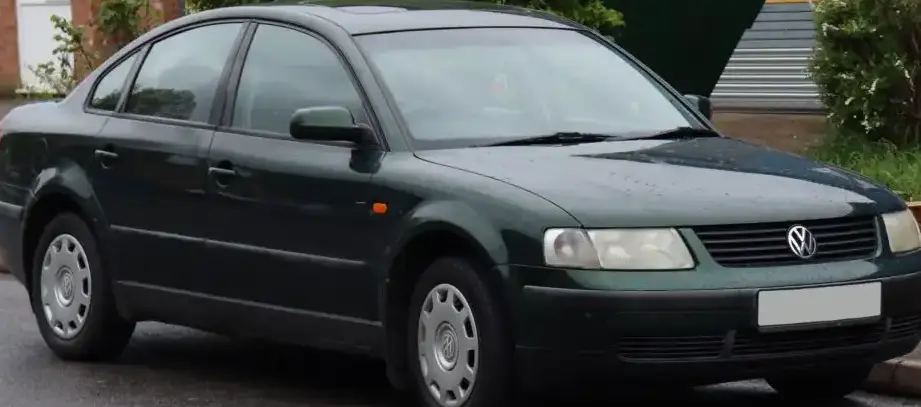
The Volkswagen Passat B5 2.8 V6 30V, produced from 1996 to 1998, represented a significant step forward for Volkswagen’s mid-size offering. Part of the B5 generation (1996-2000), this variant occupied a premium position within the Passat lineup, offering a blend of performance and refinement not found in the lower-trim models. It was primarily marketed in Europe and North America as a comfortable and capable family sedan, competing with vehicles like the BMW 3 Series, Audi A4, and Honda Accord. The B5 Passat was a pivotal model for Volkswagen, showcasing a more mature design language and improved build quality compared to its predecessor.
Technical Specifications
| Brand | Volkswagen |
| Model | Passat |
| Generation | Passat (B5) |
| Type (Engine) | 2.8 V6 30V (193 Hp) |
| Start of production | 1996 |
| End of production | 1998 |
| Powertrain Architecture | Internal Combustion engine |
| Body type | Sedan |
| Seats | 5 |
| Doors | 4 |
| Fuel consumption (economy) – urban | 14.9 l/100 km (15.8 US mpg, 19 UK mpg, 6.7 km/l) |
| Fuel consumption (economy) – extra urban | 7.9 l/100 km (29.8 US mpg, 35.8 UK mpg, 12.7 km/l) |
| Fuel consumption (economy) – combined | 10.5 l/100 km (22.4 US mpg, 26.9 UK mpg, 9.5 km/l) |
| Fuel Type | Petrol (Gasoline) |
| Acceleration 0 – 100 km/h | 7.6 sec |
| Acceleration 0 – 62 mph | 7.6 sec |
| Acceleration 0 – 60 mph | 7.2 sec |
| Maximum speed | 238 km/h (147.89 mph) |
| Weight-to-power ratio | 7.5 kg/Hp, 133.1 Hp/tonne |
| Weight-to-torque ratio | 5.2 kg/Nm, 193.1 Nm/tonne |
| Power | 193 Hp @ 6000 rpm |
| Power per litre | 69.6 Hp/l |
| Torque | 280 Nm @ 3200 rpm (206.52 lb.-ft. @ 3200 rpm) |
| Engine layout | Front, Longitudinal |
| Engine Model/Code | AMX, ATQ |
| Engine displacement | 2771 cm3 (169.1 cu. in.) |
| Number of cylinders | 6 |
| Engine configuration | V-engine |
| Cylinder Bore | 82.5 mm (3.25 in.) |
| Piston Stroke | 86.4 mm (3.4 in.) |
| Compression ratio | 10.6:1 |
| Number of valves per cylinder | 5 |
| Fuel injection system | Multi-port manifold injection |
| Engine aspiration | Naturally aspirated engine |
| Valvetrain | DOHC |
| Engine oil capacity | 5.5 l (5.81 US qt, 4.84 UK qt) |
| Coolant | 8 l (8.45 US qt, 7.04 UK qt) |
| Kerb Weight | 1450 kg (3196.7 lbs.) |
| Max. weight | 2000 kg (4409.25 lbs.) |
| Max load | 550 kg (1212.54 lbs.) |
| Trunk (boot) space – minimum | 475 l (16.77 cu. ft.) |
| Trunk (boot) space – maximum | 745 l (26.31 cu. ft.) |
| Fuel tank capacity | 62 l (16.38 US gal, 13.64 UK gal) |
| Length | 4670 mm (183.86 in.) |
| Width | 1740 mm (68.5 in.) |
| Height | 1460 mm (57.48 in.) |
| Wheelbase | 2700 mm (106.3 in.) |
| Front track | 1498 mm (58.98 in.) |
| Rear (Back) track | 1500 mm (59.06 in.) |
| Drivetrain Architecture | The Internal combustion engine (ICE) drives the front wheels of the vehicle. |
| Drive wheel | Front wheel drive |
| Number of gears and type of gearbox | 5 gears, manual transmission |
| Front suspension | Coil spring |
| Rear suspension | Coil spring |
| Front brakes | Ventilated discs |
| Rear brakes | Disc |
| Assisting systems | ABS (Anti-lock braking system) |
| Steering type | Steering rack and pinion |
| Power steering | Hydraulic Steering |
| Tires size | 205/55 R16 |
| Wheel rims size | 7J x 16 |
Powertrain & Engine Architecture
The heart of the Passat B5 2.8 V6 was the AMX or ATQ engine code, a 2.8-liter naturally aspirated V6. This engine featured a 60-degree V-angle, contributing to a smoother power delivery and reduced vibrations. It utilized a multi-port fuel injection system, delivering fuel directly into the intake ports, and a double overhead camshaft (DOHC) valvetrain with five valves per cylinder (three intake, two exhaust). This configuration maximized airflow and contributed to the engine’s relatively high specific output. The 2.8L V6 produced 193 horsepower at 6000 rpm and 280 Nm (206.52 lb-ft) of torque at 3200 rpm. The engine was longitudinally mounted, driving the front wheels through a five-speed manual transmission. While an automatic transmission was available, the manual was favored by enthusiasts for its more engaging driving experience.
Driving Characteristics
The 2.8 V6 Passat offered a noticeably more spirited driving experience than the four-cylinder variants. Acceleration to 60 mph took approximately 7.2 seconds, making it competitive with other mid-size sedans of the era. The V6 engine provided ample torque throughout the rev range, making everyday driving effortless. The five-speed manual transmission allowed for precise gear selection and maximized the engine’s power potential. While not a sports car, the Passat 2.8 V6 offered a good balance of performance and comfort. The front-wheel-drive configuration, however, could exhibit some torque steer under hard acceleration.
Equipment & Trim Levels
The 2.8 V6 typically came with a higher level of standard equipment than the base Passat models. This included features like air conditioning, power windows and locks, a sunroof, and alloy wheels. Interior upholstery was typically cloth, but leather options were available. Higher trim levels added features such as heated front seats, a premium sound system, and automatic climate control. Optional extras included a navigation system, upgraded wheels, and a sport suspension package.
Chassis & Braking
The Passat B5 featured an independent suspension system at all four corners, utilizing coil springs and shock absorbers. The front suspension employed MacPherson struts, while the rear used a multi-link setup. This configuration provided a comfortable ride while maintaining good handling characteristics. Braking duties were handled by ventilated disc brakes at the front and solid disc brakes at the rear. Anti-lock braking system (ABS) was standard, enhancing safety and control during emergency braking situations. The steering was rack-and-pinion with hydraulic power assistance, providing precise and responsive steering feel.
Market Reception & Comparison
The Passat B5 2.8 V6 was generally well-received by automotive critics. It was praised for its refined engine, comfortable ride, and spacious interior. However, some critics noted that the front-wheel-drive configuration limited its handling potential compared to rear-wheel-drive competitors. Compared to the base four-cylinder models, the 2.8 V6 offered a significant performance upgrade, but at a higher price point. The 1.8T turbocharged engine offered a similar level of performance with slightly better fuel economy, making it a popular alternative. The diesel variants, such as the 1.9 TDI, were favored by those prioritizing fuel efficiency and long-distance cruising.
Legacy
The Passat B5 2.8 V6 remains a popular choice among enthusiasts and used car buyers. The engine is known for its reliability, although regular maintenance is crucial. Common issues include oil leaks and occasional sensor failures. The availability of parts is generally good, and the Passat B5 is relatively easy to maintain. Today, well-maintained examples of the 2.8 V6 Passat B5 are sought after for their blend of performance, comfort, and classic Volkswagen styling. It represents a high point in Volkswagen’s mid-size sedan history, offering a compelling alternative to more expensive European rivals.