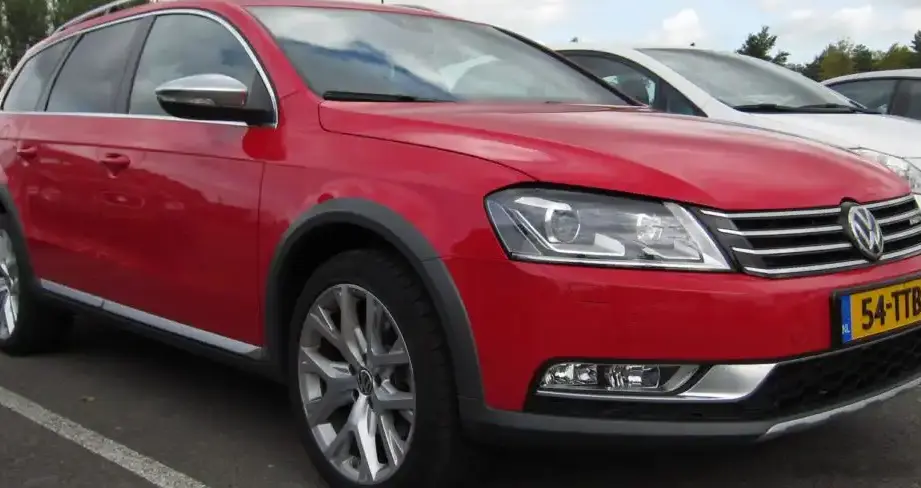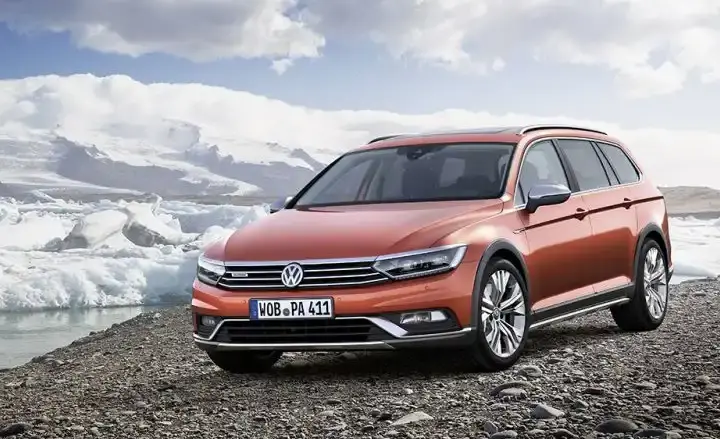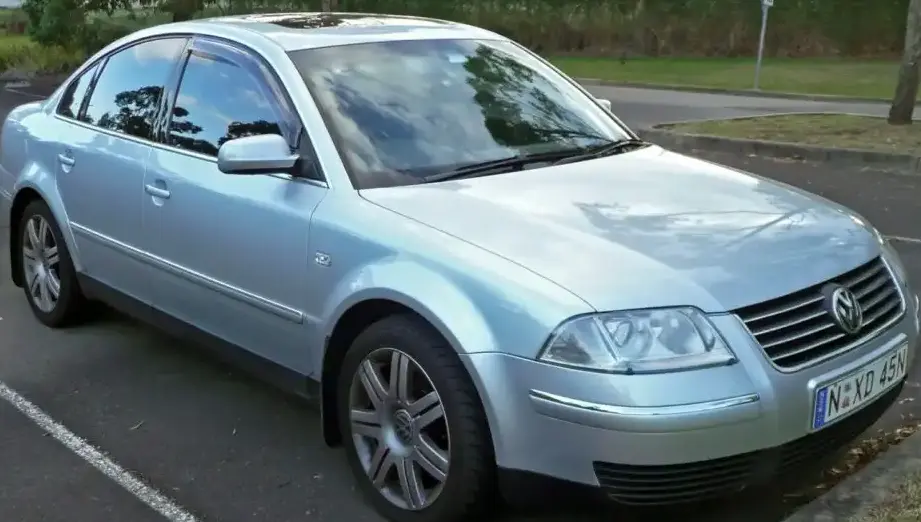
The Volkswagen Passat B5.5 1.9 TDI with 100 horsepower and an automatic transmission represents a significant iteration of Volkswagen’s mid-size offering, produced between 2000 and 2005. This variant occupied a crucial position in the Passat lineup, appealing to buyers seeking fuel efficiency and comfortable, if not overtly sporty, transportation. It was part of the B5.5 generation, a substantial refresh of the B5 Passat, incorporating styling updates, improved interior materials, and revised mechanical components. The 1.9 TDI Automatic was particularly popular in European markets where diesel engines were favored for their economy and torque, but also found a niche following in other regions.
Technical Specifications
| Brand | Volkswagen |
| Model | Passat |
| Generation | Passat (B5.5) |
| Type (Engine) | 1.9 TDI (100 Hp) Automatic |
| Start of production | 2000 year |
| End of production | 2005 year |
| Powertrain Architecture | Internal Combustion engine |
| Body type | Sedan |
| Seats | 5 |
| Doors | 4 |
| Fuel consumption (economy) – urban (NEDC) | 9.6 l/100 km (24.5 US mpg, 29.4 UK mpg, 10.4 km/l) |
| Fuel consumption (economy) – extra urban (NEDC) | 5.4 l/100 km (43.6 US mpg, 52.3 UK mpg, 18.5 km/l) |
| Fuel consumption (economy) – combined (NEDC) | 6.9 l/100 km (34.1 US mpg, 40.9 UK mpg, 14.5 km/l) |
| CO2 emissions (NEDC) | 186 g/km |
| Fuel Type | Diesel |
| Acceleration 0 – 100 km/h | 14.3 sec |
| Acceleration 0 – 62 mph | 14.3 sec |
| Acceleration 0 – 60 mph | 13.6 sec |
| Maximum speed | 185 km/h (114.95 mph) |
| Emission standard | Euro 3 |
| Weight-to-power ratio | 15.8 kg/Hp, 63.5 Hp/tonne |
| Weight-to-torque ratio | 6.3 kg/Nm, 158.7 Nm/tonne |
| Power | 100 Hp @ 4000 rpm |
| Power per litre | 52.7 Hp/l |
| Torque | 250 Nm @ 1900 rpm (184.39 lb.-ft. @ 1900 rpm) |
| Engine layout | Front, Longitudinal |
| Engine Model/Code | AVB |
| Engine displacement | 1896 cm3 (115.7 cu. in.) |
| Number of cylinders | 4 |
| Engine configuration | Inline |
| Cylinder Bore | 79.5 mm (3.13 in.) |
| Piston Stroke | 95.5 mm (3.76 in.) |
| Compression ratio | 19:1 |
| Number of valves per cylinder | 2 |
| Fuel injection system | Pump-nozzle (Unit Injector) |
| Engine aspiration | Turbocharger, Intercooler |
| Valvetrain | SOHC |
| Engine oil capacity | 3.6 l (3.8 US qt | 3.17 UK qt) |
| Coolant | 7 l (7.4 US qt | 6.16 UK qt) |
| Kerb Weight | 1575 kg (3472.28 lbs.) |
| Max. weight | 1980 kg (4365.15 lbs.) |
| Max load | 405 kg (892.87 lbs.) |
| Trunk (boot) space – minimum | 475 l (16.77 cu. ft.) |
| Trunk (boot) space – maximum | 800 l (28.25 cu. ft.) |
| Fuel tank capacity | 62 l (16.38 US gal | 13.64 UK gal) |
| Max. roof load | 100 kg (220.46 lbs.) |
| Permitted trailer load with brakes (12%) | 1400 kg (3086.47 lbs.) |
| Permitted trailer load without brakes | 650 kg (1433 lbs.) |
| Permitted towbar download | 75 kg (165.35 lbs.) |
| Length | 4703 mm (185.16 in.) |
| Width | 1746 mm (68.74 in.) |
| Height | 1462 mm (57.56 in.) |
| Wheelbase | 2703 mm (106.42 in.) |
| Front track | 1515 mm (59.65 in.) |
| Rear (Back) track | 1515 mm (59.65 in.) |
| Minimum turning circle | 11.4 m (37.4 ft.) |
| Drivetrain Architecture | The Internal combustion engine (ICE) drives the front wheels of the vehicle. |
| Drive wheel | Front wheel drive |
| Number of gears and type of gearbox | 4 gears, automatic transmission |
| Front suspension | Independent multi-link suspension, Transverse stabilizer |
| Rear suspension | Trailing arm, Torsion |
| Front brakes | Ventilated discs |
| Rear brakes | Disc |
| Assisting systems | ABS (Anti-lock braking system) |
| Steering type | Steering rack and pinion |
| Power steering | Hydraulic Steering |
| Tires size | 195/65 R15 |
| Wheel rims size | 6J x 15 |
INTRODUCTION
The Volkswagen Passat B5.5 1.9 TDI 100 hp Automatic, produced from 2000 to 2005, was a mainstay of the Passat range. Built on the 1HX0/A3 platform, this variant aimed to provide a balance between fuel economy, practicality, and affordability. It was positioned as an entry-level to mid-range option, appealing to drivers who prioritized efficiency over outright performance. The B5.5 generation represented a significant upgrade over the earlier B5, with revised styling, improved build quality, and enhanced features. This particular engine and transmission combination was especially popular in Europe, where diesel fuel was more readily available and cost-effective.
Powertrain & Engine Architecture
At the heart of this Passat variant lies the 1.9-liter inline-four cylinder diesel engine, designated the AVB engine code. This engine is a direct injection diesel, utilizing Volkswagen’s pump-nozzle (Unit Injector) technology. This system delivers highly pressurized fuel directly into the combustion chamber, improving combustion efficiency and reducing emissions. The engine features a single overhead camshaft (SOHC) valvetrain operating two valves per cylinder. A turbocharger with an intercooler is employed to boost power and torque. The automatic transmission is a conventional four-speed unit, chosen for its ease of use and comfort. While not known for its sportiness, this transmission was reliable and well-suited to the engine’s torque characteristics. The engine’s longitudinal mounting within the engine bay contributes to a balanced weight distribution.
Driving Characteristics
The 1.9 TDI 100 hp Automatic Passat offered a comfortable and relaxed driving experience. Acceleration was adequate for everyday driving, with a 0-60 mph time of around 13.6 seconds. However, it was not a particularly quick car, especially when compared to higher-powered Passat variants like the V6 models. The automatic transmission, while smooth, could feel somewhat sluggish, particularly during kickdown maneuvers. The engine’s strong low-end torque made it well-suited to cruising on highways and tackling inclines. The gear ratios were optimized for fuel efficiency rather than performance. Compared to the manual transmission version of the same engine, the automatic offered less driver engagement but greater convenience. The 1.9 TDI Automatic prioritized usability and fuel economy over sporty handling.
Equipment & Trim Levels
The 1.9 TDI Automatic typically came with a reasonable level of standard equipment. This included power windows, central locking, air conditioning, and an audio system. Interior upholstery was usually cloth, with options for upgraded materials available. Dashboard configuration was fairly standard for the B5.5 generation, with a functional and straightforward layout. Optional extras included alloy wheels, a sunroof, upgraded audio systems, and parking sensors. Trim levels varied depending on the market, but generally, this variant represented a mid-range offering, bridging the gap between the base models and the more luxurious trims.
Chassis & Braking
The Passat B5.5 featured an independent multi-link suspension at the front, providing a comfortable ride and good handling characteristics. The rear suspension utilized a trailing arm torsion beam setup, which was cost-effective and provided adequate stability. Front brakes were ventilated discs, offering good stopping power, while rear brakes were solid discs. Anti-lock Braking System (ABS) was standard. The suspension was tuned for comfort, prioritizing ride quality over sporty handling. Stabilizer bars were fitted to both the front and rear axles to reduce body roll during cornering. The chassis was designed to provide a stable and predictable driving experience.
Market Reception & Comparison
The 1.9 TDI Automatic Passat was generally well-received by critics and consumers alike. It was praised for its fuel efficiency, comfortable ride, and practicality. However, some reviewers noted its lack of outright performance and the somewhat dated feel of the automatic transmission. Compared to the 1.8T petrol engine variants, the 1.9 TDI offered significantly better fuel economy but less power. The higher-output TDI models (like the 130 hp version) provided more performance but at the cost of increased fuel consumption and potentially higher maintenance costs. The 1.9 TDI Automatic represented a sweet spot for buyers seeking a balance between economy and usability.
Legacy
The 1.9 TDI engine, particularly the AVB code, is known for its durability and reliability. With proper maintenance, these engines can accumulate high mileage without major issues. The automatic transmission, while not as robust as some other units, is generally reliable if serviced regularly. Today, the Passat B5.5 1.9 TDI Automatic remains a popular choice in the used car market, particularly for those seeking an affordable and fuel-efficient vehicle. Parts availability is generally good, and the car’s relatively simple mechanical design makes it relatively easy to maintain. However, potential buyers should be aware of the age-related issues common to older vehicles, such as corrosion and wear and tear on suspension components.