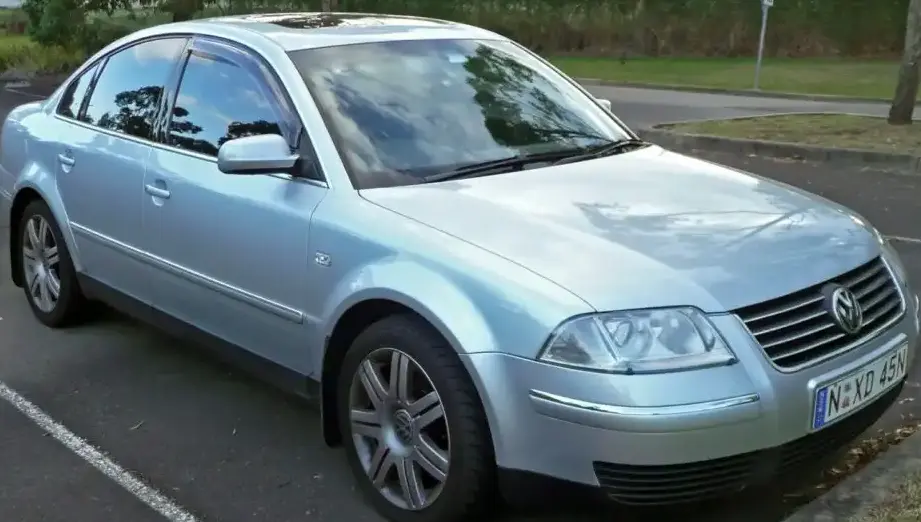
The Volkswagen Passat B5.5 2.5 TDI V6, produced from September 2000 to July 2003, represented a significant mid-cycle refresh of the popular B5 Passat. This variant, powered by a 2.5-liter V6 turbodiesel engine producing 150 horsepower, occupied a premium position within the Passat lineup, offering a blend of performance, refinement, and fuel efficiency. It was primarily marketed in Europe, where diesel engines held a dominant market share, and aimed at buyers seeking a comfortable and capable family sedan with long-distance cruising ability. The B5.5 generation, internally designated as the 3B6, brought styling updates, improved interior materials, and enhanced technology compared to the earlier B5 models.
Technical Specifications
| Brand | Volkswagen |
| Model | Passat |
| Generation | Passat (B5.5) |
| Type (Engine) | 2.5 TDI V6 (150 Hp) |
| Start of production | September, 2000 |
| End of production | July, 2003 |
| Powertrain Architecture | Internal Combustion engine |
| Body type | Sedan |
| Seats | 5 |
| Doors | 4 |
| Fuel consumption (urban) | 10 l/100 km (23.5 US mpg, 28.2 UK mpg, 10 km/l) |
| Fuel consumption (extra urban) | 5.4 l/100 km (43.6 US mpg, 52.3 UK mpg, 18.5 km/l) |
| Fuel consumption (combined) | 7 l/100 km (33.6 US mpg, 40.4 UK mpg, 14.3 km/l) |
| CO2 emissions | 189 g/km |
| Fuel Type | Diesel |
| Acceleration 0 – 100 km/h | 9.6 sec |
| Acceleration 0 – 62 mph | 9.6 sec |
| Acceleration 0 – 60 mph | 9.1 sec |
| Maximum speed | 220 km/h (136.7 mph) |
| Weight-to-power ratio | 11 kg/Hp, 90.7 Hp/tonne |
| Weight-to-torque ratio | 5.3 kg/Nm, 187.4 Nm/tonne |
| Power | 150 Hp @ 4000 rpm |
| Power per litre | 60.1 Hp/l |
| Torque | 310 Nm @ 1500 rpm (228.64 lb.-ft. @ 1500 rpm) |
| Engine layout | Front, Longitudinal |
| Engine Model/Code | AKN |
| Engine displacement | 2496 cm3 (152.32 cu. in.) |
| Number of cylinders | 6 |
| Engine configuration | V-engine |
| Cylinder Bore | 78.3 mm (3.08 in.) |
| Piston Stroke | 86.4 mm (3.4 in.) |
| Compression ratio | 19.5:1 |
| Number of valves per cylinder | 4 |
| Fuel injection system | Direct injection |
| Engine aspiration | Turbocharger, Intercooler |
| Valvetrain | DOHC |
| Engine oil capacity | 5.4 l (5.71 US qt | 4.75 UK qt) |
| Coolant | 10 l (10.57 US qt | 8.8 UK qt) |
| Kerb Weight | 1654 kg (3646.45 lbs.) |
| Max. weight | 2080 kg (4585.62 lbs.) |
| Max load | 426 kg (939.17 lbs.) |
| Trunk (boot) space – minimum | 475 l (16.77 cu. ft.) |
| Trunk (boot) space – maximum | 800 l (28.25 cu. ft.) |
| Fuel tank capacity | 62 l (16.38 US gal | 13.64 UK gal) |
| Max. roof load | 100 kg (220.46 lbs.) |
| Permitted trailer load with brakes (12%) | 1600 kg (3527.4 lbs.) |
| Permitted trailer load without brakes | 750 kg (1653.47 lbs.) |
| Permitted towbar download | 75 kg (165.35 lbs.) |
| Length | 4703 mm (185.16 in.) |
| Width | 1746 mm (68.74 in.) |
| Height | 1462 mm (57.56 in.) |
| Wheelbase | 2702 mm (106.38 in.) |
| Front track | 1515 mm (59.65 in.) |
| Rear (Back) track | 1515 mm (59.65 in.) |
| Minimum turning circle | 11.4 m (37.4 ft.) |
| Drivetrain Architecture | The Internal combustion engine (ICE) drives the front wheels of the vehicle. |
| Drive wheel | Front wheel drive |
| Number of gears and type of gearbox | 6 gears, manual transmission |
| Front suspension | Independent multi-link suspension, Transverse stabilizer |
| Rear suspension | Trailing arm, Torsion |
| Front brakes | Ventilated discs |
| Rear brakes | Disc |
| Assisting systems | ABS (Anti-lock braking system) |
| Steering type | Steering rack and pinion |
| Power steering | Hydraulic Steering |
| Tires size | 225/45 R17 |
| Wheel rims size | 7J x 17 |
Powertrain & Engine Architecture
The heart of the B5.5 2.5 TDI V6 was the AKN engine code, a 2.5-liter, 24-valve, V6 turbodiesel. This engine utilized direct injection technology, injecting fuel directly into the combustion chamber under extremely high pressure. This system, coupled with a variable geometry turbocharger and intercooler, allowed for efficient combustion and a broad torque curve. The engine featured a double overhead camshaft (DOHC) valvetrain, optimizing airflow for improved performance. The 6-speed manual transmission was standard, providing well-spaced gear ratios to maximize the engine’s potential. The engine’s longitudinal mounting allowed for a more balanced weight distribution, contributing to improved handling characteristics.
Driving Characteristics
The 2.5 TDI V6 offered a distinctly different driving experience compared to the lower-powered gasoline engines available in the Passat range. The 310 Nm (228.64 lb-ft) of torque, available from just 1500 rpm, provided strong acceleration in everyday driving situations. While not a sports car, the 9.6-second 0-62 mph acceleration was respectable for a mid-size family sedan of that era. The six-speed manual transmission allowed drivers to keep the engine in its optimal power band, resulting in effortless highway cruising. Compared to the 1.8T gasoline engine, the TDI offered significantly more low-end grunt, making it ideal for towing or navigating hilly terrain. However, it lacked the high-revving character of the gasoline counterpart.
Equipment & Trim Levels
The 2.5 TDI V6 typically came equipped with a generous level of standard features. This included climate control, power windows and mirrors, central locking, and an upgraded audio system. Higher trim levels offered options such as leather upholstery, sunroof, heated seats, and a navigation system. The interior generally featured wood trim accents and comfortable seating, reflecting the premium positioning of this variant. Safety features included ABS brakes, front and side airbags, and a robust chassis structure.
Chassis & Braking
The Passat B5.5 featured an independent multi-link front suspension and a trailing arm rear suspension. This setup provided a good balance between ride comfort and handling precision. The 2.5 TDI V6 models typically came equipped with ventilated disc brakes at the front and solid discs at the rear. The ABS anti-lock braking system was standard, enhancing braking performance and stability. Stabilizer bars were fitted front and rear to reduce body roll during cornering.
Market Reception & Comparison
The 2.5 TDI V6 Passat was well-received by automotive critics for its refined driving experience, strong performance, and excellent fuel economy. It was often praised for its comfortable ride and spacious interior. Compared to the 1.8T gasoline engine, the TDI offered superior fuel efficiency and torque, making it a popular choice for long-distance drivers. However, the TDI was generally more expensive to purchase and maintain due to the complexity of its diesel engine and fuel injection system. The 2.0 TDI variants offered a more economical option, while the more powerful V6 gasoline engines catered to those prioritizing outright performance.
Legacy
The AKN engine, while generally reliable, is known to require diligent maintenance, particularly regarding the fuel injection system and turbocharger. Common issues include injector failures and turbocharger wear. However, with proper care, these engines can provide many years of reliable service. Today, the Passat B5.5 2.5 TDI V6 holds a respectable position in the used car market, appealing to buyers seeking a comfortable, capable, and fuel-efficient sedan with a touch of German engineering. Its robust construction and relatively simple mechanicals make it a viable option for those willing to invest in regular maintenance.