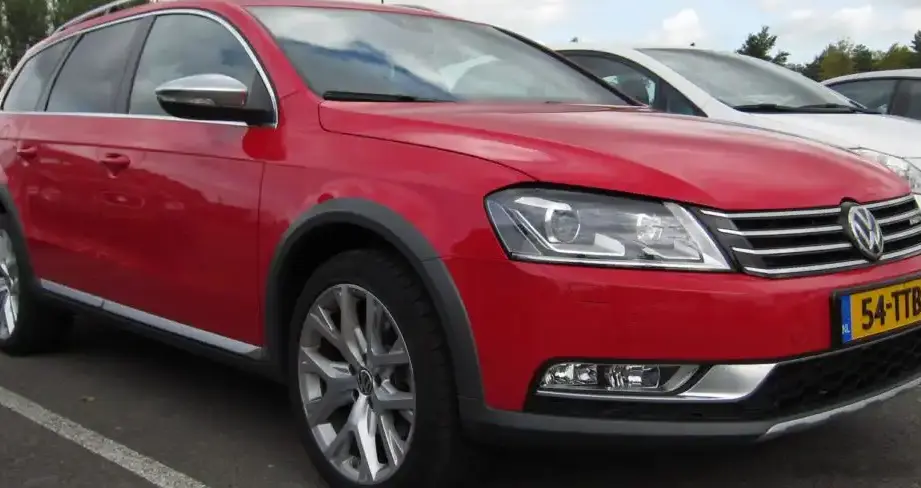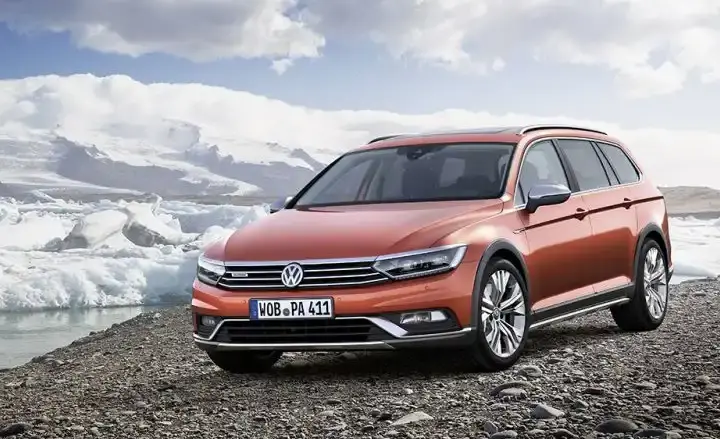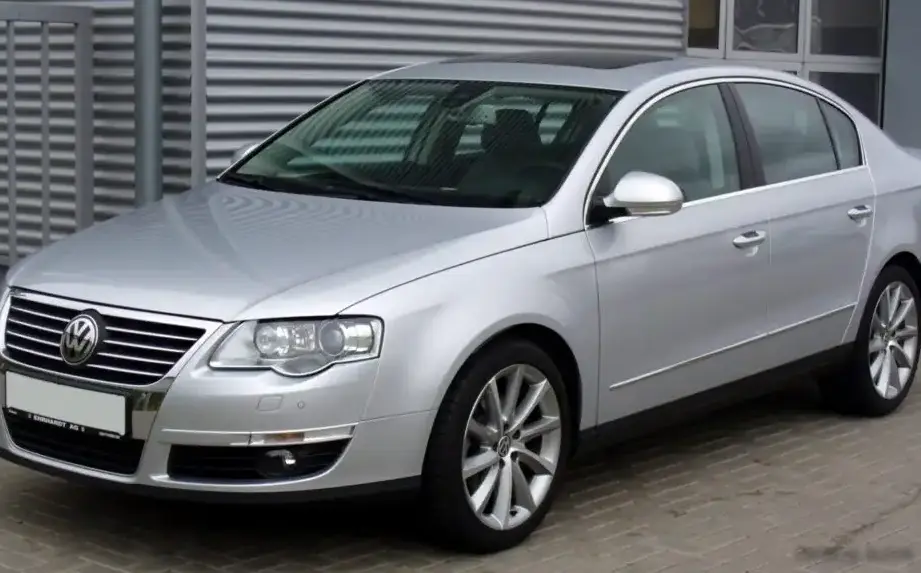
The Volkswagen Passat B6 1.4 TSI (150 hp) EcoFuel DSG, produced from 2009 to 2010, represents a unique offering within the broader B6 Passat range (2005-2010). Positioned as an environmentally conscious option, this variant combined a turbocharged direct-injection petrol engine with the capability to run on Compressed Natural Gas (CNG), paired with Volkswagen’s dual-clutch DSG automatic transmission. It was primarily marketed in European countries with established CNG infrastructure, aiming to appeal to drivers seeking lower running costs and reduced emissions without sacrificing everyday usability. The B6 generation Passat, built on the Volkswagen Group’s B6 platform (shared with models like the Audi A4 and Škoda Superb), aimed to elevate the Passat’s image with improved build quality and a more sophisticated driving experience compared to its predecessor.
Technical Specifications
| Brand | Volkswagen |
| Model | Passat |
| Generation | Passat (B6) |
| Type (Engine) | 1.4 TSI (150 Hp) EcoFuel DSG |
| Start of production | 2009 |
| End of production | 2010 |
| Powertrain Architecture | Internal Combustion engine |
| Body type | Sedan |
| Seats | 5 |
| Doors | 4 |
| Fuel consumption (economy) – urban (NEDC) | 8.8 l/100 km (26.7 US mpg, 32.1 UK mpg, 11.4 km/l) |
| Fuel consumption (economy) – urban (CNG) (NEDC) | 5.7 kg/100 km |
| Fuel consumption (economy) – extra urban (NEDC) | 5.6 l/100 km (42 US mpg, 50.4 UK mpg, 17.9 km/l) |
| Fuel consumption (economy) – extra urban (CNG) (NEDC) | 3.5 kg/100 km |
| Fuel consumption (economy) – combined (NEDC) | 6.8 l/100 km (34.6 US mpg, 41.5 UK mpg, 14.7 km/l) |
| Fuel consumption (economy) – combined (CNG) (NEDC) | 4.4 kg/100 km |
| CO2 emissions (NEDC) | 157 g/km |
| CO2 emissions (CNG) (NEDC) | 119 g/km |
| Fuel Type | Petrol / CNG |
| Acceleration 0 – 100 km/h | 9.8 sec |
| Acceleration 0 – 62 mph | 9.8 sec |
| Acceleration 0 – 60 mph | 9.3 sec |
| Maximum speed | 210 km/h (130.49 mph) |
| Emission standard | Euro 5 |
| Weight-to-power ratio | 10.3 kg/Hp, 97 Hp/tonne |
| Weight-to-torque ratio | 7 kg/Nm, 142.3 Nm/tonne |
| Power | 150 Hp @ 5500 rpm |
| Power per litre | 107.9 Hp/l |
| Torque | 220 Nm @ 1500-4500 rpm (162.26 lb.-ft. @ 1500-4500 rpm) |
| Engine layout | Front, Transverse |
| Engine Model/Code | EA111 / CDGA |
| Engine displacement | 1390 cm3 (84.82 cu. in.) |
| Number of cylinders | 4 |
| Engine configuration | Inline |
| Cylinder Bore | 76.5 mm (3.01 in.) |
| Piston Stroke | 75.6 mm (2.98 in.) |
| Compression ratio | 10:1 |
| Number of valves per cylinder | 4 |
| Fuel injection system | Direct injection and Multi-port manifold injection |
| Engine aspiration | Turbocharging and Supercharger, Intercooler |
| Valvetrain | DOHC |
| Engine oil capacity | 3.6 l (3.8 US qt | 3.17 UK qt) |
| Kerb Weight | 1546 kg (3408.35 lbs.) |
| Max. weight | 2140 kg (4717.89 lbs.) |
| Max load | 594 kg (1309.55 lbs.) |
| Trunk (boot) space – minimum | 485 l (17.13 cu. ft.) |
| Trunk (boot) space – maximum | 1011 l (35.7 cu. ft.) |
| Fuel tank capacity | 31 l (8.19 US gal | 6.82 UK gal) |
| CNG cylinder capacity | 21 kg |
| Max. roof load | 100 kg (220.46 lbs.) |
| Permitted trailer load with brakes (8%) | 1700 kg (3747.86 lbs.) |
| Permitted trailer load with brakes (12%) | 1500 kg (3306.93 lbs.) |
| Permitted trailer load without brakes | 750 kg (1653.47 lbs.) |
| Permitted towbar download | 90 kg (198.42 lbs.) |
| Length | 4765 mm (187.6 in.) |
| Width | 1820 mm (71.65 in.) |
| Width including mirrors | 1991 mm (78.39 in.) |
| Height | 1472 mm (57.95 in.) |
| Wheelbase | 2709 mm (106.65 in.) |
| Front track | 1552 mm (61.1 in.) |
| Rear (Back) track | 1551 mm (61.06 in.) |
| Ride height (ground clearance) | 114 mm (4.49 in.) |
| Minimum turning circle (turning diameter) | 11.4 m (37.4 ft.) |
| Approach angle | 14.4° |
| Departure angle | 12.6° |
| Ramp-over (brakeover) angle | 10.8° |
| Drivetrain Architecture | The Internal combustion engine (ICE) drives the front wheels of the vehicle. |
| Drive wheel | Front wheel drive |
| Number of gears and type of gearbox | 7 gears, automatic transmission DSG |
| Front suspension | Independent type McPherson, Transverse stabilizer |
| Rear suspension | Independent multi-link suspension, Transverse stabilizer |
| Front brakes | Ventilated discs |
| Rear brakes | Disc |
| Assisting systems | ABS (Anti-lock braking system) |
| Steering type | Steering rack and pinion |
| Power steering | Electric Steering |
| Tires size | 205/55 R 16 |
| Wheel rims size | 6.5 J x 16 |
Powertrain & Engine Architecture
The heart of this Passat variant is the EA111 1.4-liter turbocharged direct-injection (TSI) engine, specifically the CDGA engine code. This engine is notable for its combination of a turbocharger *and* a supercharger – a relatively uncommon setup. The supercharger provides immediate boost at low engine speeds, eliminating turbo lag, while the turbocharger takes over at higher RPMs for sustained power delivery. Fuel is delivered via both direct injection (for efficiency and precise control) and multi-port manifold injection (to aid in throttle response and intake valve cooling). The engine features a double overhead camshaft (DOHC) valvetrain with four valves per cylinder. The EcoFuel designation indicates the engine’s capability to run on CNG. When running on CNG, the engine management system adjusts fuel delivery and ignition timing to optimize combustion for the alternative fuel. The 7-speed DSG (Direct-Shift Gearbox) automatic transmission provides quick and smooth gear changes, contributing to both performance and fuel efficiency. This transmission utilizes two clutches to pre-select the next gear, minimizing interruption in power delivery.
Driving Characteristics
The 150 hp output, coupled with the DSG transmission, provided adequate performance for everyday driving. Acceleration from 0-60 mph took around 9.3 seconds, and top speed was 130.49 mph. While not a sports car, the engine’s dual-charging system ensured a responsive feel, particularly at lower speeds. The DSG transmission’s quick shifts enhanced the driving experience, making overtaking maneuvers relatively effortless. Compared to the standard 1.4 TSI petrol version, the EcoFuel model offered similar performance, but with the added flexibility of running on CNG. Compared to higher-output Passat variants like the 2.0 TSI, this engine felt less powerful, but it offered significantly better fuel economy, especially when utilizing CNG. The automatic transmission, while convenient, didn’t offer the same level of driver engagement as a manual gearbox.
Equipment & Trim Levels
The 1.4 TSI EcoFuel DSG typically came with a reasonable level of standard equipment, reflecting its position as a mid-range offering. Standard features often included air conditioning, an integrated radio/CD player, power windows, power mirrors, and ABS brakes. Interior upholstery was typically cloth, with options for upgraded materials. Available optional extras included alloy wheels, a sunroof, parking sensors, and a more advanced infotainment system. The specific trim level (Trendline, Comfortline, Highline) influenced the standard equipment and available options.
Chassis & Braking
The Passat B6 utilized an independent McPherson strut suspension at the front and an independent multi-link suspension at the rear, providing a comfortable ride and good handling characteristics. Stabilizer bars were fitted to both axles to reduce body roll during cornering. Brakes consisted of ventilated discs at the front and solid discs at the rear. ABS (Anti-lock Braking System) was standard, enhancing braking performance and stability. The suspension setup was tuned to prioritize comfort over outright sportiness, making it well-suited for long-distance cruising.
Market Reception & Comparison
The 1.4 TSI EcoFuel DSG Passat was generally well-received by critics as a practical and environmentally conscious option. Its ability to run on CNG was a major selling point in countries with established CNG infrastructure. Fuel economy was a key advantage, particularly when running on CNG, which was often significantly cheaper than petrol. However, some reviewers noted that the engine could feel strained when fully loaded or driving uphill. Compared to the 2.0 TDI diesel variants, the EcoFuel model offered a different driving experience, with a more responsive engine but potentially higher running costs if CNG wasn’t readily available or competitively priced. Reliability was generally good, although the complex dual-charging system required careful maintenance.
Legacy
The 1.4 TSI EcoFuel engine represented Volkswagen’s early efforts to offer alternative fuel vehicles. While the B6 Passat EcoFuel is no longer in production, it paved the way for future CNG and alternative fuel models. On the used car market, these models are relatively rare, and their value depends on condition, mileage, and the availability of CNG refueling stations in the area. The EA111 engine, while generally reliable, requires regular maintenance, including oil changes and spark plug replacements. The DSG transmission also requires periodic servicing to ensure smooth operation. The Passat B6 1.4 TSI EcoFuel remains a unique and interesting variant within the B6 Passat lineup, appealing to drivers seeking a blend of efficiency, practicality, and environmental responsibility.