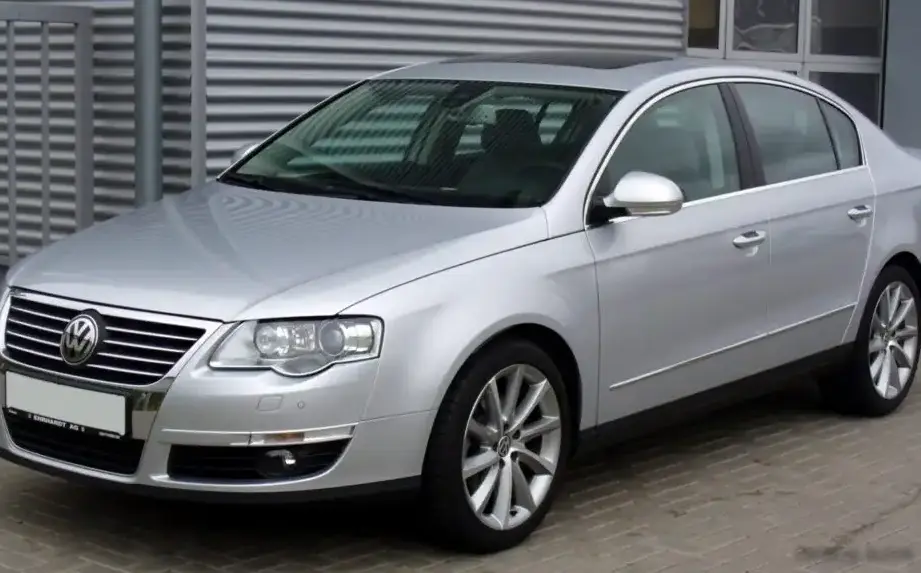
The Volkswagen Passat B6 1.8 TSI (160 hp) represents a significant iteration of Volkswagen’s mid-size sedan, produced between October 2008 and July 2010. Positioned as a mainstream offering within the B6 generation (2005-2010), this variant aimed to balance performance, fuel efficiency, and affordability. It served as a key model in the European market, where the Passat consistently ranked among the best-selling vehicles in its class. The B6 Passat, built on the Volkswagen B6 platform (shared with models like the Audi A4 and Škoda Superb of the same era), offered a more refined and technologically advanced package compared to its predecessor, the B5 Passat.
Technical Specifications
| Brand | Volkswagen |
| Model | Passat |
| Generation | Passat (B6) |
| Type (Engine) | 1.8 TSI (160 Hp) |
| Start of production | October, 2008 |
| End of production | July, 2010 |
| Powertrain Architecture | Internal Combustion engine |
| Body type | Sedan |
| Seats | 5 |
| Doors | 4 |
| Fuel consumption (urban) | 10.2 l/100 km (23.1 US mpg, 27.7 UK mpg, 9.8 km/l) |
| Fuel consumption (extra urban) | 6 l/100 km (39.2 US mpg, 47.1 UK mpg, 16.7 km/l) |
| Fuel consumption (combined) | 7.6 l/100 km (30.9 US mpg, 37.2 UK mpg, 13.2 km/l) |
| Fuel Type | Petrol (Gasoline) |
| Acceleration 0 – 100 km/h | 8.6 sec |
| Acceleration 0 – 62 mph | 8.6 sec |
| Acceleration 0 – 60 mph | 8.2 sec |
| Maximum speed | 220 km/h (136.7 mph) |
| Emission standard | Euro 4 |
| Weight-to-power ratio | 8.4 kg/Hp, 119.2 Hp/tonne |
| Weight-to-torque ratio | 5.4 kg/Nm, 186.3 Nm/tonne |
| Power | 160 Hp @ 5000 rpm |
| Power per litre | 89 Hp/l |
| Torque | 250 Nm @ 1500 rpm (184.39 lb.-ft. @ 1500 rpm) |
| Engine layout | Front, Transverse |
| Engine Model/Code | CDAA |
| Engine displacement | 1798 cm3 (109.72 cu. in.) |
| Number of cylinders | 4 |
| Engine configuration | Inline |
| Cylinder Bore | 82.5 mm (3.25 in.) |
| Piston Stroke | 84.1 mm (3.31 in.) |
| Compression ratio | 9.6:1 |
| Number of valves per cylinder | 4 |
| Fuel injection system | Direct injection |
| Engine aspiration | Turbocharger, Intercooler |
| Valvetrain | DOHC |
| Engine oil capacity | 4.7 l (4.97 US qt | 4.14 UK qt) |
| Coolant | 5.6 l (5.92 US qt | 4.93 UK qt) |
| Kerb Weight | 1342 kg (2958.6 lbs.) |
| Max. weight | 2050 kg (4519.48 lbs.) |
| Max load | 708 kg (1560.87 lbs.) |
| Trunk (boot) space – minimum | 565 l (19.95 cu. ft.) |
| Trunk (boot) space – maximum | 1091 l (38.53 cu. ft.) |
| Fuel tank capacity | 70 l (18.49 US gal | 15.4 UK gal) |
| Max. roof load | 100 kg (220.46 lbs.) |
| Permitted trailer load with brakes (8%) | 1700 kg (3747.86 lbs.) |
| Permitted trailer load with brakes (12%) | 1500 kg (3306.93 lbs.) |
| Permitted trailer load without brakes | 740 kg (1631.42 lbs.) |
| Permitted towbar download | 90 kg (198.42 lbs.) |
| Length | 4765 mm (187.6 in.) |
| Width | 1820 mm (71.65 in.) |
| Width including mirrors | 1991 mm (78.39 in.) |
| Height | 1472 mm (57.95 in.) |
| Wheelbase | 2709 mm (106.65 in.) |
| Front track | 1552 mm (61.1 in.) |
| Rear (Back) track | 1551 mm (61.06 in.) |
| Front overhang | 965 mm (37.99 in.) |
| Rear overhang | 1091 mm (42.95 in.) |
| Ride height (ground clearance) | 114 mm (4.49 in.) |
| Drag coefficient (Cd) | 0.281 |
| Minimum turning circle (turning diameter) | 11.4 m (37.4 ft.) |
| Approach angle | 14.4° |
| Departure angle | 12.6° |
| Ramp-over (brakeover) angle | 10.8° |
| Drivetrain Architecture | The Internal combustion engine (ICE) drives the front wheels of the vehicle. |
| Drive wheel | Front wheel drive |
| Number of gears and type of gearbox | 6 gears, manual transmission |
| Front suspension | Spring Strut |
| Rear suspension | Coil spring |
| Front brakes | Ventilated discs |
| Rear brakes | Disc |
| Assisting systems | ABS (Anti-lock braking system) |
| Steering type | Steering rack and pinion |
| Power steering | Electric Steering |
| Tires size | 215/55 R16 |
| Wheel rims size | 6.5J x 16 |
Powertrain & Engine Architecture
The heart of the Passat B6 1.8 TSI was the CDAA engine code, a 1.8-liter inline-four cylinder engine featuring direct fuel injection and a turbocharger with an intercooler. This engine was part of Volkswagen’s TSI (Turbocharged Stratified Injection) family, known for its blend of power and efficiency. The direct injection system allowed for precise fuel delivery, optimizing combustion and reducing emissions. The turbocharger boosted power output, providing 160 horsepower at 5000 rpm and 250 Nm (184 lb-ft) of torque from as low as 1500 rpm. This engine utilized a dual overhead camshaft (DOHC) valvetrain with four valves per cylinder, further enhancing its breathing and performance. The 6-speed manual transmission was standard, offering precise gear changes and contributing to the car’s overall driving experience.
Driving Characteristics
The 1.8 TSI engine, paired with the 6-speed manual transmission, provided a respectable driving experience. Acceleration from 0 to 60 mph took approximately 8.2 seconds, and the car had a top speed of 136.7 mph. While not a sports car, the engine delivered sufficient power for everyday driving and overtaking maneuvers. The turbocharger provided a noticeable boost in power, but turbo lag was present, particularly at lower engine speeds. The manual transmission allowed for greater driver control, but the gear ratios were tuned for fuel efficiency rather than outright performance. Compared to the more powerful 2.0 TSI or the diesel-powered TDI variants, the 1.8 TSI offered a more economical and accessible option, albeit with less thrilling acceleration.
Equipment & Trim Levels
The 1.8 TSI trim typically included standard features such as air conditioning, power windows, power mirrors, a CD stereo system, and alloy wheels. Safety features included ABS, front and side airbags, and electronic stability control. Optional extras included a sunroof, leather upholstery, a navigation system, and upgraded audio systems. The interior was generally well-appointed, with a focus on practicality and comfort. The dashboard layout was clean and functional, with easy-to-read gauges and controls. Trim levels varied slightly depending on the market, but the 1.8 TSI generally represented a mid-range offering, bridging the gap between the base models and the more luxurious trims.
Chassis & Braking
The Passat B6 featured a MacPherson strut front suspension and a multi-link rear suspension, providing a comfortable and controlled ride. The suspension was tuned to prioritize comfort over sporty handling, but it still offered decent body control in corners. The braking system consisted of ventilated discs at the front and solid discs at the rear, providing adequate stopping power. ABS (Anti-lock Braking System) was standard, enhancing safety during emergency braking situations. The steering was a rack-and-pinion system with electric power assistance, offering a light and precise feel.
Market Reception & Comparison
The Passat B6 1.8 TSI was generally well-received by automotive critics. It was praised for its fuel efficiency, comfortable ride, and spacious interior. However, some critics noted that the engine lacked the punch of the more powerful TSI variants. Compared to the 2.0 TSI, the 1.8 TSI offered better fuel economy but less performance. The diesel-powered TDI models provided even better fuel economy and strong low-end torque, but they came with a higher price tag and potential maintenance concerns. The 1.8 TSI appealed to buyers who prioritized fuel efficiency and affordability without sacrificing too much performance.
Legacy
The Volkswagen Passat B6 1.8 TSI has proven to be a relatively reliable vehicle, with the CDAA engine generally considered durable. However, like any turbocharged engine, it requires regular maintenance, including oil changes and spark plug replacements. Common issues include occasional turbocharger failures and problems with the fuel injectors. In the used car market, the B6 Passat 1.8 TSI remains a popular choice, offering a good balance of value, comfort, and fuel efficiency. Its relatively simple mechanical design and readily available parts make it a relatively affordable car to maintain, contributing to its continued appeal among budget-conscious buyers.