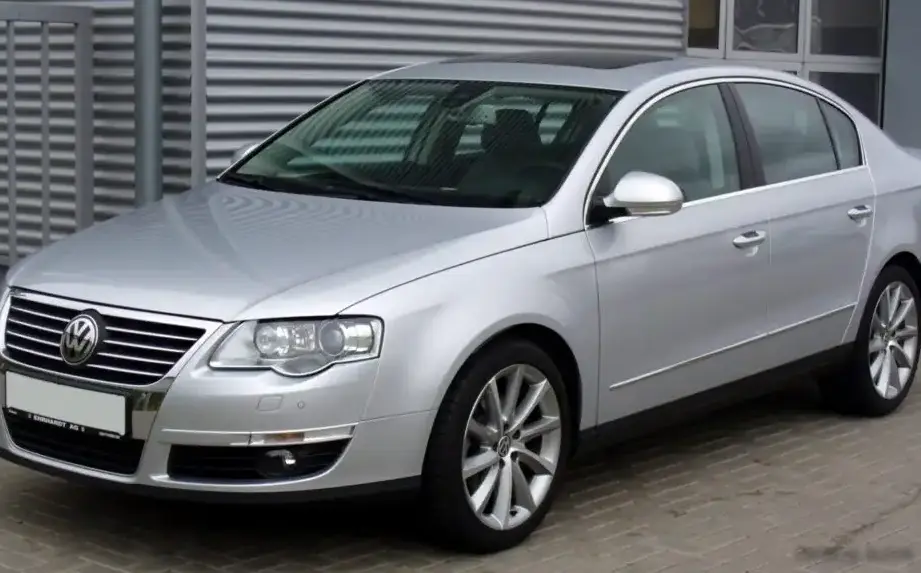
The Volkswagen Passat B6 2.0 BlueTDI (143 hp) represents a significant iteration of Volkswagen’s mid-size executive car, produced between January 2009 and July 2010. This variant occupied a key position within the B6 generation (2005-2010), offering a balance between fuel efficiency, performance, and refinement. Positioned as a mainstream offering within the Passat range, it aimed to appeal to buyers seeking a comfortable and economical diesel-powered sedan. The B6 Passat itself was a crucial model for Volkswagen, building upon the success of its predecessor and establishing a stronger presence in the competitive European and global markets. It was built on the Volkswagen Group’s B6 platform, shared with models like the Audi A4 and Škoda Superb.
Technical Specifications
| Brand | Volkswagen |
| Model | Passat |
| Generation | Passat (B6) |
| Type (Engine) | 2.0 BlueTDI (143 Hp) |
| Start of production | January, 2009 |
| End of production | July, 2010 |
| Powertrain Architecture | Internal Combustion engine |
| Body type | Sedan |
| Seats | 5 |
| Doors | 4 |
| Fuel consumption (urban) | 6.8 l/100 km (34.6 US mpg, 41.5 UK mpg, 14.7 km/l) |
| Fuel consumption (extra urban) | 4.4 l/100 km (53.5 US mpg, 64.2 UK mpg, 22.7 km/l) |
| Fuel consumption (combined) | 5.2 l/100 km (45.2 US mpg, 54.3 UK mpg, 19.2 km/l) |
| CO2 emissions | 137 g/km |
| Fuel Type | Diesel |
| Acceleration 0 – 100 km/h | 9.9 sec |
| Acceleration 0 – 62 mph | 9.9 sec |
| Acceleration 0 – 60 mph | 9.4 sec |
| Maximum speed | 210 km/h (130.49 mph) |
| Emission standard | Euro 6 |
| Weight-to-power ratio | 10.4 kg/Hp, 96.5 Hp/tonne |
| Weight-to-torque ratio | 4.2 kg/Nm, 236.2 Nm/tonne |
| Power | 143 Hp @ 4200 rpm |
| Power per litre | 72.7 Hp/l |
| Torque | 350 Nm @ 1750-2500 rpm (258.15 lb.-ft. @ 1750-2500 rpm) |
| Engine layout | Front, Transverse |
| Engine Model/Code | CBAC |
| Engine displacement | 1968 cm3 (120.09 cu. in.) |
| Number of cylinders | 4 |
| Engine configuration | Inline |
| Cylinder Bore | 81 mm (3.19 in.) |
| Piston Stroke | 95.5 mm (3.76 in.) |
| Number of valves per cylinder | 4 |
| Fuel injection system | Diesel Commonrail |
| Engine aspiration | Turbocharger, Intercooler |
| Valvetrain | DOHC |
| Engine oil capacity | 4 l (4.23 US qt | 3.52 UK qt) |
| Coolant | 8 l (8.45 US qt | 7.04 UK qt) |
| Kerb Weight | 1482 kg (3267.25 lbs.) |
| Max. weight | 2120 kg (4673.8 lbs.) |
| Max load | 638 kg (1406.55 lbs.) |
| Trunk (boot) space – minimum | 565 l (19.95 cu. ft.) |
| Trunk (boot) space – maximum | 1091 l (38.53 cu. ft.) |
| Fuel tank capacity | 70 l (18.49 US gal | 15.4 UK gal) |
| Max. roof load | 100 kg (220.46 lbs.) |
| Permitted trailer load with brakes (8%) | 2000 kg (4409.25 lbs.) |
| Permitted trailer load with brakes (12%) | 1800 kg (3968.32 lbs.) |
| Permitted trailer load without brakes | 750 kg (1653.47 lbs.) |
| Permitted towbar download | 90 kg (198.42 lbs.) |
| Length | 4765 mm (187.6 in.) |
| Width | 1820 mm (71.65 in.) |
| Width including mirrors | 1991 mm (78.39 in.) |
| Height | 1472 mm (57.95 in.) |
| Wheelbase | 2709 mm (106.65 in.) |
| Front track | 1552 mm (61.1 in.) |
| Rear (Back) track | 1551 mm (61.06 in.) |
| Drag coefficient (Cd) | 0.281 |
| Minimum turning circle (turning diameter) | 11.4 m (37.4 ft.) |
| Drivetrain Architecture | The Internal combustion engine (ICE) drives the front wheels of the vehicle. |
| Drive wheel | Front wheel drive |
| Number of gears and type of gearbox | 6 gears, manual transmission |
| Front suspension | Spring Strut |
| Rear suspension | Coil spring |
| Front brakes | Ventilated discs |
| Rear brakes | Disc |
| Assisting systems | ABS (Anti-lock braking system) |
| Steering type | Steering rack and pinion |
| Tires size | 205/55 R16 |
| Wheel rims size | 6.5J x 16 |
Powertrain & Engine Architecture
The heart of the Passat 2.0 BlueTDI is the CBAC engine code, a 1968cc inline-four cylinder diesel engine. This engine is a member of Volkswagen’s common rail direct injection (CRDI) diesel family. The “BlueTDI” designation signifies the inclusion of advanced emissions control technologies, including a diesel particulate filter (DPF) and, in many cases, selective catalytic reduction (SCR) systems utilizing AdBlue (Diesel Exhaust Fluid) to reduce NOx emissions, allowing it to meet the stringent Euro 6 standards. The engine utilizes a turbocharger with an intercooler to boost power and efficiency. The DOHC (Double Overhead Camshaft) valvetrain ensures efficient gas exchange. Fuel is delivered via a high-pressure common rail system, enabling precise fuel metering and optimized combustion. The engine produces 143 horsepower at 4200 rpm and 350 Nm (258 lb-ft) of torque between 1750 and 2500 rpm. This torque curve provides strong low-end and mid-range acceleration, making it well-suited for everyday driving and highway cruising.
Driving Characteristics
The 2.0 BlueTDI with a manual transmission delivers a composed and refined driving experience. While not overtly sporty, the engine provides ample power for confident overtaking and merging. The 9.9-second 0-62 mph acceleration is respectable for a mainstream diesel sedan. The six-speed manual gearbox is well-matched to the engine’s characteristics, offering smooth shifts and allowing the driver to keep the engine within its optimal torque band. Compared to the more powerful 2.0 TDI variants (often exceeding 170 hp), this version prioritizes fuel economy over outright performance. The lower power output also results in slightly less stress on the drivetrain components, potentially contributing to improved long-term reliability. Compared to the petrol engines available in the B6 Passat, the 2.0 BlueTDI offers significantly better fuel economy, making it a popular choice for high-mileage drivers.
Equipment & Trim Levels
The 2.0 BlueTDI typically came equipped with a solid base level of features. Standard equipment often included air conditioning, power windows, central locking, an integrated audio system, and alloy wheels. Higher trim levels, such as Trendline, Comfortline, and Highline, added features like automatic climate control, upgraded upholstery, parking sensors, and a navigation system. Interior upholstery was typically cloth, with leather options available on higher trims. The dashboard layout was functional and well-designed, with a focus on ergonomics. Optional extras included a sunroof, heated seats, and a premium audio system.
Chassis & Braking
The B6 Passat features a MacPherson strut front suspension and a multi-link rear suspension, providing a comfortable and controlled ride. The suspension was tuned to prioritize comfort over sporty handling. The 2.0 BlueTDI variants typically used ventilated disc brakes at the front and solid disc brakes at the rear. Anti-lock Braking System (ABS) was standard. The steering is a rack-and-pinion system, providing precise and responsive steering feel. Stabilizer bars were fitted to both the front and rear axles to reduce body roll during cornering.
Market Reception & Comparison
The Passat 2.0 BlueTDI was generally well-received by automotive critics. It was praised for its fuel efficiency, comfortable ride, and refined engine. Critics noted that while not the most exciting car to drive, it offered a practical and sensible choice for buyers seeking a reliable and economical mid-size sedan. Compared to other trims in the Passat lineup, the 2.0 BlueTDI offered the best balance between fuel economy and performance for many drivers. Its fuel economy figures were competitive with other diesel-powered vehicles in its class. Reliability was generally good, although the DPF and other emissions control systems could require maintenance over time.
Legacy
The Volkswagen Passat B6 2.0 BlueTDI has proven to be a durable and reliable vehicle. On the used car market, these models remain popular due to their fuel efficiency and relatively low running costs. The CBAC engine, while requiring regular maintenance (particularly regarding the DPF and EGR systems), is generally considered robust. However, potential buyers should be aware of the potential for issues with the DPF, turbocharger, and fuel injectors. Overall, the Passat 2.0 BlueTDI represents a well-engineered and practical choice for those seeking a comfortable and economical mid-size sedan.