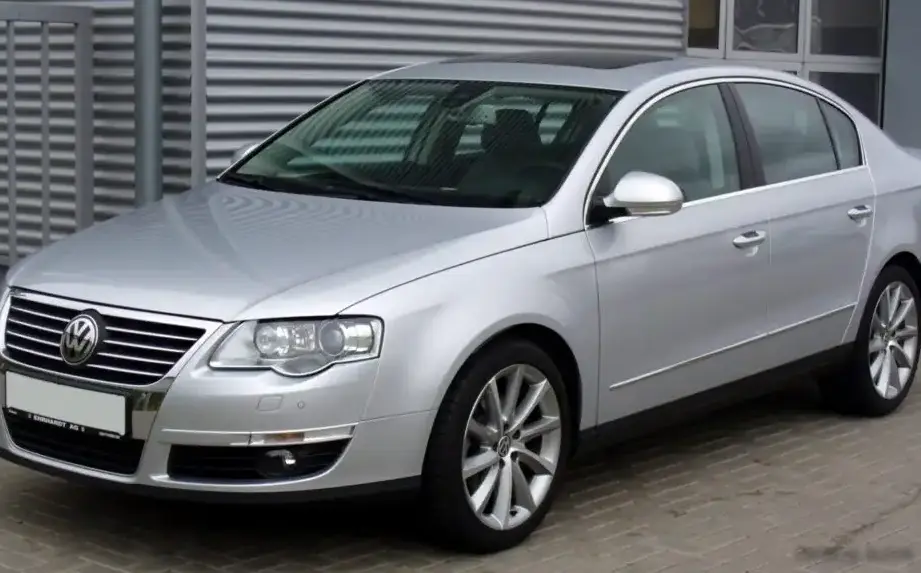
The Volkswagen Passat B6, produced from 2005 to 2010, represented a significant step forward for Volkswagen’s mid-size offering. The 2.0 FSI variant, specifically the 150 horsepower version available from February 2005 to October 2007, occupied a key position in the lineup, bridging the gap between the more economical base engines and the performance-oriented models. Built on the Volkswagen Group’s B6 platform (shared with the Audi A4 and Škoda Superb of the era), the B6 Passat aimed to deliver a more refined and sophisticated experience than its predecessor, focusing on build quality, technology, and driving dynamics. This particular 2.0 FSI engine and six-speed manual transmission combination was a popular choice in European markets, offering a balance of performance and fuel efficiency.
Technical Specifications
| Brand | Volkswagen |
| Model | Passat |
| Generation | Passat (B6) |
| Type (Engine) | 2.0 FSI (150 Hp) |
| Start of production | February, 2005 |
| End of production | October, 2007 |
| Powertrain Architecture | Internal Combustion engine |
| Body type | Sedan |
| Seats | 5 |
| Doors | 4 |
| Fuel consumption (urban) | 11.3 l/100 km (20.8 US mpg, 25 UK mpg, 8.8 km/l) |
| Fuel consumption (extra urban) | 6.4 l/100 km (36.8 US mpg, 44.1 UK mpg, 15.6 km/l) |
| Fuel consumption (combined) | 8.2 l/100 km (28.7 US mpg, 34.4 UK mpg, 12.2 km/l) |
| Fuel Type | Petrol (Gasoline) |
| Acceleration 0 – 100 km/h | 9.4 sec |
| Acceleration 0 – 62 mph | 9.4 sec |
| Acceleration 0 – 60 mph | 8.9 sec |
| Maximum speed | 213 km/h (132.35 mph) |
| Emission standard | Euro 4 |
| Weight-to-power ratio | 8.8 kg/Hp, 114.2 Hp/tonne |
| Weight-to-torque ratio | 6.6 kg/Nm, 152.2 Nm/tonne |
| Power | 150 Hp @ 6000 rpm |
| Power per litre | 75.6 Hp/l |
| Torque | 200 Nm @ 3500 rpm (147.51 lb.-ft. @ 3500 rpm) |
| Engine layout | Front, Transverse |
| Engine Model/Code | BLR |
| Engine displacement | 1984 cm3 (121.07 cu. in.) |
| Number of cylinders | 4 |
| Engine configuration | Inline |
| Cylinder Bore | 82.5 mm (3.25 in.) |
| Piston Stroke | 92.8 mm (3.65 in.) |
| Compression ratio | 11.5:1 |
| Number of valves per cylinder | 4 |
| Fuel injection system | Direct injection |
| Engine aspiration | Naturally aspirated engine |
| Valvetrain | DOHC |
| Engine oil capacity | 4.6 l (4.86 US qt | 4.05 UK qt) |
| Coolant | 8 l (8.45 US qt | 7.04 UK qt) |
| Kerb Weight | 1314 kg (2896.87 lbs.) |
| Max. weight | 2000 kg (4409.25 lbs.) |
| Max load | 686 kg (1512.37 lbs.) |
| Trunk (boot) space – minimum | 565 l (19.95 cu. ft.) |
| Trunk (boot) space – maximum | 1091 l (38.53 cu. ft.) |
| Fuel tank capacity | 70 l (18.49 US gal | 15.4 UK gal) |
| Max. roof load | 100 kg (220.46 lbs.) |
| Permitted trailer load with brakes (12%) | 1500 kg (3306.93 lbs.) |
| Permitted trailer load without brakes | 730 kg (1609.37 lbs.) |
| Permitted towbar download | 85 kg (187.39 lbs.) |
| Length | 4765 mm (187.6 in.) |
| Width | 1820 mm (71.65 in.) |
| Width including mirrors | 1991 mm (78.39 in.) |
| Height | 1472 mm (57.95 in.) |
| Wheelbase | 2709 mm (106.65 in.) |
| Front track | 1552 mm (61.1 in.) |
| Rear (Back) track | 1551 mm (61.06 in.) |
| Front overhang | 965 mm (37.99 in.) |
| Rear overhang | 1091 mm (42.95 in.) |
| Ride height (ground clearance) | 114 mm (4.49 in.) |
| Drag coefficient (Cd) | 0.281 |
| Minimum turning circle (turning diameter) | 11.4 m (37.4 ft.) |
| Approach angle | 14.4° |
| Departure angle | 12.6° |
| Ramp-over (brakeover) angle | 10.8° |
| Drivetrain Architecture | The Internal combustion engine (ICE) drives the front wheels of the vehicle. |
| Drive wheel | Front wheel drive |
| Number of gears and type of gearbox | 6 gears, manual transmission |
| Front suspension | Spring Strut |
| Rear suspension | Coil spring |
| Front brakes | Ventilated discs |
| Rear brakes | Disc |
| Assisting systems | ABS (Anti-lock braking system) |
| Steering type | Steering rack and pinion |
| Tires size | 215/55 R16 |
| Wheel rims size | 6.5J x 16 |
Powertrain & Engine Architecture
The heart of this Passat variant is the 2.0-liter inline-four cylinder engine, designated BLR. This engine is a member of Volkswagen’s FSI (Fuel Stratified Injection) family, utilizing direct fuel injection. Direct injection allows for more precise fuel delivery, resulting in improved fuel economy and increased power output compared to traditional port fuel injection systems. The BLR engine features a double overhead camshaft (DOHC) valvetrain with four valves per cylinder, optimizing airflow for enhanced performance. The engine’s 11.5:1 compression ratio contributes to its efficiency. Paired with the engine was a robust six-speed manual transmission, providing precise gear changes and contributing to the car’s overall driving experience. The transmission’s gear ratios were tuned to balance acceleration and fuel efficiency, with a relatively long sixth gear for comfortable highway cruising.
Driving Characteristics
The 150 horsepower 2.0 FSI Passat offered a respectable level of performance for everyday driving. Acceleration from 0-60 mph took approximately 8.9 seconds, and it could reach a top speed of 132.35 mph. While not a sports car, the engine provided sufficient power for overtaking maneuvers and maintaining comfortable speeds on the highway. The six-speed manual transmission allowed drivers to keep the engine in its optimal power band, enhancing responsiveness. Compared to the base 1.6-liter engine, the 2.0 FSI offered a noticeable improvement in performance. However, it didn’t possess the outright punch of the more powerful 2.8-liter V6 or the torque of the diesel options like the 2.0 TDI.
Equipment & Trim Levels
The 2.0 FSI trim typically included standard features such as air conditioning, power windows, power mirrors, and a basic audio system. Higher trim levels, often denoted by designations like ‘Trendline’ or ‘Comfortline’, added features like alloy wheels, upgraded audio systems, automatic climate control, and parking sensors. Interior upholstery was typically cloth, with leather options available as an upgrade. The dashboard layout was functional and well-designed, with a focus on ergonomics. Optional extras included a sunroof, navigation system, and heated seats.
Chassis & Braking
The Passat B6 utilized a MacPherson strut front suspension and a multi-link rear suspension, providing a comfortable and controlled ride. The suspension was tuned to balance handling and ride comfort, making it suitable for both city driving and long-distance journeys. Braking duties were handled by ventilated discs at the front and solid discs at the rear, equipped with ABS (Anti-lock Braking System) as standard. The braking system provided adequate stopping power for the vehicle’s weight and performance.
Market Reception & Comparison
The 2.0 FSI Passat was generally well-received by automotive critics. It was praised for its refined engine, comfortable ride, and spacious interior. Fuel economy was considered competitive for its class, and the direct injection technology was seen as a positive step forward. Compared to the diesel variants, the 2.0 FSI offered a different driving experience, with a more linear power delivery and a higher-revving engine. However, the diesel models typically offered superior fuel economy and torque. The 2.0 FSI was often seen as a good all-rounder, appealing to buyers who wanted a balance of performance, efficiency, and comfort.
Legacy
The BLR engine, while generally reliable, has been known to exhibit some issues related to carbon buildup on the intake valves, a common problem with direct injection engines. Regular maintenance, including the use of high-quality fuel and occasional intake valve cleaning, can help mitigate this issue. Today, the Passat B6 2.0 FSI represents a solid used car option, offering a good level of equipment and a comfortable driving experience. Its relatively affordable price and readily available parts make it an attractive choice for budget-conscious buyers. However, potential buyers should be aware of the potential for carbon buildup and ensure that the vehicle has been properly maintained.