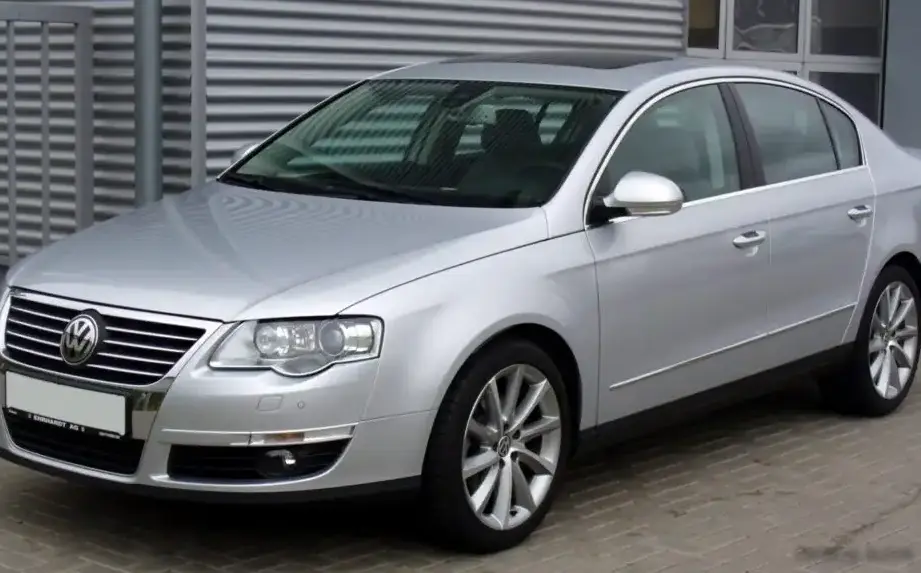
The Volkswagen Passat B6 2.0 TDI with 170 horsepower and a Direct-Shift Gearbox (DSG) represents a significant iteration of Volkswagen’s mid-size offering, produced from March 2008 to July 2010. Positioned as a popular choice in the European market, this variant aimed to balance fuel efficiency with respectable performance, appealing to drivers seeking a comfortable and practical saloon. It falls within the B6 generation (2005-2010) of the Passat, which was a crucial model for Volkswagen, solidifying its reputation for build quality and engineering. The 2.0 TDI DSG was a mid-range offering, sitting above the lower-powered diesel options and below the more expensive and performance-oriented trims.
Technical Specifications
| Brand | Volkswagen |
| Model | Passat |
| Generation | Passat (B6) |
| Type (Engine) | 2.0 TDI (170 Hp) DSG |
| Start of production | March, 2008 |
| End of production | July, 2010 |
| Powertrain Architecture | Internal Combustion engine |
| Body type | Sedan |
| Seats | 5 |
| Doors | 4 |
| Fuel consumption (urban) | 7.8 l/100 km (30.2 US mpg, 36.2 UK mpg, 12.8 km/l) |
| Fuel consumption (extra urban) | 5.1 l/100 km (46.1 US mpg, 55.4 UK mpg, 19.6 km/l) |
| Fuel consumption (combined) | 6.1 l/100 km (38.6 US mpg, 46.3 UK mpg, 16.4 km/l) |
| CO2 emissions | 159 g/km |
| Fuel Type | Diesel |
| Acceleration 0 – 100 km/h | 8.6 sec |
| Acceleration 0 – 62 mph | 8.6 sec |
| Acceleration 0 – 60 mph | 8.2 sec |
| Maximum speed | 220 km/h (136.7 mph) |
| Emission standard | Euro 5 |
| Weight-to-power ratio | 8.2 kg/Hp, 121.3 Hp/tonne |
| Weight-to-torque ratio | 4 kg/Nm, 249.6 Nm/tonne |
| Power | 170 Hp @ 4200 rpm |
| Power per litre | 86.4 Hp/l |
| Torque | 350 Nm @ 1750-2500 rpm (258.15 lb.-ft. @ 1750-2500 rpm) |
| Engine layout | Front, Transverse |
| Engine Model/Code | CBBB |
| Engine displacement | 1968 cm3 (120.09 cu. in.) |
| Number of cylinders | 4 |
| Engine configuration | Inline |
| Cylinder Bore | 81 mm (3.19 in.) |
| Piston Stroke | 95.5 mm (3.76 in.) |
| Compression ratio | 16.5:1 |
| Number of valves per cylinder | 4 |
| Fuel injection system | Diesel Commonrail |
| Engine aspiration | Turbocharger, Intercooler |
| Valvetrain | DOHC |
| Engine oil capacity | 4 l (4.23 US qt | 3.52 UK qt) |
| Kerb Weight | 1402 kg (3090.88 lbs.) |
| Max. weight | 2110 kg (4651.75 lbs.) |
| Max load | 708 kg (1560.87 lbs.) |
| Trunk (boot) space – minimum | 565 l (19.95 cu. ft.) |
| Trunk (boot) space – maximum | 1091 l (38.53 cu. ft.) |
| Fuel tank capacity | 70 l (18.49 US gal | 15.4 UK gal) |
| Max. roof load | 100 kg (220.46 lbs.) |
| Permitted trailer load with brakes (8%) | 2000 kg (4409.25 lbs.) |
| Permitted trailer load with brakes (12%) | 1800 kg (3968.32 lbs.) |
| Permitted trailer load without brakes | 750 kg (1653.47 lbs.) |
| Permitted towbar download | 90 kg (198.42 lbs.) |
| Length | 4765 mm (187.6 in.) |
| Width | 1820 mm (71.65 in.) |
| Width including mirrors | 1991 mm (78.39 in.) |
| Height | 1472 mm (57.95 in.) |
| Wheelbase | 2709 mm (106.65 in.) |
| Front track | 1552 mm (61.1 in.) |
| Rear (Back) track | 1551 mm (61.06 in.) |
| Front overhang | 965 mm (37.99 in.) |
| Rear overhang | 1091 mm (42.95 in.) |
| Ride height (ground clearance) | 114 mm (4.49 in.) |
| Drag coefficient (Cd) | 0.281 |
| Minimum turning circle (turning diameter) | 11.4 m (37.4 ft.) |
| Approach angle | 14.4° |
| Departure angle | 12.6° |
| Ramp-over (brakeover) angle | 10.8° |
| Drivetrain Architecture | The Internal combustion engine (ICE) drives the front wheels of the vehicle. |
| Drive wheel | Front wheel drive |
| Number of gears and type of gearbox | 6 gears, automatic transmission |
| Front suspension | Spring Strut |
| Rear suspension | Coil spring |
| Front brakes | Ventilated discs |
| Rear brakes | Disc |
| Assisting systems | ABS (Anti-lock braking system) |
| Steering type | Steering rack and pinion |
| Power steering | Electric Steering |
| Tires size | 215/55 R16 |
| Wheel rims size | 6.5J x 16 |
Powertrain & Engine Architecture
At the heart of the Passat B6 2.0 TDI DSG lies the CBBB engine code, a 1968cc inline-four cylinder diesel engine. This engine utilizes a common rail direct injection system, delivering fuel at extremely high pressure for optimized combustion. The turbocharger, coupled with an intercooler, forces more air into the cylinders, boosting power output. The engine features a double overhead camshaft (DOHC) valvetrain with four valves per cylinder, enhancing breathing and efficiency. The high compression ratio of 16.5:1 is typical for diesel engines, contributing to their thermal efficiency. The DSG (Direct-Shift Gearbox) is a six-speed automated manual transmission. It essentially combines the efficiency of a manual gearbox with the convenience of an automatic, using two clutches to pre-select the next gear for seamless shifts.
Driving Characteristics
The 170 hp 2.0 TDI with the DSG transmission offered a good balance between performance and economy. Acceleration from 0-60 mph took approximately 8.2 seconds, and a top speed of 136.7 mph was achievable. While not a sports car, the engine provided ample torque (350 Nm or 258 lb-ft) from 1750-2500 rpm, making it responsive in everyday driving situations. The DSG transmission contributed to smooth and quick gear changes, enhancing the driving experience. Compared to the lower-powered TDI variants, the 170 hp version felt noticeably more capable, especially when overtaking or carrying a full load. However, it didn’t offer the same level of outright performance as the petrol-powered models, such as those with the 1.8 TSI engine.
Equipment & Trim Levels
The 2.0 TDI DSG trim typically included standard features such as air conditioning, power windows, central locking, and an integrated audio system. Higher trim levels, such as Sport or Highline, added features like alloy wheels, upgraded upholstery, a multi-function steering wheel, and parking sensors. Optional extras included a sunroof, leather seats, and a navigation system. Interior upholstery was generally cloth on the base models, with leather available as an upgrade. The dashboard layout was functional and well-built, typical of Volkswagen interiors of the period.
Chassis & Braking
The Passat B6 featured a MacPherson strut front suspension and a multi-link rear suspension, providing a comfortable ride and good handling characteristics. The front brakes were ventilated discs, while the rear brakes were solid discs. ABS (Anti-lock Braking System) was standard. Stabilizer bars were fitted to both the front and rear axles to reduce body roll during cornering. The suspension setup was tuned to prioritize comfort, but it still offered a reasonably controlled driving experience.
Market Reception & Comparison
The Passat B6 2.0 TDI DSG was well-received by automotive critics for its fuel efficiency, comfortable ride, and refined engine. It was considered a practical and sensible choice for families and commuters. Compared to the lower-powered TDI variants, the 170 hp version offered a noticeable performance improvement, justifying the higher price tag for many buyers. Fuel economy was a key selling point, with combined figures around 38.6 US mpg. Reliability was generally good, although some owners reported issues with the DSG transmission, particularly early units.
Legacy
The Volkswagen Passat B6 2.0 TDI DSG remains a popular used car choice today, appreciated for its practicality, fuel efficiency, and build quality. The CBBB engine is generally considered to be a robust and reliable unit, although regular maintenance is essential. DSG transmissions require specific servicing intervals to ensure longevity. While newer Passat models offer more advanced technology and features, the B6 generation still represents a solid and dependable option for those seeking a comfortable and economical mid-size saloon. The combination of diesel efficiency and the convenience of the DSG transmission continues to appeal to a wide range of buyers in the used car market.