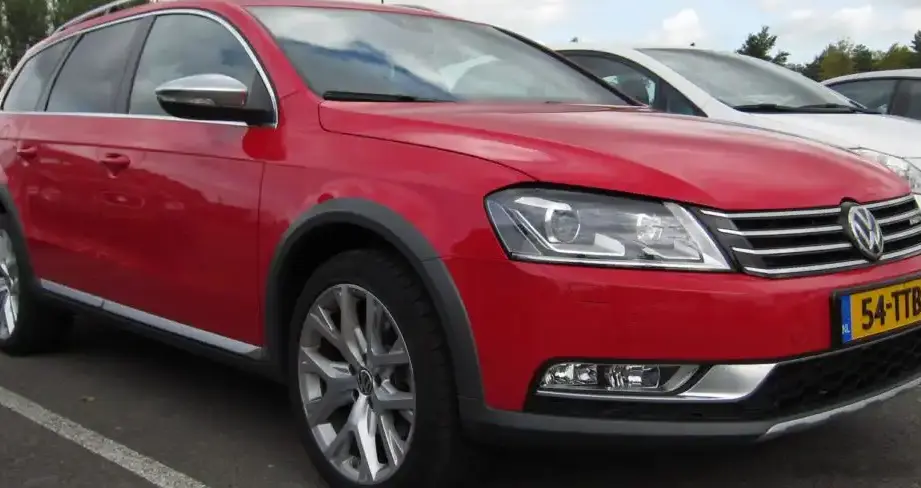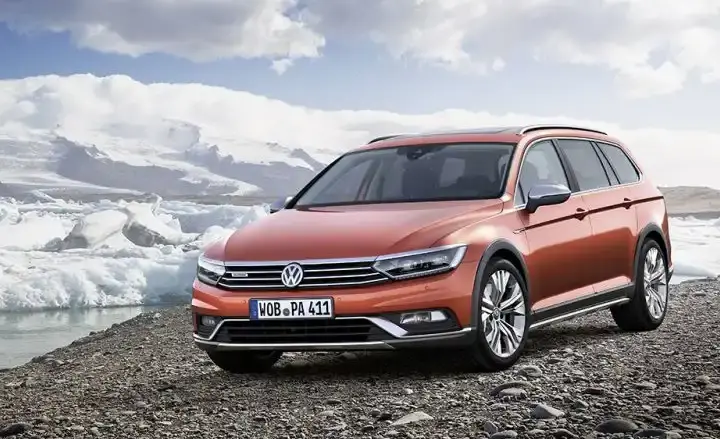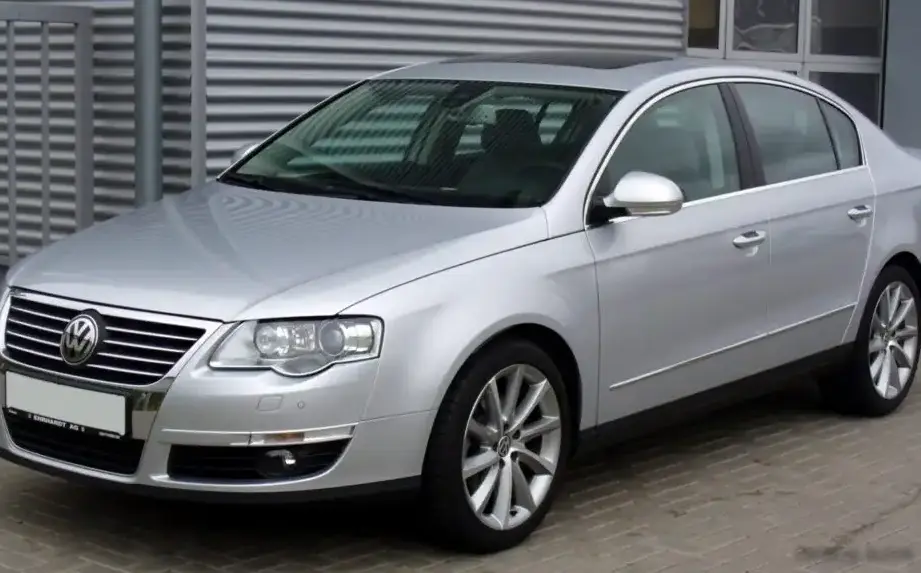
The Volkswagen Passat B6, produced from 2005 to 2010, represented a significant step forward for Volkswagen’s mid-size offering. The 2.0 TDI 8V (140 hp) PDE 4MOTION variant, available from February 2005 to February 2008, was a key model within the B6 range, particularly in European markets. This version combined a fuel-efficient turbocharged diesel engine with Volkswagen’s 4MOTION all-wheel-drive system, offering a blend of practicality, performance, and all-weather capability. It occupied a mid-range position in the Passat lineup, appealing to buyers seeking a more refined and capable vehicle than the base models, but without the premium price tag of the higher-performance trims.
Technical Specifications
| Brand | Volkswagen |
| Model | Passat |
| Generation | Passat (B6) |
| Type (Engine) | 2.0 TDI 8V (140 Hp) PDE 4MOTION |
| Start of production | February, 2005 |
| End of production | February, 2008 |
| Powertrain Architecture | Internal Combustion engine |
| Body type | Sedan |
| Seats | 5 |
| Doors | 4 |
| Fuel consumption (urban) | 8.7 l/100 km (27 US mpg, 32.5 UK mpg, 11.5 km/l) |
| Fuel consumption (extra urban) | 5.7 l/100 km (41.3 US mpg, 49.6 UK mpg, 17.5 km/l) |
| Fuel consumption (combined) | 6.7 l/100 km (35.1 US mpg, 42.2 UK mpg, 14.9 km/l) |
| CO2 emissions | 177 g/km |
| Fuel Type | Diesel |
| Acceleration 0 – 100 km/h | 10.2 sec |
| Acceleration 0 – 62 mph | 10.2 sec |
| Acceleration 0 – 60 mph | 9.7 sec |
| Maximum speed | 204 km/h (126.76 mph) |
| Emission standard | Euro 4 |
| Weight-to-power ratio | 10.6 kg/Hp, 94.7 Hp/tonne |
| Weight-to-torque ratio | 4.6 kg/Nm, 216.4 Nm/tonne |
| Power | 140 Hp @ 4000 rpm |
| Power per litre | 71.1 Hp/l |
| Torque | 320 Nm @ 1750 rpm (236.02 lb.-ft. @ 1750 rpm) |
| Engine layout | Front, Transverse |
| Engine Model/Code | EA188 / BMP |
| Engine displacement | 1968 cm3 (120.09 cu. in.) |
| Number of cylinders | 4 |
| Engine configuration | Inline |
| Cylinder Bore | 81 mm (3.19 in.) |
| Piston Stroke | 95.5 mm (3.76 in.) |
| Compression ratio | 18.5:1 |
| Number of valves per cylinder | 2 |
| Fuel injection system | Pump-nozzle (Unit Injector) |
| Engine aspiration | Turbocharger, Intercooler |
| Valvetrain | SOHC |
| Engine oil capacity | 4 l (4.23 US qt | 3.52 UK qt) |
| Coolant | 8 l (8.45 US qt | 7.04 UK qt) |
| Kerb Weight | 1479 kg (3260.64 lbs.) |
| Max. weight | 2160 kg (4761.98 lbs.) |
| Max load | 681 kg (1501.35 lbs.) |
| Trunk (boot) space – minimum | 541 l (19.11 cu. ft.) |
| Trunk (boot) space – maximum | 1067 l (37.68 cu. ft.) |
| Fuel tank capacity | 68 l (17.96 US gal | 14.96 UK gal) |
| Max. roof load | 100 kg (220.46 lbs.) |
| Permitted trailer load with brakes (12%) | 2000 kg (4409.25 lbs.) |
| Permitted trailer load without brakes | 750 kg (1653.47 lbs.) |
| Permitted towbar download | 85 kg (187.39 lbs.) |
| Length | 4765 mm (187.6 in.) |
| Width | 1820 mm (71.65 in.) |
| Width including mirrors | 1991 mm (78.39 in.) |
| Height | 1472 mm (57.95 in.) |
| Wheelbase | 2709 mm (106.65 in.) |
| Front track | 1552 mm (61.1 in.) |
| Rear (Back) track | 1551 mm (61.06 in.) |
| Front overhang | 965 mm (37.99 in.) |
| Rear overhang | 1091 mm (42.95 in.) |
| Ride height (ground clearance) | 114 mm (4.49 in.) |
| Drag coefficient (Cd) | 0.281 |
| Minimum turning circle (turning diameter) | 11.4 m (37.4 ft.) |
| Approach angle | 14.4° |
| Departure angle | 12.6° |
| Ramp-over (brakeover) angle | 10.8° |
| Drivetrain Architecture | The Internal combustion engine (ICE) drives the front wheels permanently, and the rear wheels are driven through an electrically or mechanically operated clutch if necessary. |
| Drive wheel | All wheel drive (4×4) |
| Number of gears and type of gearbox | 6 gears, manual transmission |
| Front suspension | Spring Strut |
| Rear suspension | Coil spring |
| Front brakes | Ventilated discs |
| Rear brakes | Disc |
| Assisting systems | ABS (Anti-lock braking system) |
| Steering type | Steering rack and pinion |
| Tires size | 215/55 R16 |
| Wheel rims size | 6.5J X 16 |
INTRODUCTION
The Volkswagen Passat B6 2.0 TDI 8V (140 hp) PDE 4MOTION, produced between 2005 and 2008, was a popular choice in the European market. Built on the 1HX0/A3 platform, it offered a compelling package of fuel efficiency, practicality, and all-weather capability. The “PDE” designation refers to the Pump-nozzle (Unit Injector) fuel injection system, a key component of the engine’s performance and efficiency. This variant aimed to provide a comfortable and capable driving experience for families and commuters, particularly in regions with challenging weather conditions.
Powertrain & Engine Architecture
At the heart of the Passat B6 2.0 TDI 4MOTION lies the EA188 series engine, specifically the BMP code. This 1968cc inline-four cylinder diesel engine utilizes a turbocharger with an intercooler to boost power and efficiency. The pump-nozzle (PDE) fuel injection system, a sophisticated technology for its time, allowed for precise fuel delivery and contributed to the engine’s relatively low emissions. The engine features a single overhead camshaft (SOHC) valvetrain. The 4MOTION system employs a viscous coupling to distribute power between the front and rear axles as needed, providing enhanced traction. The engine produces 140 horsepower at 4000 rpm and 320 Nm (236 lb-ft) of torque at 1750 rpm. This torque output, available at relatively low engine speeds, provided good responsiveness for everyday driving.
Driving Characteristics
The 2.0 TDI 140 hp 4MOTION Passat offered a balanced driving experience. While not a performance-oriented model, the engine’s torque delivery made it feel surprisingly capable. Acceleration from 0-60 mph took around 9.7 seconds, and top speed was rated at 126.76 mph. The 4MOTION system provided noticeable improvements in grip and stability, especially on slippery surfaces. Compared to the front-wheel-drive versions, the 4MOTION model offered more confident handling in adverse conditions. Compared to the more powerful 170 hp TDI variants, this engine prioritized fuel economy over outright performance. The six-speed manual transmission offered precise shifts, although the gear ratios were tuned for efficiency rather than sporty acceleration.
Equipment & Trim Levels
The 2.0 TDI 4MOTION typically came equipped with a reasonable level of standard features. These included air conditioning, power windows, central locking, and an audio system. Higher trim levels offered options such as alloy wheels, upgraded upholstery, a sunroof, and a navigation system. Interior appointments were generally functional and well-built, reflecting Volkswagen’s reputation for quality. Safety features included ABS, airbags, and electronic stability control. The specific trim level influenced the interior materials and the availability of optional extras.
Chassis & Braking
The Passat B6 2.0 TDI 4MOTION utilized a MacPherson strut front suspension and a multi-link rear suspension, providing a comfortable ride and good handling characteristics. The braking system consisted of ventilated discs at the front and solid discs at the rear. ABS (Anti-lock Braking System) was standard. The 4MOTION system added weight compared to the front-wheel-drive models, which slightly impacted handling agility, but the added stability was a worthwhile trade-off for many drivers. Stabilizer bars were fitted front and rear to reduce body roll during cornering.
Market Reception & Comparison
The Passat B6 2.0 TDI 4MOTION was generally well-received by automotive critics. It was praised for its fuel efficiency, comfortable ride, and all-weather capability. Compared to the more powerful TDI variants, it offered a more affordable entry point into the Passat range. Fuel economy was a strong point, with combined figures around 35.1 US mpg. Reliability was generally good, although the pump-nozzle injection system could be prone to issues if not properly maintained. Compared to competitors like the Ford Mondeo and Opel/Vauxhall Vectra, the Passat offered a more refined interior and a more sophisticated all-wheel-drive system.
Legacy
The Volkswagen Passat B6 2.0 TDI 4MOTION remains a popular choice in the used car market. The EA188 engine, while not without its potential issues (particularly with the PDE injectors and diesel particulate filter), is generally considered durable and reliable when properly maintained. The 4MOTION system continues to be valued for its all-weather capability. These models represent a good value proposition for buyers seeking a practical, fuel-efficient, and capable mid-size sedan. Regular maintenance, including timely replacement of the timing belt and careful monitoring of the DPF, is crucial to ensure long-term reliability.