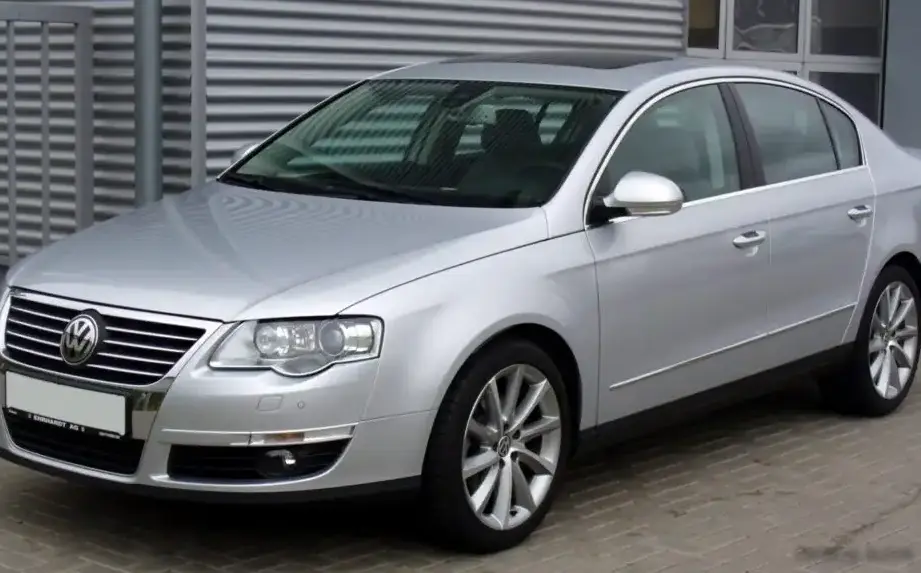
The Volkswagen Passat (B6) 2.0 TDI 8V (140 hp) PDE DSG represents a significant iteration of Volkswagen’s popular mid-size sedan, produced between February 2005 and February 2008. Positioned as a mid-range offering within the B6 Passat lineup, this variant aimed to balance fuel efficiency, respectable performance, and the convenience of an automatic transmission. It was a key model in the European market, where diesel engines and dual-clutch transmissions were increasingly favored, and also saw limited sales in other regions. The B6 generation, built on the 1HX0/A3 platform, aimed to elevate the Passat’s image with improved build quality and a more sophisticated driving experience.
Technical Specifications
| Brand | Volkswagen |
| Model | Passat |
| Generation | Passat (B6) |
| Type (Engine) | 2.0 TDI 8V (140 Hp) PDE DSG |
| Start of production | February, 2005 |
| End of production | February, 2008 |
| Powertrain Architecture | Internal Combustion engine |
| Body type | Sedan |
| Seats | 5 |
| Doors | 4 |
| Fuel consumption (urban) | 8.8 l/100 km (26.7 US mpg, 32.1 UK mpg, 11.4 km/l) |
| Fuel consumption (extra urban) | 5.4 l/100 km (43.6 US mpg, 52.3 UK mpg, 18.5 km/l) |
| Fuel consumption (combined) | 6.6 l/100 km (35.6 US mpg, 42.8 UK mpg, 15.2 km/l) |
| CO2 emissions | 175 g/km |
| Fuel Type | Diesel |
| Acceleration 0 – 100 km/h | 9.8 sec |
| Acceleration 0 – 62 mph | 9.8 sec |
| Acceleration 0 – 60 mph | 9.3 sec |
| Maximum speed | 206 km/h (128 mph) |
| Emission standard | Euro 4 |
| Weight-to-power ratio | 10 kg/Hp, 99.7 Hp/tonne |
| Weight-to-torque ratio | 4.4 kg/Nm, 227.9 Nm/tonne |
| Power | 140 Hp @ 4000 rpm |
| Power per litre | 71.1 Hp/l |
| Torque | 320 Nm @ 1750 rpm (236.02 lb.-ft. @ 1750 rpm) |
| Engine layout | Front, Transverse |
| Engine Model/Code | EA188 / BMP |
| Engine displacement | 1968 cm3 (120.09 cu. in.) |
| Number of cylinders | 4 |
| Engine configuration | Inline |
| Cylinder Bore | 81 mm (3.19 in.) |
| Piston Stroke | 95.5 mm (3.76 in.) |
| Compression ratio | 18.5:1 |
| Number of valves per cylinder | 2 |
| Fuel injection system | Pump-nozzle (Unit Injector) |
| Engine aspiration | Turbocharger, Intercooler |
| Valvetrain | SOHC |
| Engine oil capacity | 4 l (4.23 US qt | 3.52 UK qt) |
| Coolant | 8 l (8.45 US qt | 7.04 UK qt) |
| Kerb Weight | 1404 kg (3095.29 lbs.) |
| Max. weight | 2090 kg (4607.66 lbs.) |
| Max load | 686 kg (1512.37 lbs.) |
| Trunk (boot) space – minimum | 565 l (19.95 cu. ft.) |
| Trunk (boot) space – maximum | 1091 l (38.53 cu. ft.) |
| Fuel tank capacity | 70 l (18.49 US gal | 15.4 UK gal) |
| Max. roof load | 100 kg (220.46 lbs.) |
| Permitted trailer load with brakes (12%) | 1800 kg (3968.32 lbs.) |
| Permitted trailer load without brakes | 750 kg (1653.47 lbs.) |
| Permitted towbar download | 85 kg (187.39 lbs.) |
| Length | 4765 mm (187.6 in.) |
| Width | 1820 mm (71.65 in.) |
| Width including mirrors | 1991 mm (78.39 in.) |
| Height | 1472 mm (57.95 in.) |
| Wheelbase | 2709 mm (106.65 in.) |
| Front track | 1552 mm (61.1 in.) |
| Rear (Back) track | 1551 mm (61.06 in.) |
| Front overhang | 965 mm (37.99 in.) |
| Rear overhang | 1091 mm (42.95 in.) |
| Drag coefficient (Cd) | 0.281 |
| Minimum turning circle (turning diameter) | 11.4 m (37.4 ft.) |
| Approach angle | 14.4° |
| Departure angle | 12.6° |
| Ramp-over (brakeover) angle | 10.8° |
| Drivetrain Architecture | The Internal combustion engine (ICE) drives the front wheels of the vehicle. |
| Drive wheel | Front wheel drive |
| Number of gears and type of gearbox | 6 gears, automatic transmission DSG |
| Front suspension | Spring Strut |
| Rear suspension | Coil spring |
| Front brakes | Ventilated discs |
| Rear brakes | Disc |
| Assisting systems | ABS (Anti-lock braking system) |
| Steering type | Steering rack and pinion |
| Power steering | Electric Steering |
| Tires size | 215/55 R16 |
| Wheel rims size | 6.5J x 16 |
Powertrain & Engine Architecture
The heart of this Passat variant is the EA188 2.0-liter inline-four cylinder diesel engine, specifically the BMP code. This engine utilizes a pump-nozzle (PDE) fuel injection system, a technology known for its high injection pressures and precise fuel delivery, contributing to both performance and efficiency. The engine features a single overhead camshaft (SOHC) valvetrain operating two valves per cylinder. A turbocharger with an intercooler is employed to boost power output, delivering 140 horsepower at 4000 rpm and 320 Nm (236 lb-ft) of torque at a relatively low 1750 rpm. The engine’s transverse mounting and front-wheel-drive configuration were standard for the B6 Passat. Paired with the engine is a six-speed Direct-Shift Gearbox (DSG), a dual-clutch transmission that offers both the efficiency of a manual gearbox and the convenience of an automatic. The DSG’s quick and smooth shifts contribute to a more engaging driving experience compared to traditional automatic transmissions.
Driving Characteristics
The 2.0 TDI 8V with the DSG transmission provided a comfortable and capable driving experience. While not a sports sedan, the 140 hp engine and DSG gearbox offered adequate acceleration, achieving 0-60 mph in approximately 9.3 seconds. The readily available torque from the diesel engine meant that overtaking maneuvers were performed with relative ease. The DSG transmission’s programming prioritized fuel efficiency, resulting in noticeable upshifts at lower engine speeds. Compared to the manual transmission versions of the same engine, the DSG offered smoother shifts and reduced driver fatigue. However, some drivers found the DSG’s shift logic to be occasionally hesitant or jerky at low speeds. Compared to higher-output TDI variants (like the 170 hp versions), this 140 hp model offered a more economical driving experience, albeit with less outright performance.
Equipment & Trim Levels
The 2.0 TDI 8V DSG typically came equipped with a reasonable level of standard features. Interior appointments included cloth upholstery, air conditioning, a basic audio system, and power windows. Safety features such as ABS, front airbags, and side airbags were standard. Optional extras included alloy wheels, a sunroof, upgraded audio systems, parking sensors, and leather upholstery. Trim levels varied depending on the market, but this engine/transmission combination generally sat in the mid-range of the B6 Passat lineup, offering a good balance of features and price.
Chassis & Braking
The B6 Passat featured a MacPherson strut front suspension and a multi-link rear suspension, providing a comfortable ride and predictable handling. The front brakes were ventilated discs, while the rear brakes were solid discs. ABS (Anti-lock Braking System) was standard. The suspension tuning was geared towards comfort rather than outright sportiness, but the Passat still offered a stable and secure feel on the road. Stabilizer bars were fitted front and rear to reduce body roll during cornering.
Market Reception & Comparison
The 2.0 TDI 8V DSG Passat was generally well-received by automotive critics. It was praised for its fuel efficiency, comfortable ride, and the convenience of the DSG transmission. However, some critics noted that the engine could be somewhat noisy, and the interior, while well-built, lacked the premium feel of some competitors. Compared to the petrol-powered Passats, the TDI offered significantly better fuel economy. Compared to other diesel-powered competitors, such as the Ford Mondeo TDCi, the Passat was often seen as offering a more refined driving experience.
Legacy
The EA188 2.0 TDI engine, in its various iterations, proved to be a robust and reliable powerplant. However, the pump-nozzle (PDE) injection system used in the BMP code engine is known to be more susceptible to wear and tear than the common-rail systems that followed. Regular maintenance, including oil changes and fuel filter replacements, is crucial for long-term reliability. Today, used examples of the B6 Passat 2.0 TDI 8V DSG can be found at relatively affordable prices. They remain a popular choice for those seeking a comfortable, fuel-efficient, and practical mid-size sedan, but potential buyers should be aware of the potential maintenance costs associated with the PDE injection system.