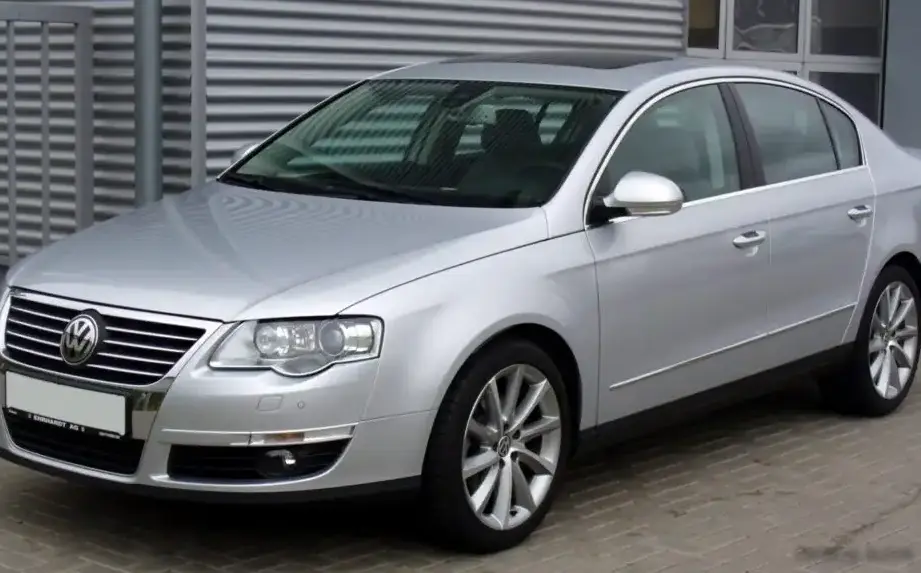
The Volkswagen Passat B6 2.0 TSI, produced from January 2008 to July 2010, represented a significant step forward in performance and technology for the mid-size Passat lineup. Positioned as a sporty alternative to the more economical engine options, the 2.0 TSI (200 horsepower) offered a compelling blend of power, efficiency, and refinement. This variant was primarily aimed at drivers seeking a more engaging driving experience without sacrificing the comfort and practicality expected of a Passat. It sat above the 1.6 and 2.0 liter naturally aspirated engines in the lineup, and below the range-topping VR6 models.
Technical Specifications
| Brand | Volkswagen |
| Model | Passat |
| Generation | Passat (B6) |
| Type (Engine) | 2.0 TSI (200 Hp) |
| Start of production | January, 2008 |
| End of production | July, 2010 |
| Powertrain Architecture | Internal Combustion engine |
| Body type | Sedan |
| Seats | 5 |
| Doors | 4 |
| Fuel consumption (urban) | 11 l/100 km (21.4 US mpg, 25.7 UK mpg, 9.1 km/l) |
| Fuel consumption (extra urban) | 6.1 l/100 km (38.6 US mpg, 46.3 UK mpg, 16.4 km/l) |
| Fuel consumption (combined) | 7.9 l/100 km (29.8 US mpg, 35.8 UK mpg, 12.7 km/l) |
| CO2 emissions | 186 g/km |
| Fuel Type | Petrol (Gasoline) |
| Acceleration 0 – 100 km/h | 7.6 sec |
| Acceleration 0 – 62 mph | 7.6 sec |
| Acceleration 0 – 60 mph | 7.2 sec |
| Maximum speed | 235 km/h (146.02 mph) |
| Emission standard | Euro 4 |
| Weight-to-power ratio | 6.9 kg/Hp, 146 Hp/tonne |
| Weight-to-torque ratio | 4.9 kg/Nm, 204.4 Nm/tonne |
| Power | 200 Hp @ 5500 rpm |
| Power per litre | 100.8 Hp/l |
| Torque | 280 Nm @ 1800 rpm (206.52 lb.-ft. @ 1800 rpm) |
| Engine layout | Front, Transverse |
| Engine Model/Code | BPY, CAWB, CCTA, CCZA |
| Engine displacement | 1984 cm3 (121.07 cu. in.) |
| Number of cylinders | 4 |
| Engine configuration | Inline |
| Cylinder Bore | 82.5 mm (3.25 in.) |
| Piston Stroke | 92.8 mm (3.65 in.) |
| Compression ratio | 9.6:1 |
| Number of valves per cylinder | 4 |
| Fuel injection system | Direct injection |
| Engine aspiration | Turbocharger, Intercooler |
| Valvetrain | DOHC |
| Engine oil capacity | 4.6 l (4.86 US qt | 4.05 UK qt) |
| Kerb Weight | 1370 kg (3020.33 lbs.) |
| Max. weight | 2050 kg (4519.48 lbs.) |
| Max load | 680 kg (1499.14 lbs.) |
| Trunk (boot) space – minimum | 565 l (19.95 cu. ft.) |
| Trunk (boot) space – maximum | 1091 l (38.53 cu. ft.) |
| Fuel tank capacity | 70 l (18.49 US gal | 15.4 UK gal) |
| Max. roof load | 100 kg (220.46 lbs.) |
| Permitted trailer load with brakes (8%) | 1800 kg (3968.32 lbs.) |
| Permitted trailer load with brakes (12%) | 1600 kg (3527.4 lbs.) |
| Permitted trailer load without brakes | 750 kg (1653.47 lbs.) |
| Permitted towbar download | 90 kg (198.42 lbs.) |
| Length | 4765 mm (187.6 in.) |
| Width | 1820 mm (71.65 in.) |
| Width including mirrors | 1991 mm (78.39 in.) |
| Height | 1472 mm (57.95 in.) |
| Wheelbase | 2709 mm (106.65 in.) |
| Front track | 1552 mm (61.1 in.) |
| Rear (Back) track | 1551 mm (61.06 in.) |
| Front overhang | 965 mm (37.99 in.) |
| Rear overhang | 1091 mm (42.95 in.) |
| Ride height (ground clearance) | 114 mm (4.49 in.) |
| Drag coefficient (Cd) | 0.281 |
| Minimum turning circle (turning diameter) | 11.4 m (37.4 ft.) |
| Approach angle | 14.4° |
| Departure angle | 12.6° |
| Ramp-over (brakeover) angle | 10.8° |
| Drivetrain Architecture | The Internal combustion engine (ICE) drives the front wheels of the vehicle. |
| Drive wheel | Front wheel drive |
| Number of gears and type of gearbox | 6 gears, manual transmission |
| Front suspension | Spring Strut |
| Rear suspension | Coil spring |
| Front brakes | Ventilated discs |
| Rear brakes | Disc |
| Assisting systems | ABS (Anti-lock braking system) |
| Steering type | Steering rack and pinion |
| Tires size | 215/55 R16 |
| Wheel rims size | 6.5J x 16 |
Powertrain & Engine Architecture
The heart of the Passat B6 2.0 TSI was the EA888 engine family, specifically the 1.8/2.0 TSI. Engine codes varied depending on the market and year, with BPY, CAWB, CCTA, and CCZA being common designations. This 1984cc inline-four cylinder engine featured direct fuel injection (FSI) and a turbocharger with an intercooler. The direct injection system allowed for precise fuel delivery, improving both power and efficiency. The engine utilized a dual overhead camshaft (DOHC) valvetrain with four valves per cylinder, optimizing airflow for increased performance. The turbocharger provided a significant boost in power, delivering 200 horsepower at 5500 rpm and 280 Nm (206.52 lb-ft) of torque from as low as 1800 rpm. The majority of these models were equipped with a six-speed manual transmission, though a six-speed automatic transmission (typically the 09G) was also available. The automatic transmission offered smooth shifts but generally resulted in slightly lower fuel economy and a less engaging driving experience compared to the manual.
Driving Characteristics
The 2.0 TSI Passat offered a noticeable improvement in performance over the base engine options. Acceleration to 60 mph took approximately 7.2-7.6 seconds, making it a genuinely quick car for its class. The turbocharger provided strong mid-range punch, making overtaking maneuvers effortless. While not as sharp or focused as a dedicated sports sedan, the 2.0 TSI Passat provided a comfortable and capable driving experience. The automatic transmission, while smooth, could sometimes feel hesitant during quick downshifts. The suspension was tuned for comfort, providing a relatively smooth ride over most road surfaces, but it wasn’t particularly sporty. Compared to the VR6 models, the 2.0 TSI offered a better balance of performance and fuel economy, though it lacked the VR6’s distinctive exhaust note and overall refinement.
Equipment & Trim Levels
The 2.0 TSI Passat typically came with a generous level of standard equipment. This included air conditioning, power windows and locks, a CD stereo system, and alloy wheels. Higher trim levels added features such as leather upholstery, a sunroof, heated front seats, and a premium audio system. Optional extras included navigation, parking sensors, and bi-xenon headlights. Interior upholstery was typically cloth on base models, with leather available as an upgrade. The dashboard layout was functional and well-designed, with clear instrumentation and intuitive controls.
Chassis & Braking
The Passat B6 utilized a MacPherson strut front suspension and a multi-link rear suspension. This setup provided a good balance of ride comfort and handling. Brakes were typically ventilated discs at the front and solid discs at the rear, with ABS (Anti-lock Braking System) standard. The braking system was generally effective, providing adequate stopping power for everyday driving. Stabilizer bars were fitted front and rear to reduce body roll during cornering.
Market Reception & Comparison
The Passat B6 2.0 TSI was generally well-received by automotive critics. It was praised for its strong performance, refined engine, and comfortable ride. However, some critics noted that the automatic transmission could be slow to respond at times. Compared to other cars in its class, such as the Ford Mondeo and Opel/Vauxhall Insignia, the Passat offered a more premium feel and a more refined driving experience. Fuel economy was competitive, averaging around 29.8 US mpg in combined driving. Reliability was generally good, although some owners reported issues with the turbocharger and fuel injectors.
Legacy
The Volkswagen Passat B6 2.0 TSI remains a popular choice in the used car market. The EA888 engine is known for its durability and tunability, making it a favorite among enthusiasts. While some maintenance items, such as the timing chain and carbon buildup, require attention, the 2.0 TSI Passat offers a compelling combination of performance, comfort, and value. The engine’s robust design and readily available parts contribute to its long-term reliability, ensuring that well-maintained examples continue to provide years of enjoyable driving.