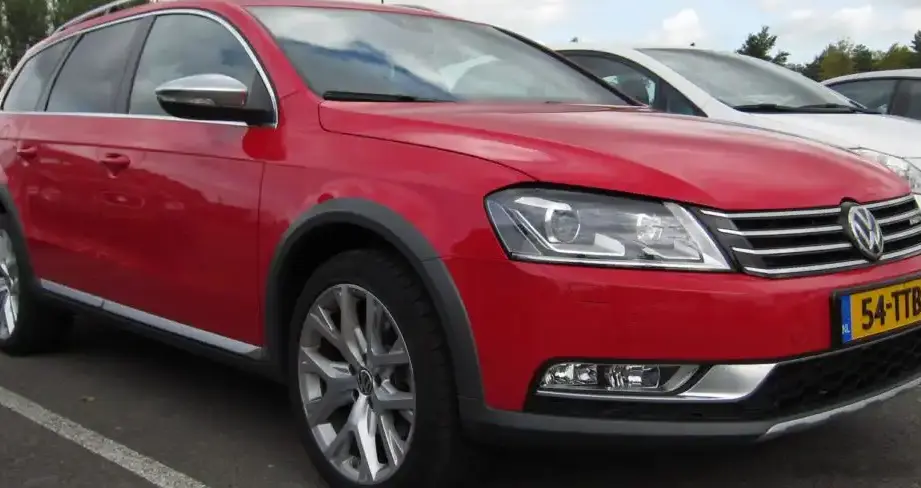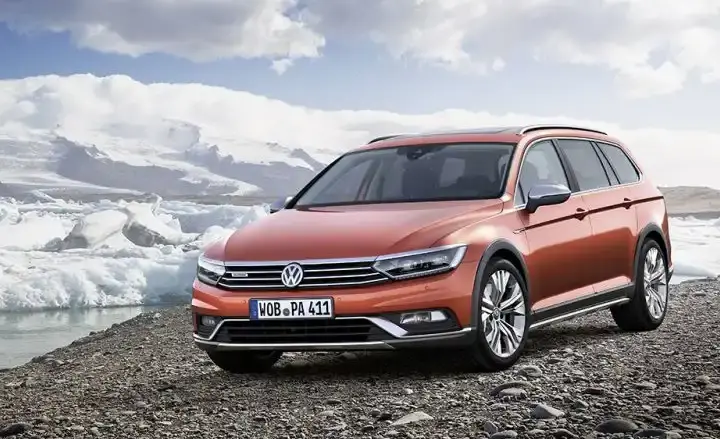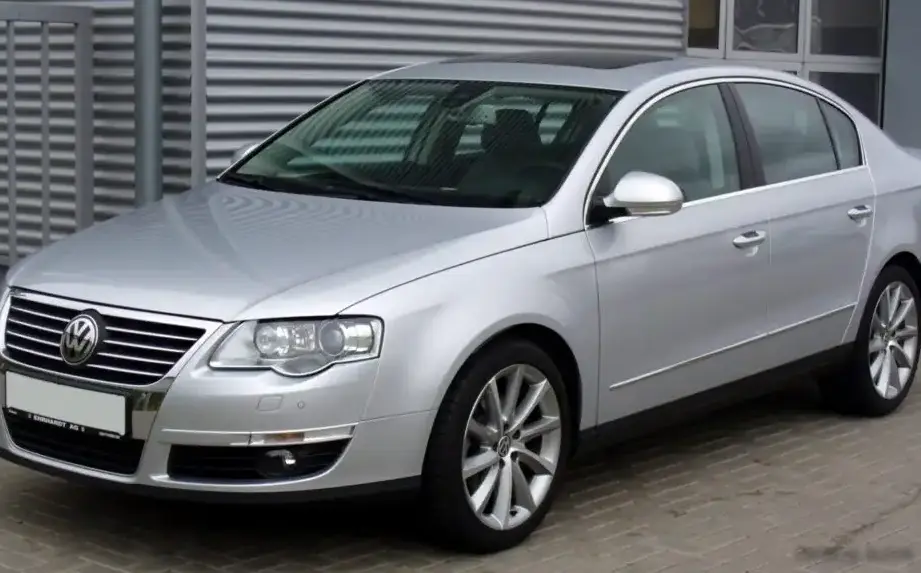
The Volkswagen Passat B6 2.0 TSI (200 hp) DSG represents a significant iteration within the sixth generation of Volkswagen’s globally successful mid-size sedan. Produced from February 2010 to October 2010, this variant occupied a performance-oriented niche within the B6 lineup, bridging the gap between the more economical engine options and the range-topping models. It was primarily marketed in Europe and other regions where sedans remained popular, offering a blend of efficiency, power, and Volkswagen’s renowned build quality. The B6 generation, built on the 1HX0/A3 platform, aimed to elevate the Passat’s image with a more sophisticated design and improved driving dynamics.
Technical Specifications
| Brand | Volkswagen |
| Model | Passat |
| Generation | Passat (B6) |
| Type (Engine) | 2.0 TSI (200 Hp) DSG |
| Start of production | February, 2010 |
| End of production | October, 2010 |
| Powertrain Architecture | Internal Combustion engine |
| Body type | Sedan |
| Seats | 5 |
| Doors | 4 |
| Fuel consumption (economy) – urban (NEDC) | 11 l/100 km (21.4 US mpg, 25.7 UK mpg, 9.1 km/l) |
| Fuel consumption (economy) – extra urban (NEDC) | 6 l/100 km (39.2 US mpg, 47.1 UK mpg, 16.7 km/l) |
| Fuel consumption (economy) – combined (NEDC) | 7.9 l/100 km (29.8 US mpg, 35.8 UK mpg, 12.7 km/l) |
| CO2 emissions (NEDC) | 184 g/km |
| Fuel Type | Petrol (Gasoline) |
| Acceleration 0 – 100 km/h | 7.6 sec |
| Acceleration 0 – 62 mph | 7.6 sec |
| Acceleration 0 – 60 mph | 7.2 sec |
| Maximum speed | 235 km/h (146.02 mph) |
| Emission standard | Euro 5 |
| Weight-to-power ratio | 7.3 kg/Hp, 137.2 Hp/tonne |
| Weight-to-torque ratio | 5.2 kg/Nm, 192 Nm/tonne |
| Power | 200 Hp @ 5100-6000 rpm |
| Power per litre | 100.8 Hp/l |
| Torque | 280 Nm @ 1700-5000 rpm (206.52 lb.-ft. @ 1700-5000 rpm) |
| Engine layout | Front, Transverse |
| Engine Model/Code | BPY, CAWB, CCTA, CCZA |
| Engine displacement | 1984 cm3 (121.07 cu. in.) |
| Number of cylinders | 4 |
| Engine configuration | Inline |
| Number of valves per cylinder | 4 |
| Fuel injection system | Direct injection |
| Engine aspiration | Turbocharger, Intercooler |
| Valvetrain | DOHC |
| Engine oil capacity | 4.6 l (4.86 US qt | 4.05 UK qt) |
| Kerb Weight | 1458 kg (3214.34 lbs.) |
| Max. weight | 2080 kg (4585.62 lbs.) |
| Max load | 622 kg (1371.28 lbs.) |
| Trunk (boot) space – minimum | 565 l (19.95 cu. ft.) |
| Trunk (boot) space – maximum | 1091 l (38.53 cu. ft.) |
| Fuel tank capacity | 70 l (18.49 US gal | 15.4 UK gal) |
| Max. roof load | 100 kg (220.46 lbs.) |
| Permitted trailer load with brakes (8%) | 1800 kg (3968.32 lbs.) |
| Permitted trailer load with brakes (12%) | 1600 kg (3527.4 lbs.) |
| Permitted trailer load without brakes | 750 kg (1653.47 lbs.) |
| Permitted towbar download | 90 kg (198.42 lbs.) |
| Length | 4765 mm (187.6 in.) |
| Width | 1820 mm (71.65 in.) |
| Width including mirrors | 1991 mm (78.39 in.) |
| Height | 1472 mm (57.95 in.) |
| Wheelbase | 2709 mm (106.65 in.) |
| Front track | 1552 mm (61.1 in.) |
| Rear (Back) track | 1551 mm (61.06 in.) |
| Ride height (ground clearance) | 114 mm (4.49 in.) |
| Minimum turning circle (turning diameter) | 11.4 m (37.4 ft.) |
| Approach angle | 14.4° |
| Departure angle | 12.6° |
| Ramp-over (brakeover) angle | 10.8° |
| Drivetrain Architecture | The Internal combustion engine (ICE) drives the front wheels of the vehicle. |
| Drive wheel | Front wheel drive |
| Number of gears and type of gearbox | 6 gears, automatic transmission DSG |
| Front suspension | Independent type McPherson, Transverse stabilizer |
| Rear suspension | Independent multi-link suspension, Transverse stabilizer |
| Front brakes | Ventilated discs |
| Rear brakes | Disc |
| Assisting systems | ABS (Anti-lock braking system) |
| Steering type | Steering rack and pinion |
| Power steering | Electric Steering |
| Tires size | 215/55 R 16 |
| Wheel rims size | 6.5 J x 16 |
Powertrain & Engine Architecture
At the heart of the Passat 2.0 TSI DSG lies the EA888 engine family, specifically the 1.8/2.0 TSI unit. The engine codes commonly associated with this output are BPY, CAWB, CCTA, and CCZA, though variations existed depending on the specific market. This is a 1984cc, inline-four cylinder engine featuring direct fuel injection (FSI) and a turbocharger with an intercooler. The direct injection system allows for precise fuel delivery, enhancing both power and efficiency. The engine utilizes a dual overhead camshaft (DOHC) valvetrain with four valves per cylinder, optimizing gas flow for improved performance. The turbocharger provides a significant boost in power output, delivering 200 horsepower and 280 Nm (206.52 lb-ft) of torque. The torque curve is relatively flat, providing ample pulling power across a wide RPM range. Paired with the engine is the 6-speed DSG (Direct-Shift Gearbox), a dual-clutch transmission known for its quick and smooth gear changes. The DSG offers both fully automatic operation and the ability for the driver to manually select gears via the shift lever or steering wheel-mounted paddles.
Driving Characteristics
The 2.0 TSI DSG Passat offered a noticeably more engaging driving experience compared to the lower-powered engine options. Acceleration from 0-100 km/h (0-62 mph) took approximately 7.6 seconds, making it a competitive performer in its class. The DSG transmission played a crucial role in this performance, providing rapid shifts and minimizing power loss during gear changes. While not as overtly sporty as some rivals, the Passat 2.0 TSI offered a good balance between comfort and performance. The steering was precise and well-weighted, and the suspension provided a comfortable ride without feeling overly soft. Compared to the manual transmission versions, the DSG offered greater convenience, particularly in urban driving. However, some enthusiasts preferred the more direct control offered by a manual gearbox. The gear ratios in the DSG were optimized for both acceleration and fuel efficiency, providing a good compromise for everyday driving.
Equipment & Trim Levels
The 2.0 TSI DSG trim typically sat in the mid-to-upper range of the Passat B6 lineup. Standard equipment often included features such as alloy wheels, air conditioning, a CD stereo system, power windows and mirrors, and ABS brakes. Higher trim levels added features like leather upholstery, a sunroof, a navigation system, and parking sensors. The interior typically featured comfortable and supportive seats, with a functional and well-designed dashboard. The quality of materials used was generally good, reflecting Volkswagen’s reputation for build quality. Optional extras included a premium sound system, heated seats, and a rear parking camera.
Chassis & Braking
The Passat B6 featured an independent suspension system on all four wheels. The front suspension utilized a McPherson strut design, while the rear suspension employed a multi-link setup. This configuration provided a good balance between ride comfort and handling. The 2.0 TSI models typically featured ventilated disc brakes on the front wheels and solid disc brakes on the rear wheels. ABS (Anti-lock Braking System) was standard, enhancing braking performance and safety. The steering system was a rack-and-pinion type with electric power assistance, providing precise and responsive steering feel.
Market Reception & Comparison
The Passat 2.0 TSI DSG was generally well-received by automotive critics. It was praised for its strong performance, comfortable ride, and refined interior. However, some critics noted that the price was relatively high compared to some rivals. In terms of fuel economy, the 2.0 TSI offered a reasonable compromise between performance and efficiency, achieving around 7.9 l/100 km (29.8 US mpg) in combined driving. Compared to the 1.4 TSI and diesel variants, the 2.0 TSI offered significantly more power but consumed more fuel. The 2.0 TSI was also more expensive to maintain than the lower-powered engine options, due to the more complex engine and transmission.
Legacy
The EA888 engine family, including the 2.0 TSI variant, has proven to be a reliable and durable powertrain. While some early versions of the engine experienced issues with carbon buildup on the intake valves, these problems were largely addressed in later revisions. The DSG transmission is also generally reliable, but requires regular maintenance, including fluid changes, to ensure optimal performance. Today, the Passat B6 2.0 TSI DSG remains a popular choice in the used car market, offering a good balance of performance, comfort, and value. However, potential buyers should be aware of the potential for carbon buildup and ensure that the DSG transmission has been properly maintained.