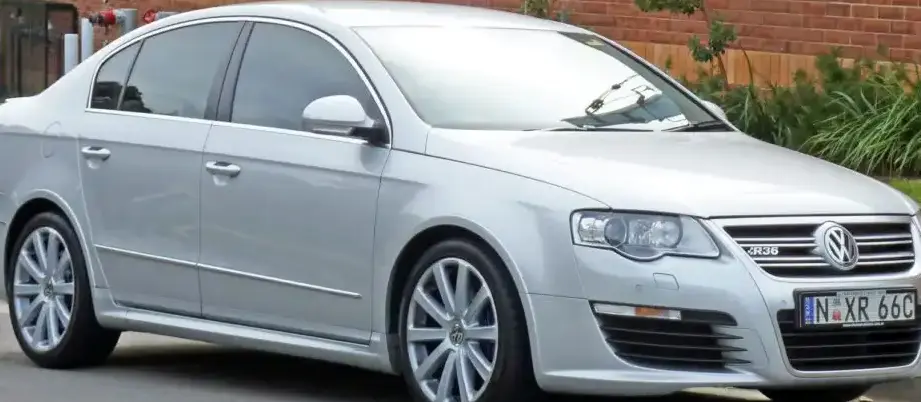
The Volkswagen Passat R36, produced between January 2008 and July 2010, represented the performance pinnacle of the B6 Passat generation. Positioned as the flagship trim, the R36 distinguished itself with a potent 3.6-liter VR6 engine, a sophisticated 4MOTION all-wheel-drive system, and a host of performance-oriented enhancements. Built on the Volkswagen Group’s B6 platform (shared with the Audi A4 and Škoda Superb of the era), the R36 aimed to deliver a blend of luxury, practicality, and engaging driving dynamics, primarily targeting European markets seeking a high-performance executive sedan. While the Passat was sold in the US, the R36 variant was not officially offered there.
Technical Specifications
| Brand | Volkswagen |
| Model | Passat |
| Generation | Passat (B6) |
| Type (Engine) | R36 3.6 V6 FSI (300 Hp) 4MOTION |
| Start of production | January, 2008 |
| End of production | July, 2010 |
| Powertrain Architecture | Internal Combustion engine |
| Body type | Sedan |
| Seats | 5 |
| Doors | 4 |
| Fuel consumption (economy) – urban | 14.7 l/100 km (16 US mpg, 19.2 UK mpg, 6.8 km/l) |
| Fuel consumption (economy) – extra urban | 8.1 l/100 km (29 US mpg, 34.9 UK mpg, 12.3 km/l) |
| Fuel consumption (economy) – combined | 10.5 l/100 km (22.4 US mpg, 26.9 UK mpg, 9.5 km/l) |
| CO2 emissions | 249 g/km |
| Fuel Type | Petrol (Gasoline) |
| Acceleration 0 – 100 km/h | 5.6 sec |
| Acceleration 0 – 62 mph | 5.6 sec |
| Acceleration 0 – 60 mph | 5.3 sec |
| Maximum speed | 250 km/h (155.34 mph), Electronically limited |
| Emission standard | Euro 4 |
| Weight-to-power ratio | 5.4 kg/Hp, 185.9 Hp/tonne |
| Weight-to-torque ratio | 4.6 kg/Nm, 216.9 Nm/tonne |
| Power | 300 Hp @ 6600 rpm |
| Power per litre | 83.4 Hp/l |
| Torque | 350 Nm @ 2400-5300 rpm (258.15 lb.-ft. @ 2400-5300 rpm) |
| Engine layout | Front, Transverse |
| Engine Model/Code | BWS |
| Engine displacement | 3597 cm3 (219.5 cu. in.) |
| Number of cylinders | 6 |
| Engine configuration | VR-engine |
| Cylinder Bore | 89 mm (3.5 in.) |
| Piston Stroke | 96.4 mm (3.8 in.) |
| Compression ratio | 11.4:1 |
| Number of valves per cylinder | 4 |
| Fuel injection system | Direct injection |
| Engine aspiration | Naturally aspirated engine |
| Valvetrain | DOHC |
| Engine oil capacity | 5.5 l (5.81 US qt | 4.84 UK qt) |
| Coolant | 9 l (9.51 US qt | 7.92 UK qt) |
| Kerb Weight | 1614 kg (3558.26 lbs.) |
| Max. weight | 2270 kg (5004.49 lbs.) |
| Max load | 656 kg (1446.23 lbs.) |
| Trunk (boot) space – minimum | 541 l (19.11 cu. ft.) |
| Trunk (boot) space – maximum | 1067 l (37.68 cu. ft.) |
| Fuel tank capacity | 68 l (17.96 US gal | 14.96 UK gal) |
| Max. roof load | 100 kg (220.46 lbs.) |
| Permitted trailer load with brakes (8%) | 2200 kg (4850.17 lbs.) |
| Permitted trailer load with brakes (12%) | 2200 kg (4850.17 lbs.) |
| Permitted trailer load without brakes | 750 kg (1653.47 lbs.) |
| Permitted towbar download | 90 kg (198.42 lbs.) |
| Length | 4765 mm (187.6 in.) |
| Width | 1820 mm (71.65 in.) |
| Width including mirrors | 1991 mm (78.39 in.) |
| Height | 1472 mm (57.95 in.) |
| Wheelbase | 2709 mm (106.65 in.) |
| Front track | 1552 mm (61.1 in.) |
| Rear (Back) track | 1551 mm (61.06 in.) |
| Front overhang | 965 mm (37.99 in.) |
| Rear overhang | 1091 mm (42.95 in.) |
| Ride height (ground clearance) | 114 mm (4.49 in.) |
| Drag coefficient (Cd) | 0.281 |
| Minimum turning circle (turning diameter) | 11.4 m (37.4 ft.) |
| Approach angle | 14.4° |
| Departure angle | 12.6° |
| Ramp-over (brakeover) angle | 10.8° |
| Drivetrain Architecture | The Internal combustion engine (ICE) drives the front wheels permanently, and the rear wheels are driven through an electrically or mechanically operated clutch if necessary. |
| Drive wheel | All wheel drive (4×4) |
| Number of gears and type of gearbox | 6 gears, automatic transmission |
| Front suspension | Independent, type McPherson with coil spring and anti-roll bar |
| Rear suspension | Independent multi-link spring suspension with stabilizer |
| Front brakes | Ventilated discs |
| Rear brakes | Ventilated discs |
| Assisting systems | ABS (Anti-lock braking system) |
| Steering type | Steering rack and pinion |
| Power steering | Electric Steering |
| Tires size | 235/40 R18 |
| Wheel rims size | 8J x 18 |
INTRODUCTION
The Volkswagen Passat R36, produced from 2008 to 2010, was the high-performance variant of the B6 Passat. It occupied the top spot in the Passat lineup, offering a significant step up in power and handling compared to the more common 1.4 TSI, 1.8 TSI, and 2.0 TDI models. The R36 was designed to appeal to drivers who desired a practical, comfortable sedan with genuine sporting credentials. It was a direct competitor to models like the Audi S4, BMW 335i, and Mercedes-Benz C350, though positioned with a slightly more understated character.
Powertrain & Engine Architecture
At the heart of the R36 lay the 3.6-liter VR6 engine, internally designated as the BWS. This engine is a narrow-angle V6, meaning the cylinder banks are relatively close together, resulting in a more compact engine compared to a traditional V6. The VR6 featured direct fuel injection (FSI), a dual overhead camshaft (DOHC) valvetrain with four valves per cylinder, and a naturally aspirated design. The engine produced 300 horsepower at 6600 rpm and 350 Nm (258 lb-ft) of torque between 2400 and 5300 rpm. The engine’s characteristics were tuned for a broad torque curve, providing strong acceleration throughout the rev range. The R36 exclusively utilized a six-speed automatic transmission, specifically the 09G unit. This transmission was known for its relatively smooth shifts and ability to handle the engine’s power output. It featured Tiptronic manual shift functionality, allowing drivers some control over gear selection.
Driving Characteristics
The R36’s driving experience was markedly different from the standard Passat models. The combination of the potent VR6 engine, the 4MOTION all-wheel-drive system, and a relatively low curb weight of 1614 kg (3558 lbs) resulted in brisk acceleration. The 0-60 mph sprint was dispatched in around 5.3 seconds, and the electronically limited top speed was 250 km/h (155 mph). The 4MOTION system provided excellent traction, particularly in adverse weather conditions, and contributed to a feeling of stability and confidence. While the automatic transmission wasn’t as engaging as a manual gearbox, it offered smooth and quick shifts, making it well-suited for everyday driving. Compared to the 1.8 TSI or 2.0 TDI Passats, the R36 offered a significantly more responsive and powerful driving experience, albeit at the cost of increased fuel consumption.
Equipment & Trim Levels
The R36 came generously equipped as standard. Key features included sport seats upholstered in “Nappa” leather, bi-xenon headlights, a premium audio system, automatic climate control, and 18-inch alloy wheels. The interior also featured unique R36 badging and brushed aluminum trim. Optional extras included a sunroof, navigation system, and parking sensors. The overall interior ambiance was one of understated luxury, focusing on quality materials and a comfortable driving environment.
Chassis & Braking
The R36 benefited from a sport-tuned suspension setup compared to the standard Passat. It featured stiffer springs and dampers, along with a thicker stabilizer bar, to reduce body roll and improve handling. The braking system consisted of ventilated discs on all four wheels, providing ample stopping power. ABS (Anti-lock Braking System) was standard. The suspension setup aimed to strike a balance between sporty handling and everyday comfort, making the R36 a capable and enjoyable car to drive on both winding roads and long highway journeys.
Market Reception & Comparison
The R36 was generally well-received by automotive critics. It was praised for its powerful engine, all-wheel-drive grip, and comfortable ride. However, some reviewers noted that the automatic transmission lacked the engagement of a manual gearbox. Compared to the more fuel-efficient 1.8 TSI and 2.0 TDI models, the R36’s fuel economy was significantly lower, averaging around 10.5 l/100 km (22.4 mpg). The R36 also commanded a higher price tag, reflecting its performance and equipment levels. In terms of reliability, the VR6 engine was generally considered robust, but preventative maintenance, particularly oil changes, was crucial.
Legacy
Today, the Volkswagen Passat R36 is gaining recognition as a desirable used car, particularly among enthusiasts seeking a unique and capable performance sedan. The BWS engine, while requiring regular maintenance, is known for its durability when properly cared for. The R36’s relative rarity and its blend of performance, practicality, and understated styling have contributed to its increasing collectibility. While not as widely known as some of its German rivals, the R36 offers a compelling alternative for those seeking a high-performance sedan with a distinctive character.