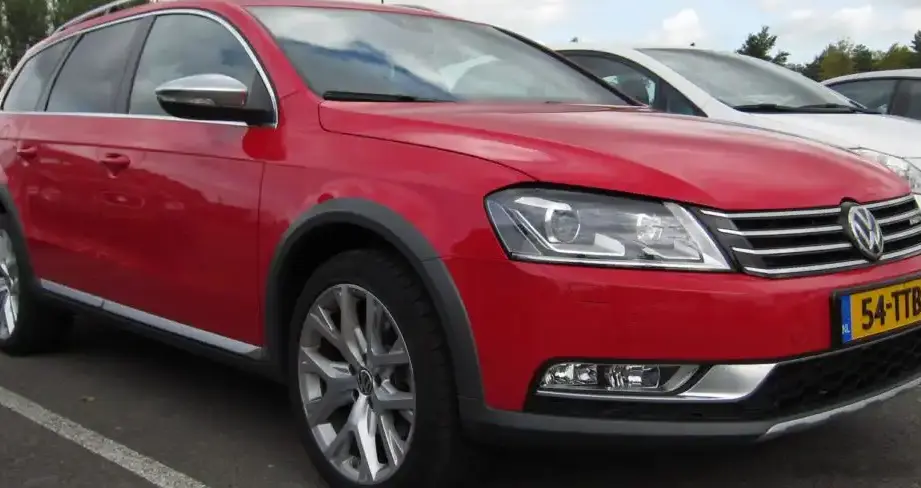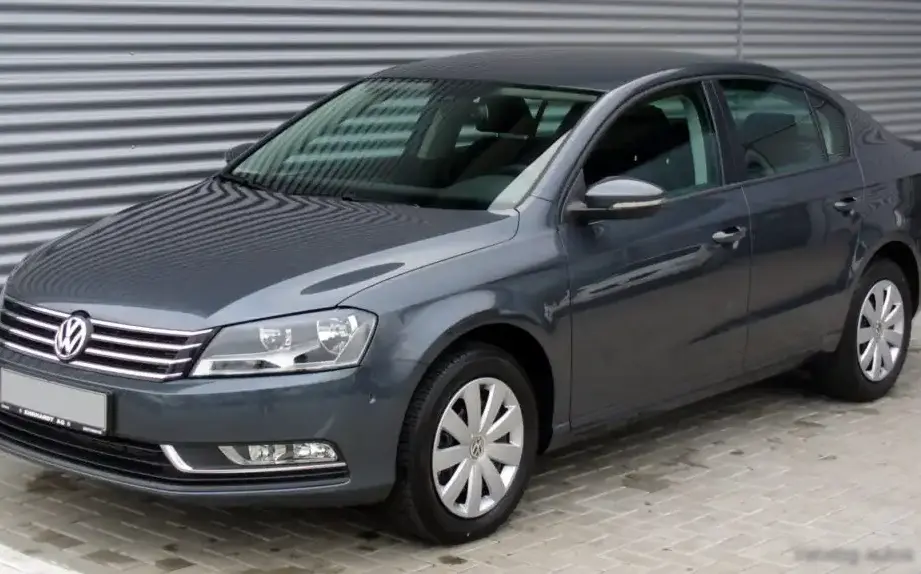
The Volkswagen Passat B7, produced from 2010 to 2014, represented a significant refresh of the B6 generation, offering updated styling, improved technology, and refined powertrains. Within the B7 range, the 1.4 TSI 122 horsepower variant occupied an important position as an entry-level offering, particularly in European markets. This model aimed to provide a balance of fuel efficiency, reasonable performance, and affordability for buyers seeking a comfortable and practical mid-size sedan. It was positioned below the more powerful 1.8 TSI and 2.0 TDI models, targeting customers prioritizing economy over outright speed.
Technical Specifications
| Brand | Volkswagen |
| Model | Passat |
| Generation | Passat (B7) |
| Type (Engine) | 1.4 TSI (122 Hp) |
| Start of production | 2010 |
| End of production | 2014 |
| Powertrain Architecture | Internal Combustion engine |
| Body type | Sedan |
| Seats | 5 |
| Doors | 4 |
| Fuel consumption (urban) | 8.1 l/100 km (29 US mpg, 34.9 UK mpg) |
| Fuel consumption (extra urban) | 5.1 l/100 km (46.1 US mpg, 55.4 UK mpg) |
| Fuel consumption (combined) | 6.3 l/100 km (37.3 US mpg, 44.8 UK mpg) |
| CO2 emissions | 145 g/km |
| Fuel Type | Petrol (Gasoline) |
| Acceleration 0 – 100 km/h | 10.3 sec |
| Acceleration 0 – 62 mph | 10.3 sec |
| Acceleration 0 – 60 mph | 9.8 sec |
| Maximum speed | 203 km/h (126.14 mph) |
| Emission standard | Euro 5 |
| Weight-to-power ratio | 11.2 kg/Hp |
| Weight-to-torque ratio | 6.8 kg/Nm |
| Power | 122 Hp @ 5000 rpm |
| Torque | 200 Nm @ 1500-4000 rpm (147.51 lb.-ft.) |
| Engine layout | Front, Transverse |
| Engine Model/Code | EA111 / CAXA |
| Engine displacement | 1390 cm3 (84.82 cu. in.) |
| Number of cylinders | 4 |
| Engine configuration | Inline |
| Cylinder Bore | 76.5 mm (3.01 in.) |
| Piston Stroke | 75.6 mm (2.98 in.) |
| Compression ratio | 10:1 |
| Number of valves per cylinder | 4 |
| Fuel injection system | Direct injection |
| Engine aspiration | Turbocharger, Intercooler |
| Valvetrain | DOHC |
| Engine oil capacity | 3.6 l (3.8 US qt, 3.17 UK qt) |
| Kerb Weight | 1365 kg (3009.31 lbs.) |
| Max. weight | 1990 kg (4387.2 lbs.) |
| Max load | 625 kg (1377.89 lbs.) |
| Trunk (boot) space (minimum) | 565 l (19.95 cu. ft.) |
| Fuel tank capacity | 70 l (18.49 US gal, 15.4 UK gal) |
| Length | 4769 mm (187.76 in.) |
| Width | 1820 mm (71.65 in.) |
| Height | 1470 mm (57.87 in.) |
| Wheelbase | 2712 mm (106.77 in.) |
| Front track | 1552 mm (61.1 in.) |
| Rear track | 1551 mm (61.06 in.) |
| Front suspension | Independent, McPherson with coil spring and anti-roll bar |
| Rear suspension | Independent multi-link spring suspension with stabilizer |
| Front brakes | Ventilated discs, 312×25 mm |
| Rear brakes | Disc, 286×12 mm |
| Number of gears | 6 |
| Type of gearbox | Manual transmission |
INTRODUCTION
The Volkswagen Passat B7 1.4 TSI (122 hp) was a key component of the B7 lineup, launched in 2010 and continuing through 2014. Built on the Volkswagen Group’s B7 platform (shared with the Škoda Superb and Audi A4), the B7 Passat aimed to refine the already successful B6 model. The 1.4 TSI variant was specifically tailored for markets where fuel economy and lower purchase prices were prioritized. It offered a more accessible entry point into the Passat range, appealing to buyers who didn’t require the higher performance of the larger-displacement engines. This trim level was particularly popular in Europe, where taxation systems often favor smaller-engined vehicles.
Powertrain & Engine Architecture
At the heart of the Passat B7 1.4 TSI was the EA111 engine code, specifically the CAXA variant. This 1.4-liter inline-four cylinder engine featured direct fuel injection and a turbocharger with an intercooler. The direct injection system allowed for precise fuel delivery, improving efficiency and reducing emissions. The turbocharger boosted power output, compensating for the relatively small displacement. The engine produced 122 horsepower at 5000 rpm and 200 Nm (147.51 lb-ft) of torque between 1500 and 4000 rpm. This torque curve provided good low-end responsiveness, making it suitable for everyday driving. The engine utilized a dual overhead camshaft (DOHC) valvetrain with four valves per cylinder. The engine was typically paired with a 6-speed manual transmission, although a 7-speed DSG (Direct-Shift Gearbox) dual-clutch automatic transmission was also available as an option.
Driving Characteristics
The 1.4 TSI 122 hp Passat B7 offered a comfortable and refined driving experience, albeit not a particularly sporty one. Acceleration from 0 to 100 km/h (0-62 mph) took around 10.3 seconds, which was adequate for most driving situations but noticeably slower than the 1.8 TSI or 2.0 TDI models. The turbocharger provided a noticeable boost in power during acceleration, but the engine could feel somewhat strained at higher speeds or when fully loaded. The 6-speed manual transmission offered precise shifts, while the optional DSG provided smooth and quick gear changes. The gear ratios were tuned for fuel efficiency, with a relatively long final drive. Compared to the more powerful variants, the 1.4 TSI felt less eager to rev and required more downshifting when overtaking or climbing hills.
Equipment & Trim Levels
The Passat B7 1.4 TSI typically came with a reasonable level of standard equipment. This included air conditioning, power windows, power mirrors, a basic audio system, and alloy wheels. Higher trim levels, such as Trendline and Comfortline, added features like automatic climate control, a more advanced audio system with touchscreen display, parking sensors, and cruise control. Optional extras included leather upholstery, a sunroof, and a navigation system. Interior upholstery was typically cloth, although leather was available as an upgrade. The dashboard layout was functional and well-designed, with clear instrumentation and intuitive controls.
Chassis & Braking
The Passat B7 featured an independent suspension system, with McPherson struts at the front and a multi-link setup at the rear. This provided a comfortable ride and good handling characteristics. The suspension was tuned for comfort rather than outright sportiness, but it still offered a stable and predictable driving experience. The braking system consisted of ventilated discs at the front and solid discs at the rear. Anti-lock braking system (ABS) was standard. The 1.4 TSI variant, being lighter than its more powerful siblings, generally required less braking force to come to a stop.
Market Reception & Comparison
The Passat B7 1.4 TSI was generally well-received by critics as a practical and fuel-efficient mid-size sedan. It was praised for its comfortable ride, spacious interior, and refined engine. However, some critics noted that the engine lacked the punch of the larger-displacement options. Compared to the 1.8 TSI, the 1.4 TSI offered lower running costs but less performance. The 2.0 TDI, while more expensive, provided superior fuel economy and torque. The 1.4 TSI was often seen as a good compromise for buyers who prioritized economy and comfort over outright performance.
Legacy
The EA111 1.4 TSI engine, while generally reliable, has been known to exhibit some issues over time, including carbon buildup on the intake valves and potential problems with the turbocharger. Regular maintenance, including oil changes and the use of quality fuel, is crucial for ensuring long-term reliability. In the used car market, the Passat B7 1.4 TSI remains a popular choice for buyers seeking an affordable and practical mid-size sedan. Its fuel efficiency and comfortable ride continue to appeal to a wide range of drivers. However, potential buyers should be aware of the potential maintenance issues associated with the engine and ensure that the vehicle has been properly maintained.