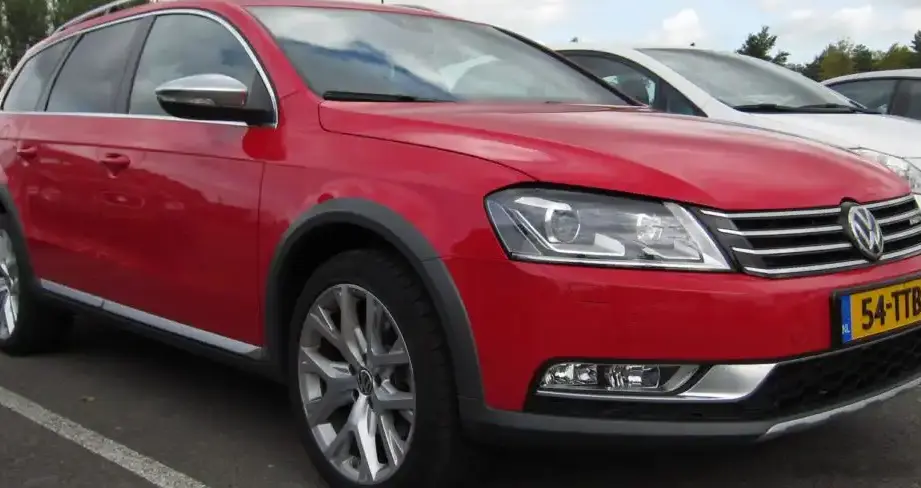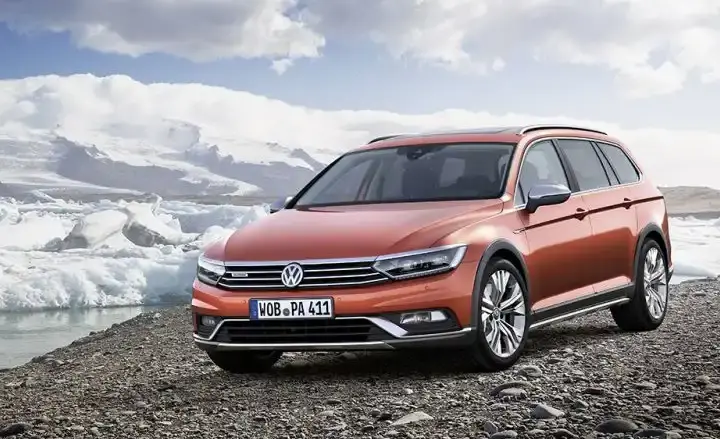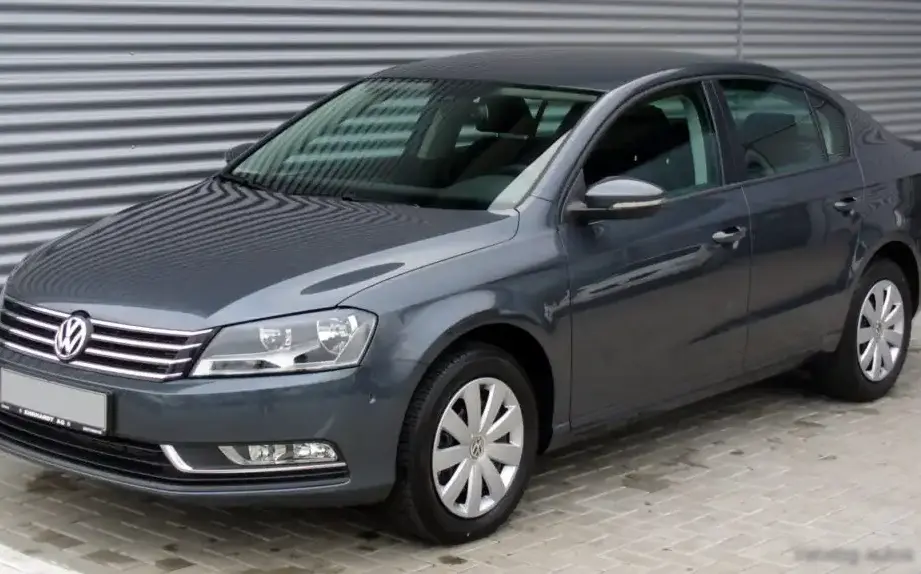
The Volkswagen Passat B7 2.0 BlueTDI with the 140 horsepower (Hp) output and a dual-clutch gearbox (DSG) represents a significant iteration of Volkswagen’s popular mid-size sedan. Produced between 2011 and 2014, this variant occupied a crucial position in the Passat lineup, offering a balance between fuel efficiency, performance, and technology. It was primarily aimed at the European market, where diesel engines and DSG transmissions were highly favored, though limited numbers were also available in other regions. The B7 generation itself was a comprehensive refresh of the B6, featuring revised styling, improved interior quality, and updated technology.
Technical Specifications
| Brand | Volkswagen |
| Model | Passat |
| Generation | Passat (B7) |
| Type (Engine) | 2.0 BlueTDI (140 Hp) DSG |
| Start of production | 2011 |
| End of production | 2014 |
| Powertrain Architecture | Internal Combustion engine |
| Body type | Sedan |
| Seats | 5 |
| Doors | 4 |
| Fuel consumption (urban) | 6.5 l/100 km (36.2 US mpg, 43.5 UK mpg, 15.4 km/l) |
| Fuel consumption (extra urban) | 4.4 l/100 km (53.5 US mpg, 64.2 UK mpg, 22.7 km/l) |
| Fuel consumption (combined) | 5.2 l/100 km (45.2 US mpg, 54.3 UK mpg, 19.2 km/l) |
| CO2 emissions | 135 g/km |
| Fuel Type | Diesel |
| Acceleration 0 – 100 km/h | 9.9 sec |
| Acceleration 0 – 62 mph | 9.9 sec |
| Acceleration 0 – 60 mph | 9.4 sec |
| Maximum speed | 211 km/h (131.11 mph) |
| Emission standard | Euro 6 N |
| Weight-to-power ratio | 10.9 kg/Hp, 91.7 Hp/tonne |
| Weight-to-torque ratio | 4.8 kg/Nm, 209.7 Nm/tonne |
| Power | 140 Hp @ 4200 rpm |
| Power per litre | 71.1 Hp/l |
| Torque | 320 Nm @ 1750-2500 rpm (236.02 lb.-ft. @ 1750-2500 rpm) |
| Engine layout | Front, Transverse |
| Engine Model/Code | EA189 / CFFB |
| Engine displacement | 1968 cm3 (120.09 cu. in.) |
| Number of cylinders | 4 |
| Engine configuration | Inline |
| Cylinder Bore | 81 mm (3.19 in.) |
| Piston Stroke | 95.5 mm (3.76 in.) |
| Compression ratio | 18:1 |
| Number of valves per cylinder | 4 |
| Fuel injection system | Diesel Commonrail |
| Engine aspiration | Turbocharger, Intercooler |
| Valvetrain | DOHC |
| Engine oil capacity | 4.3 l (4.54 US qt | 3.78 UK qt) |
| Kerb Weight | 1526 kg (3364.25 lbs.) |
| Max. weight | 2160 kg (4761.98 lbs.) |
| Max load | 634 kg (1397.73 lbs.) |
| Trunk (boot) space – minimum | 565 l (19.95 cu. ft.) |
| Fuel tank capacity | 70 l (18.49 US gal | 15.4 UK gal) |
| Max. roof load | 100 kg (220.46 lbs.) |
| Permitted trailer load with brakes (8%) | 2000 kg (4409.25 lbs.) |
| Permitted trailer load with brakes (12%) | 1800 kg (3968.32 lbs.) |
| Permitted trailer load without brakes | 750 kg (1653.47 lbs.) |
| Permitted towbar download | 90 kg (198.42 lbs.) |
| Length | 4769 mm (187.76 in.) |
| Width | 1820 mm (71.65 in.) |
| Width including mirrors | 2062 mm (81.18 in.) |
| Height | 1470 mm (57.87 in.) |
| Wheelbase | 2712 mm (106.77 in.) |
| Front track | 1552 mm (61.1 in.) |
| Rear track | 1551 mm (61.06 in.) |
| Front overhang | 941 mm (37.05 in.) |
| Rear overhang | 1116 mm (43.94 in.) |
| Ride height (ground clearance) | 135 mm (5.31 in.) |
| Minimum turning circle | 11.4 m (37.4 ft.) |
| Drivetrain Architecture | Front wheel drive |
| Number of gears and type of gearbox | 6 gears, automatic transmission DSG |
| Front suspension | Independent, type McPherson with coil spring and anti-roll bar |
| Rear suspension | Independent multi-link spring suspension with stabilizer |
| Front brakes | Ventilated discs, 312×25 mm |
| Rear brakes | Disc, 286×12 mm |
INTRODUCTION
The Volkswagen Passat B7 2.0 BlueTDI 140 Hp DSG, launched in 2011, was a key component of the Passat range. Positioned as a mid-range offering, it aimed to provide a compelling blend of efficiency and usability. Built on the Volkswagen Group’s B7 platform (shared with the Škoda Superb and Audi A4), the B7 Passat represented an evolution rather than a revolution, focusing on refinement and improved technology. The “BlueTDI” designation indicated the engine’s compliance with stringent Euro 6 emissions standards, achieved through advanced exhaust gas treatment systems. This variant was particularly popular in Europe, where diesel-powered vehicles with automatic transmissions were common.
Powertrain & Engine Architecture
At the heart of the Passat B7 2.0 BlueTDI lies the EA189 engine family, specifically the CFFB engine code. This is a 1.968-liter, four-cylinder diesel engine featuring common rail direct injection and a turbocharger with an intercooler. The common rail system, operating at very high pressures, allows for precise fuel metering and optimized combustion. The engine utilizes a double overhead camshaft (DOHC) valvetrain with four valves per cylinder, enhancing volumetric efficiency. The 140 Hp output is achieved at 4200 rpm, while the peak torque of 320 Nm (236 lb-ft) is available between 1750 and 2500 rpm, providing strong low-end and mid-range pull. Paired with this engine is the Volkswagen Group’s renowned 6-speed DSG (Direct-Shift Gearbox). This dual-clutch transmission offers quick, seamless gear changes and contributes to improved fuel economy compared to a traditional automatic transmission. The DSG utilizes two separate clutches, one for even gears and one for odd gears, allowing the next gear to be pre-selected for near-instantaneous shifts.
Driving Characteristics
The 2.0 BlueTDI 140 Hp DSG Passat B7 delivers a comfortable and refined driving experience. While not overtly sporty, the engine provides sufficient power for everyday driving and overtaking maneuvers. The DSG transmission enhances responsiveness, and the broad torque curve means that the engine feels strong across a wide range of speeds. Acceleration from 0 to 100 km/h (0-62 mph) takes approximately 9.9 seconds. Compared to the more powerful 2.0 TDI variants (170 Hp or higher), this version feels less urgent, but the difference is often negligible in typical driving conditions. The DSG transmission’s shift points are generally well-optimized for fuel efficiency, but can be manually overridden for more spirited driving. The relatively low weight of the vehicle (around 1526 kg) helps to mitigate the effects of the 140 Hp output.
Equipment & Trim Levels
The Passat B7 2.0 BlueTDI 140 Hp DSG typically came equipped with a respectable level of standard features. These included air conditioning, power windows, central locking, an audio system with CD player, and alloy wheels. Higher trim levels, such as Trendline, Comfortline, and Highline, added features like automatic climate control, a touchscreen infotainment system, parking sensors, and leather upholstery. Optional extras included navigation systems, sunroofs, and advanced driver-assistance systems. Interior upholstery was typically cloth on lower trims, with leather options available on higher-spec models. The dashboard layout was functional and well-designed, with a focus on ergonomics.
Chassis & Braking
The Passat B7 features a fully independent suspension system, with a McPherson strut setup at the front and a multi-link setup at the rear. This configuration provides a good balance between ride comfort and handling. Stabilizer bars are fitted to both axles to reduce body roll during cornering. The braking system consists of ventilated discs at the front and solid discs at the rear. Anti-lock braking system (ABS) is standard, along with electronic brake-force distribution (EBD). The steering is power-assisted, providing a light and precise feel.
Market Reception & Comparison
The Passat B7 2.0 BlueTDI 140 Hp DSG was generally well-received by automotive critics. It was praised for its fuel efficiency, comfortable ride, and refined interior. However, some reviewers noted that the engine could feel a little underpowered, particularly when fully loaded or driving uphill. Compared to the higher-output TDI variants, this version offered a more affordable entry point into the Passat range. Its fuel economy was a key selling point, averaging around 5.2 l/100 km (45.2 US mpg), making it an attractive option for drivers covering long distances. Reliability was generally good, although some owners reported issues with the DSG transmission, particularly early units.
Legacy
The Volkswagen Passat B7 2.0 BlueTDI 140 Hp DSG remains a popular choice in the used car market. Its combination of fuel efficiency, practicality, and reliability has ensured its continued appeal. The EA189 engine, while subject to some controversy regarding emissions (Dieselgate), is generally considered to be a robust and durable unit when properly maintained. The DSG transmission, while potentially requiring more frequent servicing than a traditional automatic, offers a superior driving experience. Today, these Passats can be found with relatively high mileage, demonstrating their inherent durability. They represent a solid and dependable option for buyers seeking a comfortable and economical mid-size sedan.