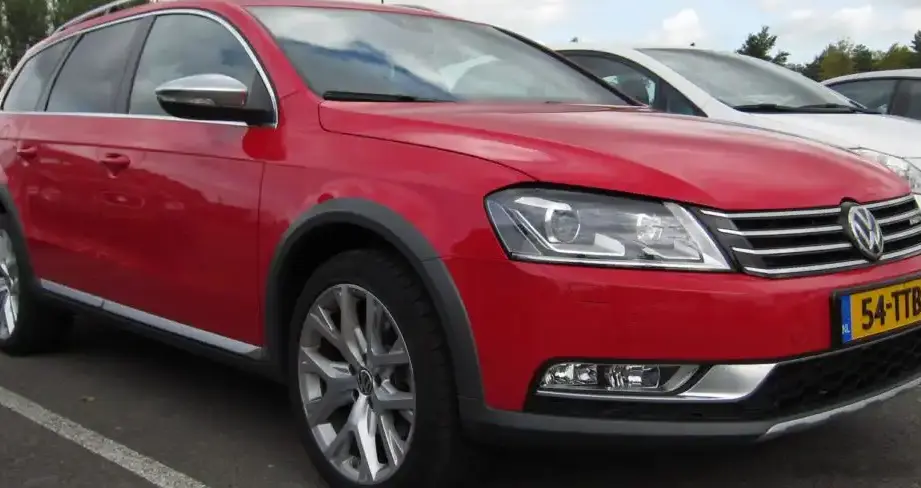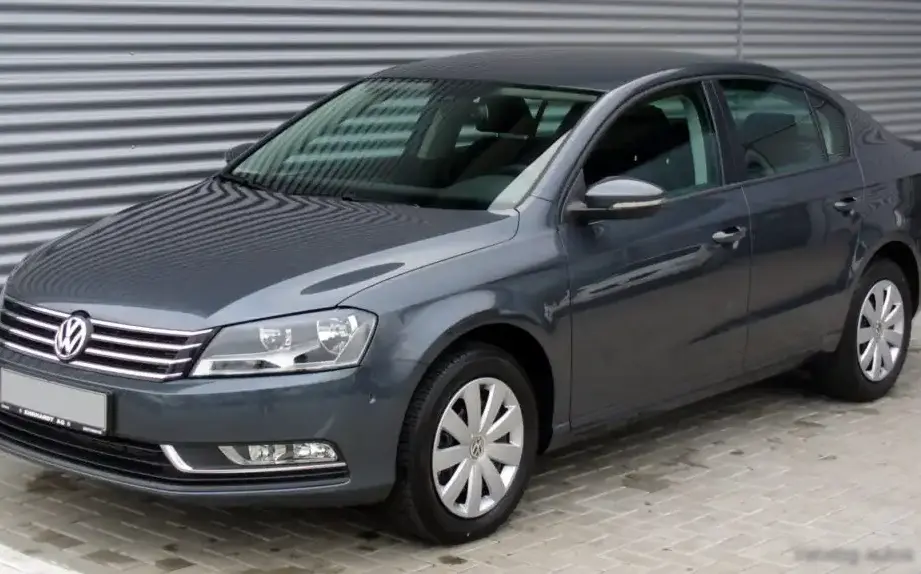
The Volkswagen Passat B7 2.0 TDI BMT (177 hp) represents a significant iteration of Volkswagen’s popular mid-size sedan, produced between 2012 and 2014. Positioned as a mid-range offering within the B7 Passat lineup, this variant aimed to balance fuel efficiency with respectable performance, appealing to drivers seeking a practical and comfortable daily driver. It falls within the broader context of the B7 generation (2010-2015), which itself was a comprehensive refresh of the B6 Passat, focusing on refinement and technological upgrades. The “BMT” designation stands for “BlueMotion Technology,” signifying Volkswagen’s efforts to improve fuel economy and reduce emissions.
Technical Specifications
| Brand | Volkswagen |
| Model | Passat |
| Generation | Passat (B7) |
| Type (Engine) | 2.0 TDI BMT (177 Hp) |
| Start of production | 2012 |
| End of production | 2014 |
| Powertrain Architecture | Internal Combustion engine |
| Body type | Sedan |
| Seats | 5 |
| Doors | 4 |
| Fuel consumption (economy) – urban (NEDC) | 5.4 l/100 km (43.6 US mpg, 52.3 UK mpg, 18.5 km/l) |
| Fuel consumption (economy) – extra urban (NEDC) | 4.1 l/100 km (57.4 US mpg, 68.9 UK mpg, 24.4 km/l) |
| Fuel consumption (economy) – combined (NEDC) | 4.6 l/100 km (51.1 US mpg, 61.4 UK mpg, 21.7 km/l) |
| CO2 emissions (NEDC) | 120 g/km |
| Fuel Type | Diesel |
| Acceleration 0 – 100 km/h | 8.4 sec |
| Acceleration 0 – 62 mph | 8.4 sec |
| Acceleration 0 – 60 mph | 8 sec |
| Maximum speed | 227 km/h (141.05 mph) |
| Emission standard | Euro 5 |
| Weight-to-power ratio | 8.2 kg/Hp, 121.3 Hp/tonne |
| Weight-to-torque ratio | 3.8 kg/Nm, 260.5 Nm/tonne |
| Power | 177 Hp @ 4200 rpm |
| Power per litre | 89.9 Hp/l |
| Torque | 380 Nm @ 1750-2500 rpm (280.27 lb.-ft. @ 1750-2500 rpm) |
| Engine layout | Front, Transverse |
| Engine Model/Code | EA189 / CFGC |
| Engine displacement | 1968 cm3 (120.09 cu. in.) |
| Number of cylinders | 4 |
| Engine configuration | Inline |
| Cylinder Bore | 81 mm (3.19 in.) |
| Piston Stroke | 95.5 mm (3.76 in.) |
| Compression ratio | 16:1 |
| Number of valves per cylinder | 4 |
| Fuel injection system | Diesel Commonrail |
| Engine aspiration | Turbocharger, Intercooler |
| Valvetrain | DOHC |
| Engine oil capacity | 4.3 l (4.54 US qt | 3.78 UK qt) |
| Kerb Weight | 1459 kg (3216.54 lbs.) |
| Max. weight | 2090 kg (4607.66 lbs.) |
| Max load | 631 kg (1391.12 lbs.) |
| Trunk (boot) space – minimum | 565 l (19.95 cu. ft.) |
| Fuel tank capacity | 70 l (18.49 US gal | 15.4 UK gal) |
| Length | 4769 mm (187.76 in.) |
| Width | 1820 mm (71.65 in.) |
| Width including mirrors | 2062 mm (81.18 in.) |
| Height | 1470 mm (57.87 in.) |
| Wheelbase | 2712 mm (106.77 in.) |
| Front track | 1552 mm (61.1 in.) |
| Rear (Back) track | 1551 mm (61.06 in.) |
| Front suspension | Independent, type McPherson with coil spring and anti-roll bar |
| Rear suspension | Independent multi-link spring suspension with stabilizer |
| Front brakes | Ventilated discs, 312×25 mm |
| Rear brakes | Disc, 286×12 mm |
Powertrain & Engine Architecture
The heart of the Passat B7 2.0 TDI BMT is the EA189 series 2.0-liter inline-four diesel engine, specifically the CFGC code. This engine utilizes a common rail direct injection system, delivering fuel at extremely high pressures for optimized combustion. The turbocharger, coupled with an intercooler, provides increased air density for improved power output. The engine features a double overhead camshaft (DOHC) valvetrain with four valves per cylinder, enhancing volumetric efficiency. The “BMT” designation incorporates features like start-stop technology and optimized aerodynamics to reduce fuel consumption. While a six-speed manual transmission was available, this variant was commonly paired with a six-speed automatic transmission (typically the 09G or 0C8 depending on production date), chosen for its convenience and ease of use. The automatic transmission was programmed for fuel efficiency, with taller gear ratios prioritizing economy over outright acceleration.
Driving Characteristics
The 177 hp and 280 lb-ft of torque offered by the 2.0 TDI BMT provided adequate performance for everyday driving. Acceleration from 0-60 mph took around 8 seconds, making it competitive with other mid-size sedans. However, compared to the more powerful Passat variants (like the 2.0 TSI gasoline engine), the TDI BMT felt less responsive, particularly during overtaking maneuvers. The automatic transmission, while smooth, sometimes hesitated during downshifts. The focus was clearly on fuel economy; the engine delivered strong low-end torque, making it easy to maintain highway speeds with minimal effort. The gear ratios were optimized for cruising, resulting in a relaxed driving experience on long journeys.
Equipment & Trim Levels
The 2.0 TDI BMT typically came equipped with a respectable level of standard features. Interior appointments included cloth upholstery, manually adjustable front seats, and a basic audio system. Air conditioning was standard, as were power windows and mirrors. Higher trim levels, such as Trendline and Comfortline, added features like alloy wheels, upgraded audio systems, automatic climate control, and parking sensors. Optional extras included leather upholstery, a sunroof, and a navigation system. Safety features included ABS, electronic stability control, and multiple airbags.
Chassis & Braking
The Passat B7 utilized an independent suspension setup, with McPherson struts at the front and a multi-link system at the rear. This configuration provided a comfortable ride quality, absorbing bumps and imperfections in the road effectively. The front brakes were ventilated discs, while the rear brakes were solid discs. The steering was electrically assisted, offering a light and precise feel. Stabilizer bars were fitted to both the front and rear axles to reduce body roll during cornering. The suspension tuning was geared towards comfort rather than sporty handling.
Market Reception & Comparison
The Passat B7 2.0 TDI BMT was generally well-received by automotive critics. It was praised for its fuel efficiency, comfortable ride, and spacious interior. However, some reviewers noted that the engine lacked the punch of its gasoline counterparts. Compared to the 1.6 TDI Passat, the 2.0 TDI BMT offered significantly more power and torque, making it a more capable all-rounder. Against the more powerful 2.0 TSI gasoline engine, the TDI BMT traded performance for fuel economy. The TDI BMT’s fuel economy figures of around 51 mpg combined were a major selling point, particularly in Europe where diesel fuel was often cheaper than gasoline.
Legacy
The EA189 engine family, while generally reliable, has been subject to scrutiny regarding emissions compliance, particularly in the wake of the “Dieselgate” scandal. However, the 2.0 TDI BMT, when properly maintained, has proven to be a durable and long-lasting powertrain. In the used car market, these Passats represent a good value proposition, offering a comfortable and economical driving experience. Regular maintenance, including oil changes and filter replacements, is crucial to ensure the longevity of the engine and transmission. Potential buyers should be aware of the potential for diesel particulate filter (DPF) issues, particularly if the vehicle has been primarily used for short trips.