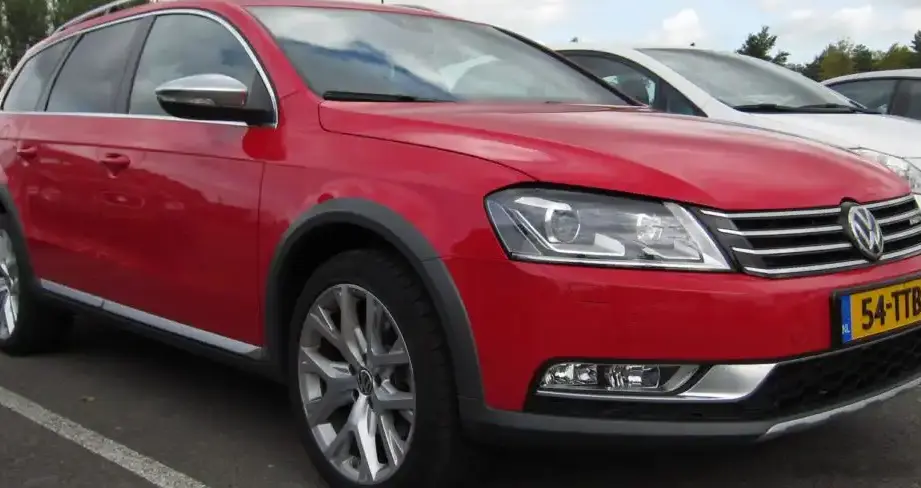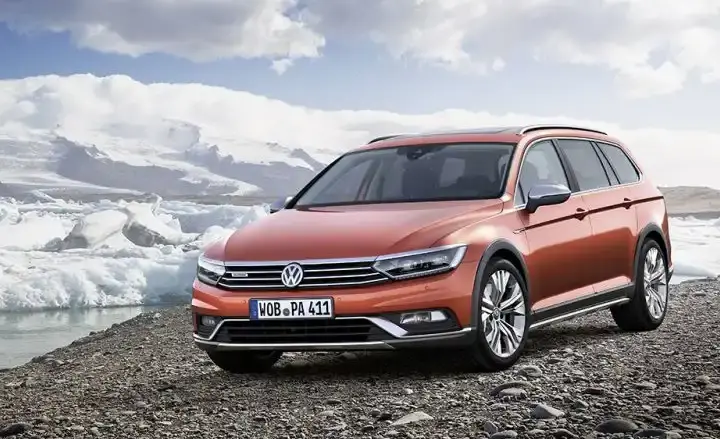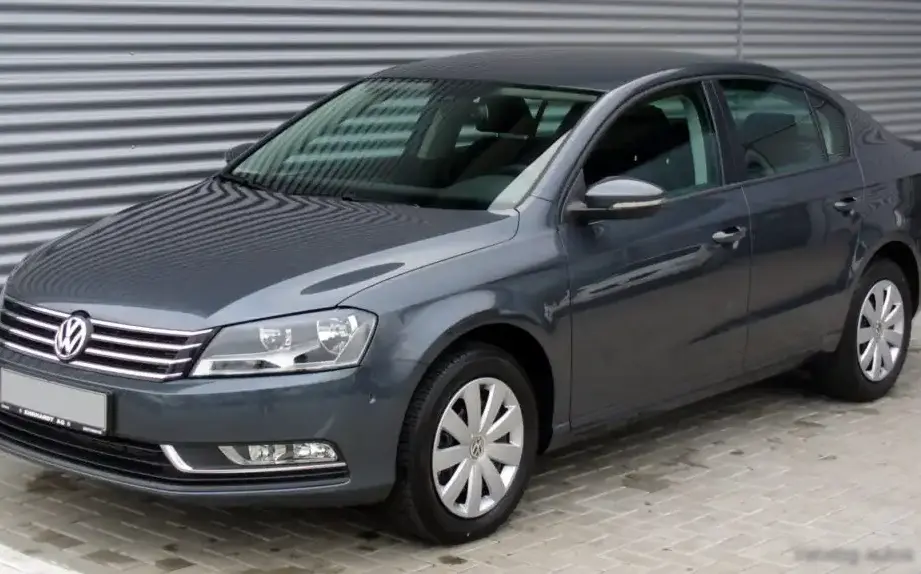
The Volkswagen Passat (B7) 2.0 TDI BMT 4MOTION DSG, produced from 2013 to 2014, represents a sophisticated iteration of Volkswagen’s mid-size executive car. Positioned as a premium offering within the B7 Passat range, this variant combined a fuel-efficient diesel engine with all-wheel drive and a dual-clutch transmission, appealing to drivers seeking both performance and practicality. It was primarily marketed in Europe, where demand for diesel-powered, all-weather vehicles remained strong. The B7 generation itself was a significant refresh of the B6, featuring revised styling, improved interior quality, and updated technology.
Technical Specifications
| Brand | Volkswagen |
| Model | Passat |
| Generation | Passat (B7) |
| Type (Engine) | 2.0 TDI BMT (177 Hp) 4MOTION DSG |
| Start of production | 2013 |
| End of production | 2014 |
| Powertrain Architecture | Internal Combustion engine |
| Body type | Sedan |
| Seats | 5 |
| Doors | 4 |
| Fuel consumption (economy) – urban (NEDC) | 6.7 l/100 km (35.1 US mpg, 42.2 UK mpg, 14.9 km/l) |
| Fuel consumption (economy) – extra urban (NEDC) | 5 l/100 km (47 US mpg, 56.5 UK mpg, 20 km/l) |
| Fuel consumption (economy) – combined (NEDC) | 5.6 l/100 km (42 US mpg, 50.4 UK mpg, 17.9 km/l) |
| CO2 emissions (NEDC) | 147 g/km |
| Fuel Type | Diesel |
| Acceleration 0 – 100 km/h | 8.3 sec |
| Acceleration 0 – 62 mph | 8.3 sec |
| Acceleration 0 – 60 mph | 7.9 sec |
| Maximum speed | 220 km/h (136.7 mph) |
| Emission standard | Euro 5 |
| Weight-to-power ratio | 8.9 kg/Hp, 112.4 Hp/tonne |
| Weight-to-torque ratio | 4.1 kg/Nm, 241.3 Nm/tonne |
| Power | 177 Hp @ 4200 rpm |
| Torque | 380 Nm @ 1750-2500 rpm (280.27 lb.-ft. @ 1750-2500 rpm) |
| Engine layout | Front, Transverse |
| Engine Model/Code | EA189 / CFGC |
| Engine displacement | 1968 cm3 (120.09 cu. in.) |
| Number of cylinders | 4 |
| Engine configuration | Inline |
| Cylinder Bore | 81 mm (3.19 in.) |
| Piston Stroke | 95.5 mm (3.76 in.) |
| Compression ratio | 16:1 |
| Number of valves per cylinder | 4 |
| Fuel injection system | Diesel Commonrail |
| Engine aspiration | Turbocharger, Intercooler |
| Valvetrain | DOHC |
| Engine oil capacity | 4.3 l (4.54 US qt | 3.78 UK qt) |
| Kerb Weight | 1575 kg (3472.28 lbs.) |
| Max. weight | 2210 kg (4872.22 lbs.) |
| Max load | 635 kg (1399.94 lbs.) |
| Trunk (boot) space – minimum | 541 l (19.11 cu. ft.) |
| Fuel tank capacity | 68 l (17.96 US gal | 14.96 UK gal) |
| Max. roof load | 100 kg (220.46 lbs.) |
| Permitted trailer load with brakes (8%) | 2200 kg (4850.17 lbs.) |
| Permitted trailer load with brakes (12%) | 2000 kg (4409.25 lbs.) |
| Permitted trailer load without brakes | 750 kg (1653.47 lbs.) |
| Permitted towbar download | 90 kg (198.42 lbs.) |
| Length | 4769 mm (187.76 in.) |
| Width | 1820 mm (71.65 in.) |
| Width including mirrors | 2062 mm (81.18 in.) |
| Height | 1470 mm (57.87 in.) |
| Wheelbase | 2712 mm (106.77 in.) |
| Front track | 1552 mm (61.1 in.) |
| Rear (Back) track | 1551 mm (61.06 in.) |
| Front overhang | 941 mm (37.05 in.) |
| Rear overhang | 1116 mm (43.94 in.) |
| Ride height (ground clearance) | 135 mm (5.31 in.) |
| Minimum turning circle (turning diameter) | 11.4 m (37.4 ft.) |
| Drivetrain Architecture | All wheel drive (4×4). Internal Combustion engine. The Internal combustion engine (ICE) drives the front wheels permanently, and the rear wheels are driven through an electrically or mechanically operated clutch if necessary. |
| Number of gears and type of gearbox | 6 gears, automatic transmission DSG |
| Front suspension | Independent, type McPherson with coil spring and anti-roll bar |
| Rear suspension | Independent multi-link spring suspension with stabilizer |
| Front brakes | Ventilated discs, 312×25 mm |
| Rear brakes | Disc, 286×12 mm |
Powertrain & Engine Architecture
The heart of the Passat 2.0 TDI BMT 4MOTION DSG is the EA189 series 2.0-liter inline-four diesel engine, specifically the CFGC code. This engine utilizes common rail direct injection, delivering fuel at extremely high pressures for optimized combustion. The “BMT” designation stands for “Best Mileage Technology,” indicating the inclusion of features designed to enhance fuel efficiency, such as a reduced-friction design and optimized combustion chamber geometry. A turbocharger with an intercooler provides forced induction, boosting power output to 177 horsepower at 4200 rpm and 380 Nm (280 lb-ft) of torque between 1750 and 2500 rpm. The engine features a double overhead camshaft (DOHC) valvetrain with four valves per cylinder. The engine is transversely mounted in the front of the vehicle.
The DSG (Direct-Shift Gearbox) is a seven-speed dual-clutch transmission. This transmission offers both the efficiency of a manual gearbox and the convenience of an automatic. It operates by using two separate clutches for odd and even gears, allowing for incredibly fast and smooth gear changes. The 4MOTION all-wheel-drive system employs a Haldex multi-plate clutch, which automatically distributes torque between the front and rear axles as needed, providing enhanced traction in various driving conditions.
Driving Characteristics
The 2.0 TDI BMT 4MOTION DSG offered a balanced driving experience. While not overtly sporty, the 177 hp engine and DSG transmission provided brisk acceleration, achieving 0-62 mph in 8.3 seconds. The DSG transmission’s quick shifts contributed to a responsive feel, and the 4MOTION system instilled confidence in slippery conditions. Compared to the lower-powered 1.6 TDI variants, the 2.0 TDI offered significantly more performance, particularly during overtaking maneuvers. However, it didn’t match the outright speed of the more expensive and performance-oriented Passat models equipped with larger engines. The gear ratios were tuned for a blend of fuel efficiency and usability, with a focus on providing ample torque in the mid-range for everyday driving.
Equipment & Trim Levels
The 2.0 TDI BMT 4MOTION DSG typically came with a generous level of standard equipment. This included features like air conditioning, a touchscreen infotainment system, alloy wheels, and a multi-function steering wheel. Higher trim levels offered options such as leather upholstery, a sunroof, parking sensors, and advanced safety systems like adaptive cruise control and lane assist. Interior upholstery was generally cloth on base models, with leather available as an upgrade. Dashboard configurations were typically dark-toned, with a focus on functionality and ergonomics.
Chassis & Braking
The B7 Passat featured an independent suspension setup at all four corners. The front suspension utilized a McPherson strut design, while the rear employed a multi-link setup. This configuration provided a comfortable ride quality while maintaining good handling characteristics. The 4MOTION models often featured slightly stiffer suspension components to accommodate the added weight and improve stability. Braking duties were handled by ventilated discs at the front and solid discs at the rear. Anti-lock braking system (ABS) was standard, along with electronic brake-force distribution (EBD).
Market Reception & Comparison
The Passat 2.0 TDI BMT 4MOTION DSG was generally well-received by automotive critics. It was praised for its fuel efficiency, comfortable ride, and all-weather capability. However, some reviewers noted that the engine could be somewhat noisy under hard acceleration. Compared to the 1.6 TDI models, the 2.0 TDI offered a noticeable performance improvement, justifying the higher price tag for drivers who frequently undertook long journeys or required more power. Against competitors like the Ford Mondeo and Opel/Vauxhall Insignia, the Passat offered a more refined interior and a more sophisticated all-wheel-drive system.
Legacy
The EA189 engine family, while generally reliable, has been subject to scrutiny regarding emissions compliance. The 2.0 TDI BMT, like other EA189 engines, was affected by the Volkswagen emissions scandal, leading to software updates and potential recalls. Despite this, well-maintained examples of the Passat 2.0 TDI BMT 4MOTION DSG remain relatively common on the used car market. The DSG transmission, while offering performance benefits, can require more frequent servicing than a traditional automatic gearbox. Overall, this variant represents a capable and efficient mid-size executive car that continues to offer good value for money.