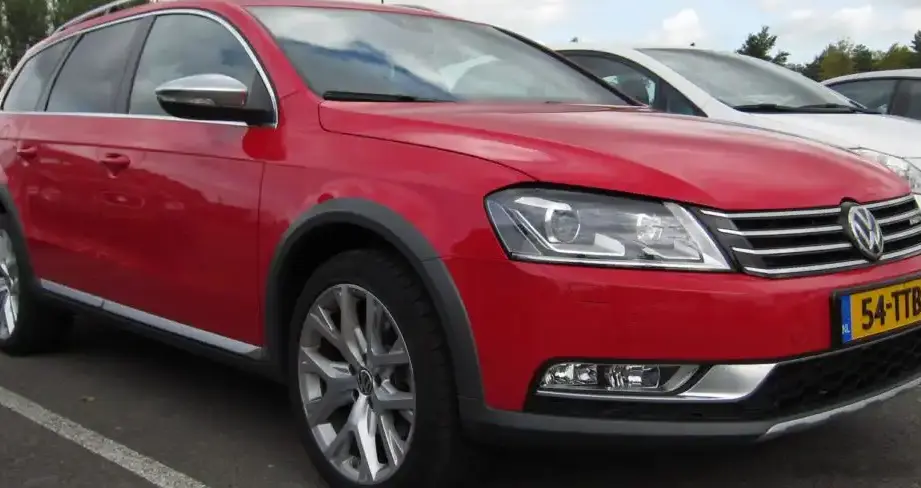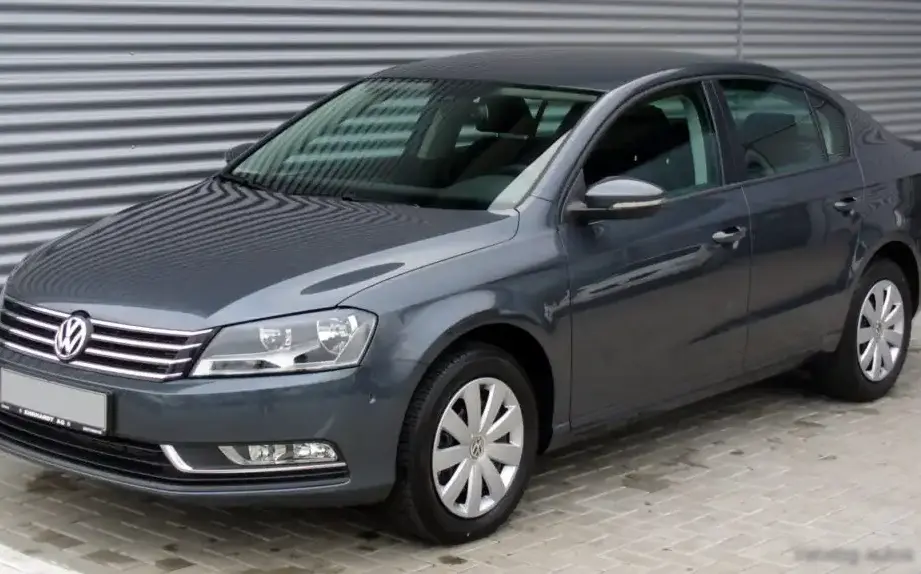
The Volkswagen Passat B7 2.0 TSI (211 hp) DSG represents a significant iteration of Volkswagen’s mid-size sedan, produced between 2010 and 2014. Positioned as a higher-performance variant within the B7 range, it offered a blend of efficiency and spirited driving. This model occupied a mid-to-upper trim level, appealing to buyers seeking more than the base engine options but not necessarily the flagship performance of potential future R-Line models. It was primarily marketed in Europe and other global markets, serving as a key competitor to vehicles like the Ford Mondeo, Opel Insignia, and BMW 3 Series.
Technical Specifications
| Brand | Volkswagen |
| Model | Passat |
| Generation | Passat (B7) |
| Type (Engine) | 2.0 TSI (211 Hp) DSG |
| Start of production | 2010 |
| End of production | 2014 |
| Powertrain Architecture | Internal Combustion engine |
| Body type | Sedan |
| Seats | 5 |
| Doors | 4 |
| Fuel consumption (economy) – urban (NEDC) | 10.8 l/100 km (21.8 US mpg, 26.2 UK mpg, 9.3 km/l) |
| Fuel consumption (economy) – extra urban (NEDC) | 5.9 l/100 km (39.9 US mpg, 47.9 UK mpg, 16.9 km/l) |
| Fuel consumption (economy) – combined (NEDC) | 7.7 l/100 km (30.5 US mpg, 36.7 UK mpg, 13 km/l) |
| CO2 emissions (NEDC) | 180 g/km |
| Fuel Type | Petrol (Gasoline) |
| Acceleration 0 – 100 km/h | 7.6 sec |
| Acceleration 0 – 62 mph | 7.6 sec |
| Acceleration 0 – 60 mph | 7.2 sec |
| Maximum speed | 236 km/h (146.64 mph) |
| Emission standard | Euro 5 |
| Weight-to-power ratio | 7 kg/Hp, 143.6 Hp/tonne |
| Weight-to-torque ratio | 5.2 kg/Nm, 190.6 Nm/tonne |
| Power | 211 Hp @ 5300-6200 rpm |
| Power per litre | 106.4 Hp/l |
| Torque | 280 Nm @ 1700-5200 rpm (206.52 lb.-ft. @ 1700-5200 rpm) |
| Engine layout | Front, Transverse |
| Engine Model/Code | EA888 / CCZB |
| Engine displacement | 1984 cm3 (121.07 cu. in.) |
| Number of cylinders | 4 |
| Engine configuration | Inline |
| Cylinder Bore | 82.5 mm (3.25 in.) |
| Piston Stroke | 92.8 mm (3.65 in.) |
| Compression ratio | 9.8:1 |
| Number of valves per cylinder | 4 |
| Fuel injection system | Direct injection |
| Engine aspiration | Turbocharger, Intercooler |
| Valvetrain | DOHC |
| Engine oil capacity | 4.7 l (4.97 US qt | 4.14 UK qt) |
| Kerb Weight | 1469 kg (3238.59 lbs.) |
| Max. weight | 2080 kg (4585.62 lbs.) |
| Max load | 611 kg (1347.02 lbs.) |
| Trunk (boot) space – minimum | 565 l (19.95 cu. ft.) |
| Fuel tank capacity | 70 l (18.49 US gal | 15.4 UK gal) |
| Max. roof load | 100 kg (220.46 lbs.) |
| Permitted trailer load with brakes (8%) | 1800 kg (3968.32 lbs.) |
| Permitted trailer load with brakes (12%) | 1600 kg (3527.4 lbs.) |
| Permitted trailer load without brakes | 750 kg (1653.47 lbs.) |
| Permitted towbar download | 90 kg (198.42 lbs.) |
| Length | 4769 mm (187.76 in.) |
| Width | 1820 mm (71.65 in.) |
| Width including mirrors | 2062 mm (81.18 in.) |
| Height | 1470 mm (57.87 in.) |
| Wheelbase | 2712 mm (106.77 in.) |
| Front track | 1552 mm (61.1 in.) |
| Rear (Back) track | 1551 mm (61.06 in.) |
| Front overhang | 941 mm (37.05 in.) |
| Rear overhang | 1116 mm (43.94 in.) |
| Ride height (ground clearance) | 135 mm (5.31 in.) |
| Minimum turning circle (turning diameter) | 11.4 m (37.4 ft.) |
| Drivetrain Architecture | The Internal combustion engine (ICE) drives the front wheels of the vehicle. |
| Drive wheel | Front wheel drive |
| Number of gears and type of gearbox | 6 gears, automatic transmission DSG |
| Front suspension | Independent, type McPherson with coil spring and anti-roll bar |
| Rear suspension | Independent multi-link spring suspension with stabilizer |
| Front brakes | Ventilated discs, 312×25 mm |
| Rear brakes | Disc, 286×12 mm |
| Assisting systems | ABS (Anti-lock braking system) |
| Steering type | Steering rack and pinion |
| Power steering | Electric Steering |
| Tires size | 215/55 R16; 235/45 R17; 235/40 R18 |
| Wheel rims size | 7J x 16; 7.5J x 17; 8J x 18 |
Powertrain & Engine Architecture
At the heart of the Passat B7 2.0 TSI (211 hp) lies the EA888 engine, specifically the CCZB variant. This 1984cc, turbocharged, direct-injection four-cylinder engine was a cornerstone of Volkswagen’s powertrain strategy. The engine utilizes a sophisticated direct injection system, delivering fuel directly into the combustion chamber for improved efficiency and power. The turbocharger, coupled with an intercooler, provides a significant boost in power output. The engine features a double overhead camshaft (DOHC) valvetrain with four valves per cylinder, optimizing gas flow for enhanced performance. The six-speed DSG (Direct-Shift Gearbox) automatic transmission is integral to the driving experience. This dual-clutch transmission offers rapid, seamless gear changes, contributing to both performance and fuel economy. The DSG’s programming is tuned to balance responsiveness with comfort, making it suitable for both city driving and highway cruising.
Driving Characteristics
The 211 hp output and 280 Nm (206.52 lb-ft) of torque provide brisk acceleration. The 0-60 mph sprint takes approximately 7.2 seconds, and the car reaches a top speed of 146.64 mph. Compared to lower-powered Passat variants (like the 1.6 TDI), the 2.0 TSI offers a noticeably more engaging driving experience. The DSG transmission allows for quick downshifts and responsive acceleration, while the turbocharger provides a surge of power in the mid-range. While not as sporty as a manual transmission, the DSG offers a good balance of convenience and performance. Compared to the range-topping models, the 2.0 TSI offers a sweet spot between performance and fuel efficiency.
Equipment & Trim Levels
The 2.0 TSI typically came equipped with a generous array of standard features. These often included alloy wheels, air conditioning, a multi-function steering wheel, and an infotainment system with a touchscreen display. Higher trim levels added features like leather upholstery, heated front seats, a sunroof, and advanced driver-assistance systems. Optional extras included navigation, parking sensors, and upgraded audio systems. Interior upholstery was typically cloth on base trims, with leather available as an upgrade. Dashboard configurations were generally consistent across the B7 range, with a focus on functionality and ergonomics.
Chassis & Braking
The Passat B7 2.0 TSI utilizes an independent suspension setup, with McPherson struts at the front and a multi-link system at the rear. This configuration provides a comfortable ride while maintaining good handling characteristics. Stabilizer bars are fitted to both axles to reduce body roll during cornering. The braking system consists of ventilated discs at the front and solid discs at the rear. ABS (Anti-lock Braking System) is standard, enhancing safety and control. The suspension tuning is geared towards comfort, but the 2.0 TSI variant benefits from slightly firmer damping compared to lower-powered models to manage the increased performance.
Market Reception & Comparison
The Passat B7 2.0 TSI (211 hp) was generally well-received by automotive critics. It was praised for its refined engine, comfortable ride, and spacious interior. Fuel economy was considered respectable for a car of its class, averaging around 30.5 US mpg in combined driving. Compared to other trims, the 2.0 TSI offered a significant performance upgrade without a substantial penalty in fuel economy. Reliability was generally good, although some owners reported minor issues with the DSG transmission. The Passat B7 2.0 TSI competed directly with other mid-size sedans like the Ford Mondeo, Opel Insignia, and BMW 3 Series, offering a compelling combination of value, performance, and comfort.
Legacy
The EA888 engine, in its various iterations, has proven to be a durable and reliable powerplant. The DSG transmission, while occasionally requiring maintenance, is generally robust. Today, the Passat B7 2.0 TSI (211 hp) remains a popular choice in the used car market. Its combination of performance, comfort, and practicality makes it an attractive option for buyers seeking a well-rounded mid-size sedan. Regular maintenance, particularly for the DSG transmission, is crucial to ensure long-term reliability. The B7 generation Passat, and this variant in particular, is often regarded as a well-engineered and refined vehicle that continues to offer a good driving experience.