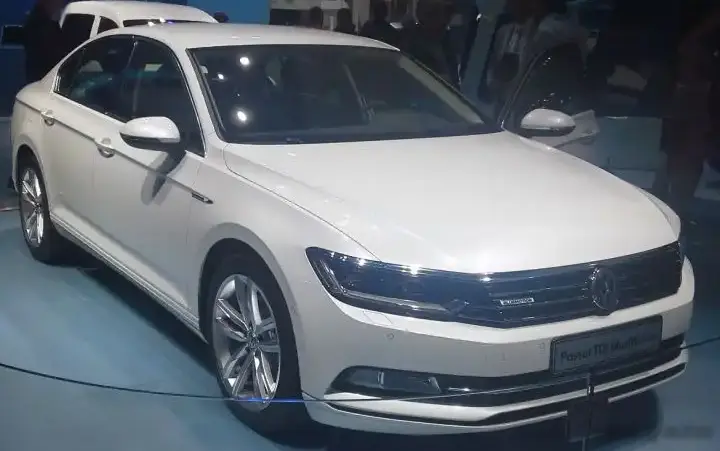
The Volkswagen Passat B8, produced from 2014 to 2018, represented a significant step forward for Volkswagen’s mid-size sedan. The 1.4 TSI (150 hp) ACT variant occupied a key position in the lineup, offering a balance between fuel efficiency and acceptable performance. This model was primarily aimed at the European market, where fuel economy and lower running costs are highly valued, though it was also available in select other regions. The “ACT” designation stands for Active Cylinder Technology, a fuel-saving feature that deactivates two cylinders under light load conditions. This version served as a more accessible entry point into the B8 Passat range, slotting below the more powerful 2.0 TSI models and diesel variants.
Technical Specifications
| Brand | Volkswagen |
| Model | Passat |
| Generation | Passat (B8) |
| Type (Engine) | 1.4 TSI (150 Hp) ACT |
| Start of production | 2014 |
| End of production | 2018 |
| Powertrain Architecture | Internal Combustion engine |
| Body type | Sedan |
| Seats | 5 |
| Doors | 4 |
| Fuel consumption (urban) | 6.0-6.1 l/100 km (39.2 – 38.6 US mpg) |
| Fuel consumption (extra urban) | 4.3-4.4 l/100 km (54.7 – 53.5 US mpg) |
| Fuel consumption (combined) | 4.9-5.0 l/100 km (48 – 47 US mpg) |
| CO2 emissions | 115-116 g/km |
| Fuel Type | Petrol (Gasoline) |
| Acceleration 0 – 100 km/h | 8.4 sec |
| Acceleration 0 – 62 mph | 8.4 sec |
| Acceleration 0 – 60 mph | 8 sec (Calculated) |
| Maximum speed | 220 km/h (136.7 mph) |
| Emission standard | Euro 6 |
| Weight-to-power ratio | 9.2 kg/Hp, 108.1 Hp/tonne |
| Weight-to-torque ratio | 5.5 kg/Nm, 180.2 Nm/tonne |
| Power | 150 Hp @ 5000-6000 rpm |
| Power per litre | 107.5 Hp/l |
| Torque | 250 Nm @ 1500-3000 rpm (184.39 lb.-ft.) |
| Engine layout | Front, Transverse |
| Engine Model/Code | CZDA, CZEA |
| Engine displacement | 1395 cm3 (85.13 cu. in.) |
| Number of cylinders | 4 |
| Engine configuration | Inline |
| Number of valves per cylinder | 4 |
| Fuel injection system | Direct injection |
| Engine aspiration | Turbocharger, Intercooler |
| Engine oil capacity | 4 l (4.23 US qt | 3.52 UK qt) |
| Kerb Weight | 1387 kg (3057.81 lbs.) |
| Max. weight | 1940 kg (4276.97 lbs.) |
| Max load | 553 kg (1219.16 lbs.) |
| Trunk (boot) space – minimum | 586 l (20.69 cu. ft.) |
| Trunk (boot) space – maximum | 1152 l (40.68 cu. ft.) |
| Fuel tank capacity | 66 l (17.44 US gal | 14.52 UK gal) |
| Length | 4767 mm (187.68 in.) |
| Width | 1832 mm (72.13 in.) |
| Height | 1456 mm (57.32 in.) |
| Wheelbase | 2791 mm (109.88 in.) |
| Front track | 1584 mm (62.36 in.) |
| Rear track | 1568 mm (61.73 in.) |
| Minimum turning circle | 11.7 m (38.39 ft.) |
| Drivetrain Architecture | Front wheel drive, ICE |
| Drive wheel | Front wheel drive |
| Number of gears | 6 gears, manual transmission |
| Front brakes | Ventilated discs |
| Assisting systems | ABS (Anti-lock braking system) |
| Steering type | Steering rack and pinion |
| Tires size | 215/60 R16; 215/55 R17 |
| Wheel rims size | 6.5J x 16; 7.0J x 17 |
INTRODUCTION
The Volkswagen Passat B8 1.4 TSI (150 hp) ACT, launched in 2014, was a key component of the eighth-generation Passat range. Built on the modular transverse matrix (MQB) platform – also known as the 1HX0/A3 platform – the B8 represented a move upmarket for the Passat, with improved interior quality, technology, and refinement. The 1.4 TSI ACT variant was positioned as the fuel-efficient option, appealing to buyers prioritizing economy over outright performance. It was a popular choice in Europe, where taxation and fuel costs incentivize smaller displacement engines. This trim level aimed to provide a comfortable and well-equipped family sedan at a relatively affordable price point.
Powertrain & Engine Architecture
At the heart of the Passat 1.4 TSI ACT lies the EA211 engine family. Specifically, the CZDA or CZEA engine code identifies this particular 1.4-liter, four-cylinder, turbocharged gasoline engine. This engine utilizes direct fuel injection (FSI) and a single turbocharger with an intercooler to boost power and efficiency. The key innovation is the Active Cylinder Technology (ACT), which shuts down cylinders 2 and 3 during low-load cruising conditions. This reduces pumping losses and significantly improves fuel economy. The engine’s valvetrain employs dual overhead camshafts (DOHC) with four valves per cylinder. The 1.4 TSI was typically paired with a 6-speed manual transmission, although a 7-speed DSG (Dual Clutch Gearbox) was also available as an option. The DSG offered quicker shifts and improved fuel efficiency, but at an additional cost.
Driving Characteristics
The 150 hp and 250 Nm (184 lb-ft) of torque delivered by the 1.4 TSI engine provided adequate, but not exhilarating, performance. Acceleration from 0-60 mph took around 8.4 seconds. In real-world driving, the engine felt responsive enough for everyday commuting and highway cruising. The ACT system was generally seamless in operation, with minimal noticeable transition when cylinders were deactivated or reactivated. Compared to the more powerful 2.0 TSI variants, the 1.4 TSI felt noticeably slower, particularly during overtaking maneuvers. The 6-speed manual transmission offered a decent spread of gears, but the relatively low power output meant frequent downshifts were often necessary. The DSG transmission, when equipped, provided smoother and more efficient gear changes, enhancing the overall driving experience.
Equipment & Trim Levels
The 1.4 TSI ACT Passat typically came with a respectable level of standard equipment. This included air conditioning, alloy wheels, a touchscreen infotainment system, and basic safety features like ABS, ESP, and multiple airbags. Higher trim levels, such as Trendline, Comfortline, and Highline, added features like automatic climate control, parking sensors, a navigation system, leather upholstery, and advanced driver-assistance systems. Optional extras included a panoramic sunroof, adaptive cruise control, and a premium sound system. Interior upholstery was typically cloth in the base models, with leather options available on higher trims. The dashboard layout was clean and modern, with a focus on ergonomics and ease of use.
Chassis & Braking
The Passat B8 featured a MacPherson strut front suspension and a multi-link rear suspension, providing a comfortable and controlled ride. The 1.4 TSI variant typically used smaller brake discs compared to the higher-powered models. Front brakes were ventilated discs, while rear brakes were often solid discs, depending on the specific trim level and market. The steering was precise and well-weighted, offering a good balance between feedback and ease of use. Stabilizer bars were fitted to both the front and rear axles to reduce body roll during cornering. The suspension tuning was geared towards comfort, making the Passat a pleasant long-distance cruiser.
Market Reception & Comparison
The Passat 1.4 TSI ACT received generally positive reviews from automotive critics. It was praised for its fuel efficiency, comfortable ride, and well-equipped interior. However, some critics noted that the engine lacked the punch of the larger 2.0 TSI variants. Compared to the 2.0 TSI, the 1.4 TSI offered significantly better fuel economy, but at the expense of performance. The diesel variants, such as the 2.0 TDI, provided even better fuel economy and more torque, but were subject to stricter emissions regulations and potential dieselgate concerns. The 1.4 TSI ACT appealed to buyers who prioritized economy and comfort over outright performance, making it a popular choice for fleet operators and private buyers alike.
Legacy
The 1.4 TSI engine, particularly in conjunction with ACT technology, proved to be a relatively reliable powertrain. While some early examples experienced issues with the timing chain tensioner, these were largely addressed with updated parts. The Passat B8, as a whole, has established a reputation for build quality and durability. In the used car market, the 1.4 TSI ACT variant represents a good value proposition, offering a comfortable and well-equipped family sedan at an affordable price. However, potential buyers should be aware of the potential for timing chain issues and ensure that the vehicle has been properly maintained. The B8 Passat, and the 1.4 TSI ACT in particular, remains a popular choice for those seeking a practical and efficient mid-size sedan.