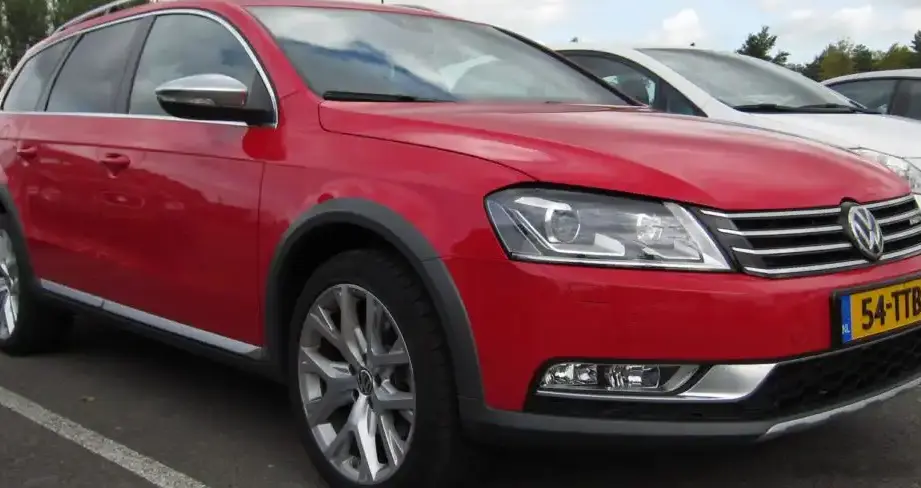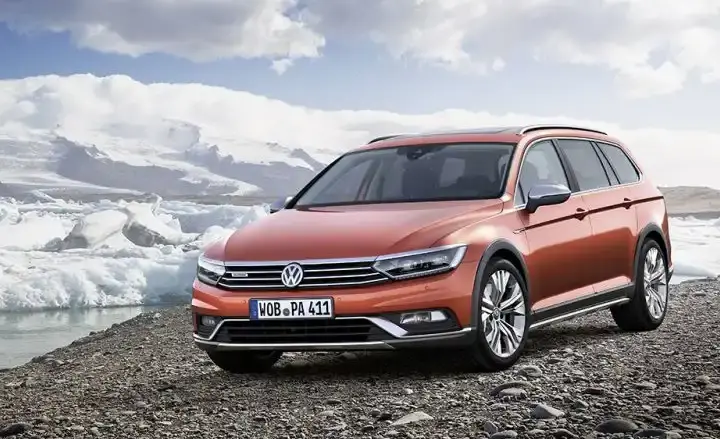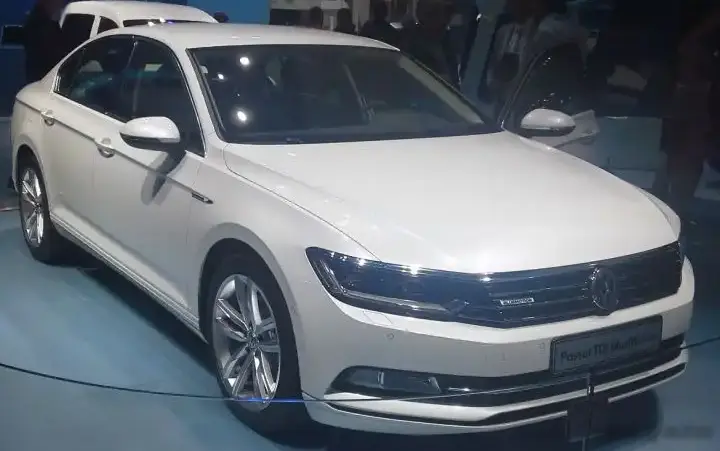
The Volkswagen Passat B8 2.0 TSI (220 hp) DSG represents a significant iteration of Volkswagen’s mid-size sedan, produced from 2015 to 2018. Positioned as a higher-performance variant within the B8 generation (introduced in late 2014), this model aimed to deliver a more engaging driving experience while maintaining the Passat’s reputation for comfort and practicality. It served as a key offering in the European market, where the Passat consistently ranked among the best-selling vehicles in its class, and was also available in select global markets. This specific configuration, combining the 2.0-liter turbocharged engine with Volkswagen’s dual-clutch DSG transmission, offered a compelling alternative to both the base engine options and the diesel variants prevalent in Europe.
Technical Specifications
| Brand | Volkswagen |
| Model | Passat |
| Generation | Passat (B8) |
| Type (Engine) | 2.0 TSI (220 Hp) DSG |
| Start of production | 2015 |
| End of production | 2018 |
| Powertrain Architecture | Internal Combustion engine |
| Body type | Sedan |
| Seats | 5 |
| Doors | 4 |
| Fuel consumption (urban) | 7.8 l/100 km (30.2 US mpg, 36.2 UK mpg, 12.8 km/l) |
| Fuel consumption (extra urban) | 5.3 l/100 km (44.4 US mpg, 53.3 UK mpg, 18.9 km/l) |
| Fuel consumption (combined) | 6.2 l/100 km (37.9 US mpg, 45.6 UK mpg, 16.1 km/l) |
| CO2 emissions | 142-143 g/km |
| Fuel Type | Petrol (Gasoline) |
| Acceleration 0 – 100 km/h | 6.7 sec |
| Acceleration 0 – 62 mph | 6.7 sec |
| Acceleration 0 – 60 mph | 6.4 sec |
| Maximum speed | 246 km/h (152.86 mph) |
| Emission standard | Euro 6 |
| Weight-to-power ratio | 6.5 kg/Hp, 153.8 Hp/tonne |
| Weight-to-torque ratio | 4.1 kg/Nm, 244.8 Nm/tonne |
| Power | 220 Hp @ 4500-6200 rpm |
| Power per litre | 110.9 Hp/l |
| Torque | 350 Nm @ 1500-4400 rpm (258.15 lb.-ft. @ 1500-4400 rpm) |
| Engine layout | Front, Transverse |
| Engine Model/Code | EA888 / CHHB |
| Engine displacement | 1984 cm3 (121.07 cu. in.) |
| Number of cylinders | 4 |
| Engine configuration | Inline |
| Cylinder Bore | 82.5 mm (3.25 in.) |
| Piston Stroke | 92.8 mm (3.65 in.) |
| Compression ratio | 9.6:1 |
| Number of valves per cylinder | 4 |
| Fuel injection system | Direct injection and Multi-port manifold injection |
| Engine aspiration | Turbocharger, Intercooler |
| Valvetrain | DOHC |
| Engine oil capacity | 5.7 l (6.02 US qt | 5.02 UK qt) |
| Kerb Weight | 1430 kg (3152.61 lbs.) |
| Max. weight | 2080 kg (4585.62 lbs.) |
| Max load | 650 kg (1433 lbs.) |
| Trunk (boot) space – minimum | 586 l (20.69 cu. ft.) |
| Trunk (boot) space – maximum | 1152 l (40.68 cu. ft.) |
| Fuel tank capacity | 66 l (17.44 US gal | 14.52 UK gal) |
| Max. roof load | 100 kg (220.46 lbs.) |
| Permitted trailer load with brakes (8%) | 2000 kg (4409.25 lbs.) |
| Permitted trailer load with brakes (12%) | 2000 kg (4409.25 lbs.) |
| Permitted trailer load without brakes | 750 kg (1653.47 lbs.) |
| Permitted towbar download | 90 kg (198.42 lbs.) |
| Length | 4767 mm (187.68 in.) |
| Width | 1832 mm (72.13 in.) |
| Width including mirrors | 2083 mm (82.01 in.) |
| Height | 1456 mm (57.32 in.) |
| Wheelbase | 2791 mm (109.88 in.) |
| Front track | 1584 mm (62.36 in.) |
| Rear (Back) track | 1568 mm (61.73 in.) |
| Ride height (ground clearance) | 145 mm (5.71 in.) |
| Minimum turning circle (turning diameter) | 11.7 m (38.39 ft.) |
| Front suspension | Independent, type McPherson with coil spring and anti-roll bar |
| Rear suspension | Independent multi-link spring suspension with stabilizer |
| Front brakes | Ventilated discs |
| Rear brakes | Disc |
| Gearbox | 6 gears, automatic transmission DSG |
| Tires size | 215/55 R17; 235/45 R18; 235/40 R19 |
| Wheel rims size | 7J x 17; 8J x 18; 8J x 19 |
Powertrain & Engine Architecture
At the heart of the Passat 2.0 TSI DSG lies the EA888 engine, specifically the CHHB variant. This 1984cc, inline-four cylinder engine utilizes direct fuel injection combined with multi-point injection, optimizing both power delivery and fuel efficiency. The engine is turbocharged, with an intercooler to reduce intake air temperature, enhancing performance. The EA888 engine family is known for its robust design and tunability. The CHHB version produces 220 horsepower at 4500-6200 rpm and 350 Nm (258 lb-ft) of torque between 1500-4400 rpm. This power is then channeled through a six-speed DSG (Direct-Shift Gearbox) dual-clutch transmission. The DSG provides rapid, seamless gear changes, contributing to both performance and fuel economy. The transmission’s programming is tuned for a balance between comfort and responsiveness.
Driving Characteristics
The 2.0 TSI DSG Passat delivers a noticeably more spirited driving experience compared to lower-powered variants. Acceleration from 0-60 mph takes approximately 6.4 seconds, and the car feels confident at highway speeds. The DSG transmission contributes to this by providing quick and precise shifts, minimizing power interruption during acceleration. While not as raw or engaging as a manual transmission, the DSG offers a good compromise for drivers seeking both performance and convenience. The gear ratios are well-chosen, providing ample torque for everyday driving and sufficient power for overtaking maneuvers. Compared to the 1.4 TSI engine, the 2.0 TSI offers significantly more power and torque, resulting in a more effortless driving experience.
Equipment & Trim Levels
The 2.0 TSI DSG trim typically included a generous level of standard equipment. This often included features such as automatic climate control, a touchscreen infotainment system with navigation, alloy wheels, and a suite of safety features like ABS, electronic stability control, and multiple airbags. Higher trim levels offered options such as leather upholstery, a panoramic sunroof, adaptive cruise control, and advanced driver-assistance systems. Interior upholstery was typically cloth on base models, with leather available as an upgrade. Dashboard configurations were generally consistent across the B8 Passat range, with a focus on ergonomics and a modern aesthetic.
Chassis & Braking
The Passat B8 features an independent suspension setup, with McPherson struts at the front and a multi-link system at the rear. This configuration provides a comfortable ride while maintaining good handling characteristics. The 2.0 TSI models often featured slightly stiffer suspension components compared to the base models to better manage the increased power. Braking duties are handled by ventilated discs at the front and solid discs at the rear. ABS (Anti-lock Braking System) is standard, providing enhanced stopping power and control. The steering is electrically assisted, offering a light and precise feel.
Market Reception & Comparison
The Passat 2.0 TSI DSG was generally well-received by automotive critics. It was praised for its strong performance, comfortable ride, and well-equipped interior. Fuel economy was considered respectable for a vehicle of its class, averaging around 37.9 US mpg in combined driving. Compared to other trims, the 2.0 TSI offered a significant performance upgrade, but at a higher price point. The diesel variants, particularly the 2.0 TDI, were often favored in Europe due to their superior fuel economy, but the 2.0 TSI provided a more refined and responsive driving experience. Reliability was generally good, although some owners reported minor issues with the DSG transmission.
Legacy
The Volkswagen Passat B8 2.0 TSI DSG remains a popular choice in the used car market. The EA888 engine is known for its durability, and the DSG transmission, while requiring occasional maintenance, is generally reliable. These vehicles offer a good balance of performance, comfort, and practicality, making them appealing to a wide range of buyers. Regular maintenance, including DSG fluid changes, is crucial to ensure the long-term reliability of this powertrain. The B8 Passat, and particularly the 2.0 TSI variant, helped solidify the Passat’s position as a leading contender in the mid-size sedan segment.