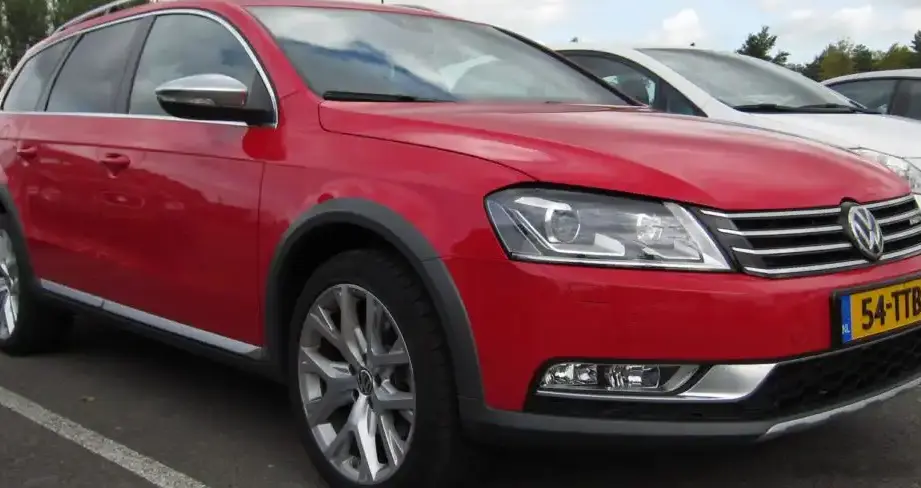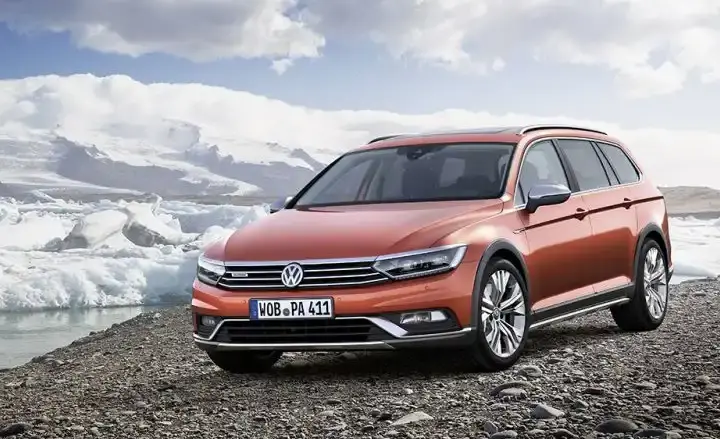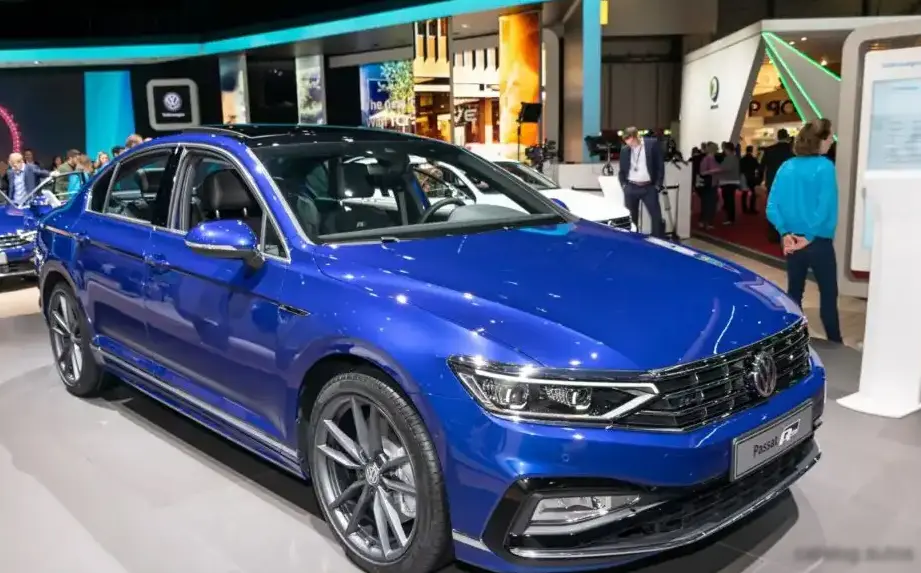
The Volkswagen Passat B8 facelift, produced from 2019 to 2023, represented a significant evolution of Volkswagen’s mid-size sedan. The 2.0 TDI 200 horsepower (Hp) 4MOTION DSG variant, manufactured from 2020-2021, occupied a premium position within the B8 lineup, offering a blend of performance, all-wheel drive capability, and refined comfort. This model was primarily aimed at the European market, where diesel engines and all-wheel-drive systems remain highly popular due to their fuel efficiency and all-weather traction. It served as a flagship offering, positioned above lower-powered engine options and front-wheel-drive configurations.
Technical Specifications
| Brand | Volkswagen |
| Model | Passat |
| Generation | Passat (B8, facelift 2019) |
| Type (Engine) | 2.0 TDI (200 Hp) 4MOTION DSG |
| Start of production | 2020 |
| End of production | 2021 |
| Powertrain Architecture | Internal Combustion engine |
| Body type | Sedan |
| Seats | 5 |
| Doors | 4 |
| Fuel consumption at Low speed (WLTP) | 8.0 l/100 km (29.4 US mpg, 35.3 UK mpg, 12.5 km/l) |
| Fuel consumption at Medium speed (WLTP) | 5.7 l/100 km (41.3 US mpg, 49.6 UK mpg, 17.5 km/l) |
| Fuel consumption at high speed (WLTP) | 4.9 l/100 km (48 US mpg, 57.6 UK mpg, 20.4 km/l) |
| Fuel consumption at very high speed (WLTP) | 5.5 l/100 km (42.8 US mpg, 51.4 UK mpg, 18.2 km/l) |
| Combined fuel consumption (WLTP) | 5.7 l/100 km (41.3 US mpg, 49.6 UK mpg, 17.5 km/l) |
| CO2 emissions (WLTP) | 150 g/km |
| Fuel consumption (economy) – urban | 6.1-6.2 l/100 km (38.6 – 37.9 US mpg, 46.3 – 45.6 UK mpg, 16.4 – 16.1 km/l) |
| Fuel consumption (economy) – extra urban | 4.3-4.4 l/100 km (54.7 – 53.5 US mpg, 65.7 – 64.2 UK mpg, 23.3 – 22.7 km/l) |
| Fuel consumption (economy) – combined | 5-5.1 l/100 km (47 – 46.1 US mpg, 56.5 – 55.4 UK mpg, 20 – 19.6 km/l) |
| CO2 emissions | 131-133 g/km |
| Fuel Type | Diesel |
| Maximum speed | 234 km/h (145.4 mph) |
| Emission standard | Euro 6d-ISC-FCM |
| Weight-to-power ratio | 7.8 kg/Hp, 128.3 Hp/tonne |
| Weight-to-torque ratio | 3.9 kg/Nm, 256.6 Nm/tonne |
| Power | 200 Hp |
| Power per litre | 101.6 Hp/l |
| Torque | 400 Nm @ 1750-3500 rpm (295.02 lb.-ft. @ 1750-3500 rpm) |
| Engine layout | Front, Transverse |
| Engine Model/Code | DTUA |
| Engine displacement | 1968 cm3 (120.09 cu. in.) |
| Number of cylinders | 4 |
| Engine configuration | Inline |
| Number of valves per cylinder | 4 |
| Fuel injection system | Diesel Commonrail |
| Engine aspiration | Turbocharger, Intercooler |
| Engine oil capacity | 5.5 l (5.81 US qt | 4.84 UK qt) |
| Kerb Weight | 1559 kg (3437.01 lbs.) |
| Max. weight | 2200 kg (4850.17 lbs.) |
| Max load | 641 kg (1413.16 lbs.) |
| Trunk (boot) space – minimum | 586 l (20.69 cu. ft.) |
| Trunk (boot) space – maximum | 1152 l (40.68 cu. ft.) |
| Fuel tank capacity | 66 l (17.44 US gal | 14.52 UK gal) |
| AdBlue tank | 16 l (4.23 US gal | 3.52 UK gal) |
| Max. roof load | 100 kg (220.46 lbs.) |
| Permitted trailer load with brakes (12%) | 2200 kg (4850.17 lbs.) |
| Permitted trailer load without brakes | 750 kg (1653.47 lbs.) |
| Permitted towbar download | 90 kg (198.42 lbs.) |
| Length | 4775-4873 mm (187.99 – 191.85 in.) |
| Width | 1832 mm (72.13 in.) |
| Width including mirrors | 2083 mm (82.01 in.) |
| Height | 1483 mm (58.39 in.) |
| Wheelbase | 2786 mm (109.69 in.) |
| Front track | 1578-1586 mm (62.13 – 62.44 in.) |
| Rear (Back) track | 1564-1572 mm (61.57 – 61.89 in.) |
| Minimum turning circle (turning diameter) | 11.7 m (38.39 ft.) |
| Drivetrain Architecture | The Internal combustion engine (ICE) drives the front wheels permanently, and the rear wheels are driven through an electrically or mechanically operated clutch if necessary. |
| Drive wheel | All wheel drive (4×4) |
| Number of gears and type of gearbox | 7 gears, automatic transmission DSG |
| Front brakes | Disc |
| Rear brakes | Disc |
| Assisting systems | ABS (Anti-lock braking system) |
| Steering type | Steering rack and pinion |
| Power steering | Electric Steering |
| Tires size | 215/60 R16; 215/55 R17 |
| Wheel rims size | 6.5J x 16; 7J x 17 |
INTRODUCTION
The Volkswagen Passat B8 facelift, launched in 2019, brought refreshed styling, updated technology, and refined powertrains to Volkswagen’s popular mid-size sedan. The 2.0 TDI 200 Hp 4MOTION DSG variant, available from 2020-2021, represented a top-tier offering within the range. Built on the MQB platform (specifically the A3 variant), this Passat aimed to deliver a premium driving experience with a focus on efficiency and all-weather capability. It was a key model for Volkswagen in Europe, competing with rivals like the Audi A4, BMW 3 Series, and Mercedes-Benz C-Class.
Powertrain & Engine Architecture
At the heart of the Passat 2.0 TDI 4MOTION DSG lies the DTUA engine code, a 1968cc inline-four cylinder diesel engine. This engine utilizes a common rail direct injection system, delivering fuel at extremely high pressures for optimized combustion. A turbocharger with an intercooler further enhances performance, boosting power output to 200 Hp and torque to 400 Nm (295 lb-ft) available from 1750-3500 rpm. The engine features four valves per cylinder and adheres to the stringent Euro 6d-ISC-FCM emissions standards, incorporating a diesel particulate filter (DPF) and Selective Catalytic Reduction (SCR) system utilizing AdBlue. The engine is transversely mounted in the front of the vehicle. The 7-speed dual-clutch transmission (DSG) provides rapid and smooth gear changes, contributing to both performance and fuel efficiency. The 4MOTION all-wheel-drive system utilizes a Haldex multi-plate clutch to distribute torque between the front and rear axles as needed, providing enhanced traction in various conditions.
Driving Characteristics
The 200 Hp TDI engine paired with the 7-speed DSG transmission delivers a responsive and refined driving experience. While not overtly sporty, the Passat 2.0 TDI 4MOTION offers ample power for confident overtaking and highway cruising. The DSG transmission is programmed for smooth shifts in normal driving modes, but can be shifted manually for more engaging control. The 4MOTION system provides excellent grip, particularly on slippery surfaces, inspiring confidence in adverse weather conditions. Compared to lower-powered Passat variants, the 2.0 TDI offers significantly improved acceleration and overall performance. However, it doesn’t match the outright performance of the petrol-powered models. The gear ratios are tuned for a balance between fuel economy and responsiveness, with a relatively long final drive contributing to highway efficiency.
Equipment & Trim Levels
The 2.0 TDI 4MOTION DSG typically came equipped with a high level of standard features. These included automatic climate control, a touchscreen infotainment system with navigation, Bluetooth connectivity, and a suite of driver-assistance systems such as adaptive cruise control, lane assist, and automatic emergency braking. Interior upholstery was typically a combination of cloth and leatherette, with higher trims offering full leather options. Optional extras included a panoramic sunroof, premium sound system, and upgraded alloy wheels. The dashboard layout was clean and modern, with a focus on ergonomics and ease of use.
Chassis & Braking
The Passat B8 utilizes a MacPherson strut front suspension and a multi-link rear suspension, providing a comfortable and controlled ride. The 4MOTION variants often featured slightly stiffer springs and dampers to accommodate the added weight and improve handling. Braking duties are handled by disc brakes on all four wheels, providing ample stopping power. The electronic stability control (ESC) system works in conjunction with the ABS (Anti-lock Braking System) to maintain control during emergency braking maneuvers. Steering is via a rack and pinion system with electric power assistance, offering precise and responsive steering feel.
Market Reception & Comparison
The Passat 2.0 TDI 4MOTION DSG was generally well-received by automotive critics. It was praised for its refined engine, comfortable ride, and all-weather capability. Fuel economy was also a strong point, with combined fuel consumption figures around 5.7 l/100 km (41.3 US mpg). Compared to the lower-powered 1.6 TDI and 2.0 TDI variants, the 200 Hp version offered a noticeable performance upgrade. However, it came at a higher price point. Compared to petrol-powered Passat models, the TDI offered superior fuel economy but lacked the same level of outright performance. Reliability was generally good, although some owners reported issues with the DPF system, a common concern with modern diesel engines.
Legacy
The Volkswagen Passat 2.0 TDI 4MOTION DSG remains a popular choice in the used car market, particularly in Europe. The DTUA engine is known for its durability and relatively low maintenance costs, provided it has been properly maintained. The 7-speed DSG transmission is generally reliable, but requires regular fluid changes. The 4MOTION system adds to the vehicle’s appeal, making it a practical and capable all-weather vehicle. While newer Passat models have introduced more advanced technology and features, the B8 facelift 2.0 TDI 4MOTION DSG continues to offer a compelling combination of performance, efficiency, and comfort.