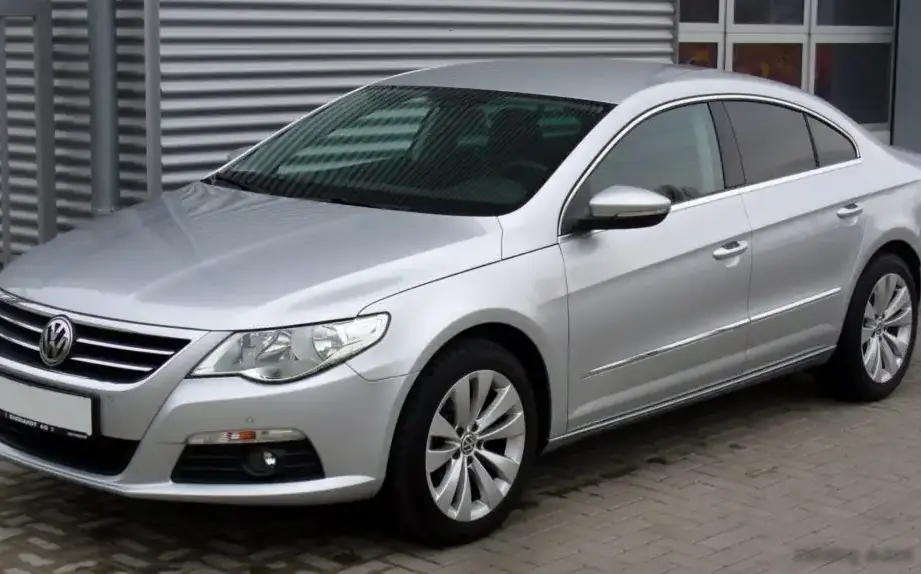
The Volkswagen Passat CC I 1.8 TSI (160 hp) represents a compelling blend of style and efficiency within the first generation of Volkswagen’s coupe-like four-door, marketed as the Passat CC. Produced from March 2008 to October 2012, this variant occupied a mid-range position in the Passat CC lineup, offering a balance between performance and affordability. It was designed to appeal to buyers seeking a more dynamic and visually striking alternative to the traditional Passat sedan, primarily targeting the European market, though limited imports reached North America. The Passat CC I, built on the Volkswagen Group’s B6 platform (shared with the Audi A4 and Škoda Superb), aimed to carve out a niche in the burgeoning four-door coupe segment.
Technical Specifications
| Brand | Volkswagen |
| Model | Passat CC |
| Generation | Passat CC I |
| Type (Engine) | 1.8 TSI (160 Hp) |
| Start of production | March, 2008 |
| End of production | October, 2012 |
| Powertrain Architecture | Internal Combustion engine |
| Body type | Coupe |
| Seats | 4 |
| Doors | 4 |
| Fuel consumption (urban) | 10.4 l/100 km (22.6 US mpg, 27.2 UK mpg, 9.6 km/l) |
| Fuel consumption (extra urban) | 6 l/100 km (39.2 US mpg, 47.1 UK mpg, 16.7 km/l) |
| Fuel consumption (combined) | 7.6 l/100 km (30.9 US mpg, 37.2 UK mpg, 13.2 km/l) |
| Fuel Type | Petrol (Gasoline) |
| Acceleration 0 – 100 km/h | 8.6 sec |
| Acceleration 0 – 62 mph | 8.6 sec |
| Acceleration 0 – 60 mph | 8.2 sec |
| Maximum speed | 222 km/h (137.94 mph) |
| Emission standard | Euro 4 |
| Weight-to-power ratio | 9.4 kg/Hp, 106.3 Hp/tonne |
| Weight-to-torque ratio | 6 kg/Nm, 166.1 Nm/tonne |
| Power | 160 Hp @ 5000 rpm |
| Power per litre | 89 Hp/l |
| Torque | 250 Nm @ 1500 rpm (184.39 lb.-ft. @ 1500 rpm) |
| Engine layout | Front, Transverse |
| Engine Model/Code | BZB, CDAA |
| Engine displacement | 1798 cm3 (109.72 cu. in.) |
| Number of cylinders | 4 |
| Engine configuration | Inline |
| Number of valves per cylinder | 4 |
| Fuel injection system | Direct injection |
| Engine aspiration | Turbocharger, Intercooler |
| Valvetrain | DOHC |
| Engine oil capacity | 4.7 l (4.97 US qt | 4.14 UK qt) |
| Kerb Weight | 1505 kg (3317.96 lbs) |
| Max. weight | 1920 kg (4232.88 lbs) |
| Max load | 415 kg (914.92 lbs) |
| Trunk (boot) space – minimum | 532 l (18.79 cu. ft) |
| Fuel tank capacity | 70 l (18.49 US gal | 15.4 UK gal) |
| Length | 4799 mm (188.94 in) |
| Width | 1855 mm (73.03 in) |
| Height | 1417 mm (55.79 in) |
| Wheelbase | 2711 mm (106.73 in) |
| Front track | 1552 mm (61.1 in) |
| Rear (Back) track | 1559 mm (61.38 in) |
| Minimum turning circle | 11.4 m (37.4 ft) |
| Drivetrain Architecture | The Internal combustion engine (ICE) drives the front wheels of the vehicle. |
| Drive wheel | Front wheel drive |
| Number of gears | 6 gears, manual transmission |
| Front suspension | Independent, type McPherson with coil spring and anti-roll bar |
| Rear suspension | Coil spring |
| Front brakes | Ventilated discs |
| Rear brakes | Disc |
| Assisting systems | ABS (Anti-lock braking system) |
| Steering type | Steering rack and pinion |
| Tires size | 235/45 R17 |
| Wheel rims size | 17 |
Powertrain & Engine Architecture
At the heart of the Passat CC I 1.8 TSI (160 hp) lies the 1.8-liter turbocharged four-cylinder engine, identified by engine codes BZB or CDAA depending on the specific production year and market. This engine is a member of Volkswagen’s EA886 family, known for its robust design and relatively lightweight construction. The engine utilizes direct fuel injection (FSI) and a single turbocharger with an intercooler to deliver a balance of power and efficiency. The direct injection system precisely meters fuel into the combustion chamber, improving combustion efficiency and reducing emissions. The DOHC (Double Overhead Camshaft) valvetrain, with four valves per cylinder, further enhances breathing and contributes to the engine’s power output. The 1.8 TSI engine produces 160 horsepower at 5000 rpm and 184 lb-ft of torque at a low 1500 rpm, providing ample low-end grunt for everyday driving. This variant was typically paired with a 6-speed manual transmission, although a 7-speed DSG (Direct-Shift Gearbox) dual-clutch automatic was also available as an option.
Driving Characteristics
The 1.8 TSI engine, coupled with the manual transmission, provided a reasonably engaging driving experience. Acceleration from 0-60 mph took approximately 8.2 seconds, and the car could reach a top speed of 137.94 mph. While not a performance-oriented variant, the engine’s turbocharger provided a noticeable boost in power during acceleration, making overtaking maneuvers relatively effortless. The 6-speed manual transmission offered precise shifts and allowed drivers to maintain control over the engine’s power delivery. Compared to the more powerful 2.0 TSI and VR6 variants, the 1.8 TSI felt less urgent in its acceleration, but it offered better fuel economy and a more forgiving driving experience. The suspension, tuned for comfort, provided a smooth ride, although it wasn’t as sporty as the setups found in the higher-performance models.
Equipment & Trim Levels
The Passat CC I 1.8 TSI (160 hp) typically came equipped with a respectable level of standard features. These included air conditioning, power windows and locks, a CD stereo system, and alloy wheels. Higher trim levels offered upgrades such as leather upholstery, a sunroof, a premium sound system, and bi-xenon headlights. Safety features included ABS, traction control, and multiple airbags. The interior design was generally modern and well-appointed, with a focus on comfort and ergonomics. The Passat CC’s defining feature was its coupe-like roofline, which gave it a more stylish and dynamic appearance than the traditional Passat sedan.
Chassis & Braking
The Passat CC I utilized a front-wheel-drive layout with an independent McPherson strut suspension in the front and a coil spring suspension in the rear. The front brakes were ventilated discs, providing ample stopping power, while the rear brakes were solid discs. ABS (Anti-lock Braking System) was standard, enhancing braking performance and stability. The chassis was designed to provide a balance between comfort and handling, offering a relatively smooth ride without sacrificing too much agility. The steering was precise and responsive, providing good feedback to the driver.
Market Reception & Comparison
The Passat CC I 1.8 TSI (160 hp) was generally well-received by automotive critics. It was praised for its stylish design, comfortable ride, and fuel-efficient engine. However, some critics noted that the 1.8 TSI engine lacked the outright performance of the more powerful variants. Compared to the 2.0 TSI, the 1.8 TSI offered better fuel economy but less power. Compared to the VR6, the 1.8 TSI was more affordable and fuel-efficient, but it lacked the VR6’s distinctive engine sound and overall performance. In terms of reliability, the 1.8 TSI engine proved to be generally reliable, although some owners reported issues with the turbocharger and fuel injectors.
Legacy
The Volkswagen Passat CC I 1.8 TSI (160 hp) remains a popular choice in the used car market today. Its combination of style, comfort, and fuel efficiency makes it an attractive option for buyers seeking a practical and visually appealing four-door coupe. The 1.8 TSI engine, while not the most powerful in the lineup, has proven to be relatively durable and reliable. However, potential buyers should be aware of the potential for issues with the turbocharger and fuel injectors, and it’s recommended to have the car thoroughly inspected by a qualified mechanic before purchase. The Passat CC I helped establish Volkswagen as a maker of stylish and sophisticated automobiles, and it paved the way for future generations of four-door coupes.