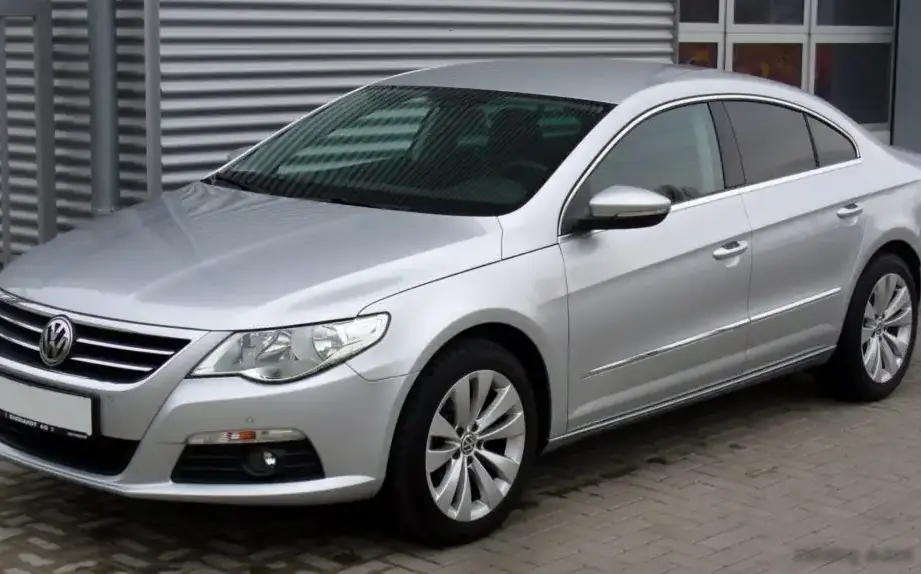
The Volkswagen Passat CC I 2.0 TDI BMT (140 hp) DSG represents a specific configuration within the first generation of the Passat CC, produced between October 2009 and 2012. Positioned as a mid-range offering, this variant combined a fuel-efficient diesel engine with the convenience of a dual-clutch transmission (DSG) in a coupe-like four-door body style. The Passat CC, internally designated as the 357 model series, aimed to blend the practicality of a sedan with the more stylish aesthetics of a coupe, targeting buyers seeking a more dynamic alternative to traditional family cars. This particular engine and transmission pairing was popular in Europe, offering a balance between performance, economy, and refinement.
Technical Specifications
| Brand | Volkswagen |
| Model | Passat CC |
| Generation | Passat CC I |
| Type (Engine) | 2.0 TDI BMT (140 Hp) DSG |
| Start of production | October, 2009 |
| End of production | 2012 |
| Powertrain Architecture | Internal Combustion engine |
| Body type | Coupe |
| Seats | 4 |
| Doors | 4 |
| Fuel consumption (urban) | 6.4 l/100 km (36.8 US mpg, 44.1 UK mpg, 15.6 km/l) |
| Fuel consumption (extra urban) | 4.7 l/100 km (50 US mpg, 60.1 UK mpg, 21.3 km/l) |
| Fuel consumption (combined) | 5.3 l/100 km (44.4 US mpg, 53.3 UK mpg, 18.9 km/l) |
| CO2 emissions | 139 g/km |
| Fuel Type | Diesel |
| Acceleration 0 – 100 km/h | 9.8 sec |
| Acceleration 0 – 62 mph | 9.8 sec |
| Acceleration 0 – 60 mph | 9.3 sec |
| Maximum speed | 210 km/h (130.49 mph) |
| Emission standard | Euro 5 |
| Weight-to-power ratio | 11.2 kg/Hp, 89.5 Hp/tonne |
| Weight-to-torque ratio | 4.9 kg/Nm, 204.6 Nm/tonne |
| Power | 140 Hp @ 4200 rpm |
| Power per litre | 71.1 Hp/l |
| Torque | 320 Nm @ 1750-2500 rpm (236.02 lb.-ft. @ 1750-2500 rpm) |
| Engine layout | Front, Transverse |
| Engine Model/Code | CBAB, CFFB |
| Engine displacement | 1968 cm3 (120.09 cu. in.) |
| Number of cylinders | 4 |
| Engine configuration | Inline |
| Cylinder Bore | 81 mm (3.19 in.) |
| Piston Stroke | 95.5 mm (3.76 in.) |
| Compression ratio | 16.5:1 |
| Number of valves per cylinder | 4 |
| Fuel injection system | Diesel Commonrail |
| Engine aspiration | Turbocharger, Intercooler |
| Valvetrain | DOHC |
| Engine oil capacity | 4 l (4.23 US qt | 3.52 UK qt) |
| Kerb Weight | 1564 kg (3448.03 lbs.) |
| Max. weight | 1990 kg (4387.2 lbs.) |
| Max load | 426 kg (939.17 lbs.) |
| Trunk (boot) space – minimum | 532 l (18.79 cu. ft.) |
| Fuel tank capacity | 70 l (18.49 US gal | 15.4 UK gal) |
| Max. roof load | 100 kg (220.46 lbs.) |
| Permitted trailer load with brakes (12%) | 1800 kg (3968.32 lbs.) |
| Permitted trailer load without brakes | 750 kg (1653.47 lbs.) |
| Permitted towbar download | 90 kg (198.42 lbs.) |
| Length | 4799 mm (188.94 in.) |
| Width | 1855 mm (73.03 in.) |
| Width including mirrors | 2090 mm (82.28 in.) |
| Height | 1417 mm (55.79 in.) |
| Wheelbase | 2711 mm (106.73 in.) |
| Front track | 1552 mm (61.1 in.) |
| Rear (Back) track | 1559 mm (61.38 in.) |
| Ride height (ground clearance) | 127 mm (5 in.) |
| Minimum turning circle (turning diameter) | 11.4 m (37.4 ft.) |
| Drivetrain Architecture | The Internal combustion engine (ICE) drives the front wheels of the vehicle. |
| Drive wheel | Front wheel drive |
| Number of gears and type of gearbox | 6 gears, automatic transmission DSG |
| Front suspension | Independent, type McPherson with coil spring and anti-roll bar |
| Rear suspension | Independent multi-link spring suspension with stabilizer |
| Front brakes | Ventilated discs |
| Rear brakes | Disc |
| Assisting systems | ABS (Anti-lock braking system) |
| Steering type | Steering rack and pinion |
| Power steering | Electric Steering |
| Tires size | 235/45 R17 |
| Wheel rims size | 8J x 17 |
Powertrain & Engine Architecture
The heart of this Passat CC variant is the 2.0-liter four-cylinder diesel engine, specifically the CBAB or CFFB engine code. These engines belong to the Volkswagen Group’s common rail diesel family, known for their efficiency and relatively quiet operation. The engine utilizes a turbocharger with an intercooler to boost power output, achieving 140 horsepower at 4200 rpm and a substantial 320 Nm (236 lb-ft) of torque between 1750 and 2500 rpm. The common rail direct injection system, operating at very high pressures, ensures precise fuel delivery and optimized combustion. The engine features a double overhead camshaft (DOHC) valvetrain with four valves per cylinder, contributing to its breathing efficiency. Paired with this engine is the 6-speed DSG (Direct-Shift Gearbox), a dual-clutch transmission that offers both the efficiency of a manual gearbox and the convenience of an automatic. The DSG provides quick and seamless gear changes, enhancing the driving experience.
Driving Characteristics
The 2.0 TDI BMT with the DSG transmission delivers a comfortable and refined driving experience. While not overtly sporty, the engine provides ample torque for everyday driving and overtaking maneuvers. The DSG transmission contributes to smooth acceleration and responsive gear changes. Compared to the more powerful 2.0 TDI variants (often exceeding 170 hp), this version prioritizes fuel economy over outright performance. The gear ratios in the DSG are tuned for efficiency, resulting in a slightly less engaging driving experience than a manual transmission. However, the automatic mode makes it ideal for city driving and long highway journeys. The 0-60 mph time of around 9.3 seconds is respectable for a diesel-powered coupe, but it’s noticeably slower than higher-performance versions of the Passat CC.
Equipment & Trim Levels
The 2.0 TDI BMT DSG trim typically included standard features such as alloy wheels, automatic climate control, a multi-function steering wheel, and an infotainment system with a CD player and radio. Upholstery was generally cloth, although leather options were available as upgrades. Optional extras included a sunroof, navigation system, parking sensors, and upgraded sound systems. The Passat CC aimed for a more premium feel than the standard Passat, with a focus on interior comfort and aesthetics. The specific trim level within the CC range (e.g., Trendline, Comfortline, Highline) would dictate the level of standard equipment.
Chassis & Braking
The Passat CC I utilizes an independent suspension setup, with McPherson struts at the front and a multi-link system at the rear. This configuration provides a good balance between ride comfort and handling. The front suspension incorporates a stabilizer bar to reduce body roll during cornering. Braking duties are handled by ventilated discs at the front and solid discs at the rear, equipped with ABS (Anti-lock Braking System) as standard. The steering is rack and pinion with electric power assistance, offering precise and responsive control.
Market Reception & Comparison
The Passat CC I 2.0 TDI BMT DSG was generally well-received by automotive critics. It was praised for its fuel efficiency, comfortable ride, and stylish design. However, some reviewers noted that the engine lacked the punch of higher-powered alternatives. Compared to the 1.8 TSI petrol engine, the 2.0 TDI offered superior fuel economy and torque, making it a more practical choice for long-distance driving. Against other 2.0 TDI variants, this 140 hp version represented a more affordable entry point, appealing to buyers who prioritized economy over performance. Reliability was generally good, although common diesel issues such as DPF (Diesel Particulate Filter) clogging could occur with infrequent long journeys.
Legacy
The Volkswagen Passat CC I 2.0 TDI BMT DSG has proven to be a relatively reliable powertrain in the used car market. The 2.0 TDI engine is known for its durability, and the DSG transmission, while requiring occasional maintenance, is generally robust. However, potential buyers should be aware of the potential for DPF issues and ensure that the vehicle has been properly maintained. Today, these vehicles offer a compelling combination of style, comfort, and fuel efficiency at an affordable price point, making them a popular choice for buyers seeking a practical and refined coupe-like sedan.