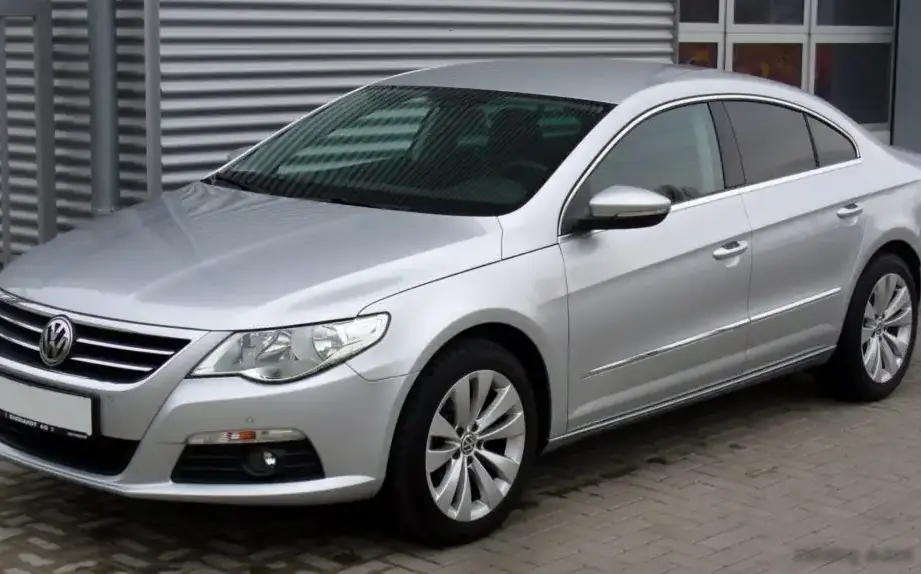
The Volkswagen Passat CC I 2.0 TDI BMT (170 hp) represents a compelling blend of style, efficiency, and performance within the Passat CC lineage. Produced between 2010 and 2012, this variant occupied a significant position in the model range, offering a diesel-powered option geared towards drivers prioritizing fuel economy and comfortable long-distance cruising. It was built on the B6 Passat platform, known internally as the 3C, and visually distinguished itself with a coupe-like profile, setting it apart from the more conventional Passat sedan. The “BMT” designation signifies Volkswagen’s BlueMotion Technology, emphasizing fuel-saving measures.
Technical Specifications
| Brand | Volkswagen |
| Model | Passat CC |
| Generation | Passat CC I |
| Type (Engine) | 2.0 TDI BMT (170 Hp) |
| Start of production | 2010 |
| End of production | 2012 |
| Powertrain Architecture | Internal Combustion engine |
| Body type | Coupe |
| Seats | 4 |
| Doors | 4 |
| Fuel consumption (urban) | 5.8 l/100 km (40.6 US mpg, 48.7 UK mpg, 17.2 km/l) |
| Fuel consumption (extra urban) | 4.4 l/100 km (53.5 US mpg, 64.2 UK mpg, 22.7 km/l) |
| Fuel consumption (combined) | 4.9 l/100 km (48 US mpg, 57.6 UK mpg, 20.4 km/l) |
| CO2 emissions | 129 g/km |
| Fuel Type | Diesel |
| Acceleration 0 – 100 km/h | 8.5 sec |
| Acceleration 0 – 62 mph | 8.5 sec |
| Acceleration 0 – 60 mph | 8.1 sec |
| Maximum speed | 227 km/h (141.05 mph) |
| Emission standard | Euro 5 |
| Weight-to-power ratio | 9.2 kg/Hp, 109.2 Hp/tonne |
| Weight-to-torque ratio | 4.4 kg/Nm, 224.8 Nm/tonne |
| Power | 170 Hp @ 4200 rpm |
| Power per litre | 86.4 Hp/l |
| Torque | 350 Nm @ 1750-2500 rpm (258.15 lb.-ft. @ 1750-2500 rpm) |
| Engine layout | Front, Transverse |
| Engine Model/Code | CBBB, CFGB |
| Engine displacement | 1968 cm3 (120.09 cu. in.) |
| Number of cylinders | 4 |
| Engine configuration | Inline |
| Cylinder Bore | 81 mm (3.19 in.) |
| Piston Stroke | 95.5 mm (3.76 in.) |
| Compression ratio | 16.5:1 |
| Number of valves per cylinder | 4 |
| Fuel injection system | Diesel Commonrail |
| Engine aspiration | Turbocharger, Intercooler |
| Valvetrain | DOHC |
| Engine oil capacity | 4 l (4.23 US qt | 3.52 UK qt) |
| Kerb Weight | 1557 kg (3432.6 lbs.) |
| Max. weight | 1950 kg (4299.01 lbs.) |
| Max load | 393 kg (866.42 lbs.) |
| Trunk (boot) space – minimum | 532 l (18.79 cu. ft.) |
| Fuel tank capacity | 70 l (18.49 US gal | 15.4 UK gal) |
| Max. roof load | 100 kg (220.46 lbs.) |
| Permitted trailer load with brakes (12%) | 1800 kg (3968.32 lbs.) |
| Permitted trailer load without brakes | 750 kg (1653.47 lbs.) |
| Permitted towbar download | 90 kg (198.42 lbs.) |
| Length | 4799 mm (188.94 in.) |
| Width | 1855 mm (73.03 in.) |
| Width including mirrors | 2090 mm (82.28 in.) |
| Height | 1417 mm (55.79 in.) |
| Wheelbase | 2711 mm (106.73 in.) |
| Front track | 1552 mm (61.1 in.) |
| Rear (Back) track | 1559 mm (61.38 in.) |
| Ride height (ground clearance) | 127 mm (5 in.) |
| Minimum turning circle (turning diameter) | 11.4 m (37.4 ft.) |
| Front suspension | Independent, type McPherson with coil spring and anti-roll bar |
| Rear suspension | Independent multi-link spring suspension with stabilizer |
| Front brakes | Ventilated discs |
| Rear brakes | Disc |
| Assisting systems | ABS (Anti-lock braking system) |
| Steering type | Steering rack and pinion |
| Power steering | Electric Steering |
| Tires size | 235/45 R17 |
| Wheel rims size | 8J x 17 |
Powertrain & Engine Architecture
At the heart of the Passat CC I 2.0 TDI BMT lies the Volkswagen Group’s 2.0-liter four-cylinder diesel engine, specifically the CBBB or CFGB engine code depending on the production year. This engine is a common-rail direct injection (CRDI) unit, utilizing piezo injectors for precise fuel delivery. The engine benefits from a turbocharger with an intercooler, boosting power output to 170 horsepower at 4200 rpm and 350 Nm (258 lb-ft) of torque between 1750 and 2500 rpm. The BMT designation indicates the inclusion of BlueMotion Technology features, such as start-stop functionality and optimized aerodynamics, aimed at reducing fuel consumption and emissions. The engine’s DOHC (Double Overhead Camshaft) valvetrain, with four valves per cylinder, contributes to its efficient operation. The engine is transversely mounted in the front of the vehicle. The transmission is a six-speed automatic gearbox, designed to provide smooth shifts and optimize fuel efficiency.
Driving Characteristics
The 2.0 TDI BMT automatic configuration in the Passat CC I delivers a comfortable and refined driving experience. While not overtly sporty, the engine provides ample torque for everyday driving and confident overtaking maneuvers. The automatic transmission is well-tuned, offering smooth gear changes and a responsive feel. Compared to the manual transmission versions, the automatic offers greater convenience, particularly in urban traffic. However, it does slightly diminish acceleration times and fuel economy. Against higher-output variants like the 2.0 TDI with 140 hp, the 170 hp version offers a noticeable performance boost, especially at higher speeds. The gear ratios are optimized for fuel efficiency, with a taller final drive contributing to lower engine speeds at cruising speeds.
Equipment & Trim Levels
The Passat CC I 2.0 TDI BMT typically came equipped with a generous level of standard features. These included climate control, alloy wheels, a multi-function steering wheel, and an infotainment system with a CD player and auxiliary input. Higher trim levels offered options such as leather upholstery, a sunroof, navigation system, and parking sensors. The interior design emphasized comfort and sophistication, with high-quality materials and a well-laid-out dashboard. The coupe-like styling of the CC also contributed to a more driver-focused cockpit compared to the standard Passat.
Chassis & Braking
The Passat CC I features an independent suspension setup, with McPherson struts at the front and a multi-link system at the rear. This configuration provides a comfortable ride and good handling characteristics. The front brakes are ventilated discs, while the rear brakes are solid discs. ABS (Anti-lock Braking System) is standard, enhancing safety and stability during braking. The steering is a rack-and-pinion system with electric power assistance, offering precise control and a light feel.
Market Reception & Comparison
The Passat CC I 2.0 TDI BMT was generally well-received by automotive critics. It was praised for its stylish design, comfortable ride, and fuel-efficient engine. The automatic transmission was considered a good match for the engine, providing a smooth and convenient driving experience. Compared to other trims in the Passat CC lineup, the 2.0 TDI BMT offered a compelling balance of performance and economy. It was a popular choice for drivers who wanted a stylish and practical car with low running costs. Fuel economy figures consistently hovered around 48 mpg on the combined cycle, making it an attractive option for long-distance commuters.
Legacy
The Volkswagen Passat CC I 2.0 TDI BMT has proven to be a relatively reliable powertrain. The 2.0 TDI engine is known for its durability, and the automatic transmission is generally robust. However, like all diesel engines, it is susceptible to issues with the diesel particulate filter (DPF) if not properly maintained. In the used car market, these models remain popular due to their combination of style, comfort, and fuel efficiency. They represent a good value proposition for buyers seeking a well-equipped and reliable mid-size coupe.