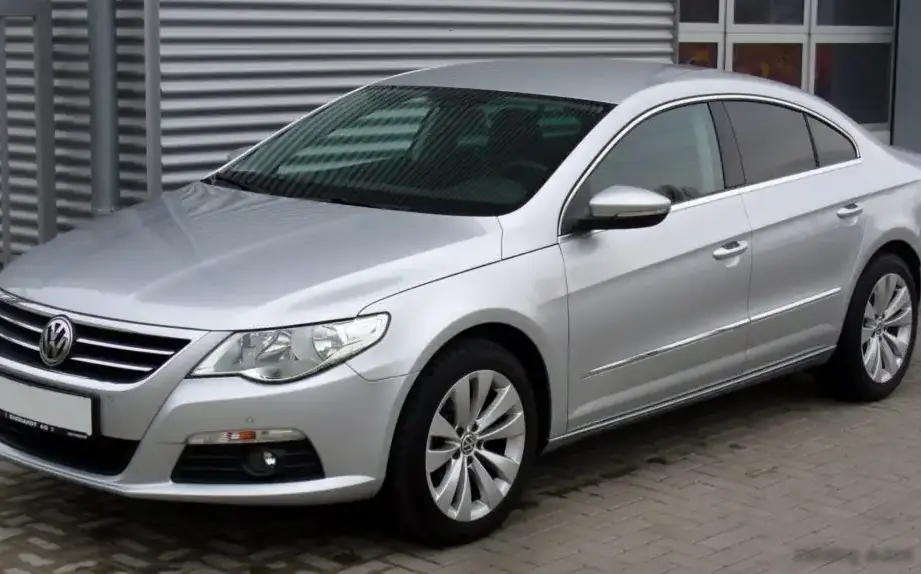
The Volkswagen Passat CC I 2.0 TSI (200 hp) was a variant of the first-generation Passat CC (Typ 357), produced between April 2008 and October 2010. Positioned as a more stylish and sporty alternative to the traditional Passat sedan, the CC – standing for “Comfort Coupe” – featured a sloping roofline and a more aggressively sculpted design. This 2.0 TSI model represented a mid-range offering within the CC lineup, slotting between the base 1.8 TSI and the more powerful 3.6 V6 models. It aimed to provide a balance of performance, fuel efficiency, and equipment for buyers seeking a premium four-door coupe experience.
Technical Specifications
| Brand | Volkswagen |
| Model | Passat CC |
| Generation | Passat CC I |
| Type (Engine) | 2.0 TSI (200 Hp) |
| Start of production | April, 2008 |
| End of production | October, 2010 |
| Powertrain Architecture | Internal Combustion engine |
| Body type | Coupe |
| Seats | 4 |
| Doors | 4 |
| Fuel consumption (urban) | 11 l/100 km (21.4 US mpg) |
| Fuel consumption (extra urban) | 6.1 l/100 km (38.6 US mpg) |
| Fuel consumption (combined) | 7.9 l/100 km (29.8 US mpg) |
| Fuel Type | Petrol (Gasoline) |
| Acceleration 0 – 100 km/h | 7.6 sec |
| Acceleration 0 – 62 mph | 7.6 sec |
| Acceleration 0 – 60 mph | 7.2 sec |
| Maximum speed | 237 km/h (147.26 mph) |
| Emission standard | Euro 4 |
| Weight-to-power ratio | 7.6 kg/Hp |
| Weight-to-torque ratio | 5.4 kg/Nm |
| Power | 200 Hp @ 5100 rpm |
| Torque | 280 Nm @ 1800 rpm (206.52 lb.-ft. @ 1800 rpm) |
| Engine layout | Front, Transverse |
| Engine Model/Code | CAWB, CCZA |
| Engine displacement | 1984 cm3 (121.07 cu. in.) |
| Number of cylinders | 4 |
| Engine configuration | Inline |
| Cylinder Bore | 82.5 mm (3.25 in.) |
| Piston Stroke | 92.8 mm (3.65 in.) |
| Compression ratio | 10.3:1 |
| Number of valves per cylinder | 4 |
| Fuel injection system | Direct injection |
| Engine aspiration | Turbocharger, Intercooler |
| Valvetrain | DOHC |
| Engine oil capacity | 4.7 l (4.97 US qt | 4.14 UK qt) |
| Kerb Weight | 1515 kg (3340 lbs.) |
| Max. weight | 1940 kg (4276.97 lbs.) |
| Max load | 425 kg (936.96 lbs.) |
| Trunk (boot) space – minimum | 532 l (18.79 cu. ft.) |
| Fuel tank capacity | 70 l (18.49 US gal | 15.4 UK gal) |
| Length | 4799 mm (188.94 in.) |
| Width | 1855 mm (73.03 in.) |
| Height | 1417 mm (55.79 in.) |
| Wheelbase | 2711 mm (106.73 in.) |
| Front track | 1552 mm (61.1 in.) |
| Rear (Back) track | 1559 mm (61.38 in.) |
| Minimum turning circle | 11.4 m (37.4 ft.) |
| Drivetrain Architecture | Front wheel drive |
| Number of gears | 6 gears, manual transmission |
| Front suspension | Independent, type McPherson with coil spring and anti-roll bar |
| Rear suspension | Coil spring |
| Front brakes | Ventilated discs |
| Rear brakes | Disc |
| Assisting systems | ABS (Anti-lock braking system) |
| Steering type | Steering rack and pinion |
| Tires size | 235/45 R17 W |
| Wheel rims size | 17 |
INTRODUCTION
The Passat CC I 2.0 TSI (200 hp) was a key model in Volkswagen’s attempt to broaden the appeal of the Passat range. Introduced as a more emotionally styled alternative to the standard sedan, the CC aimed to attract buyers who desired a blend of practicality and coupe-like aesthetics. Built on the Volkswagen Group’s B6 platform (also known as the 1HX0/A3 platform), the CC shared its mechanical underpinnings with the Passat but distinguished itself through its unique bodywork and more luxurious appointments. The 2.0 TSI engine, a mainstay of the Volkswagen lineup, provided a compelling balance of performance and efficiency for this model.
Powertrain & Engine Architecture
At the heart of the Passat CC I 2.0 TSI lay the EA888 2.0-liter turbocharged four-cylinder engine. Specifically, the CAWB and CCZA engine codes were commonly found in this variant, differing slightly in calibration and emissions control systems. This engine featured direct fuel injection (FSI – Fuel Stratified Injection) which allowed for precise fuel delivery and improved combustion efficiency. The engine utilized a double overhead camshaft (DOHC) valvetrain with four valves per cylinder, optimizing airflow for increased power output. A turbocharger with an intercooler boosted power and torque, providing a noticeable increase in performance over naturally aspirated engines. The 200 hp output was achieved at 5100 rpm, while peak torque of 280 Nm (206.52 lb-ft) was available from just 1800 rpm, providing strong low-end and mid-range acceleration. The engine was typically paired with a six-speed manual transmission, although a six-speed automatic transmission (DSG – Direct Shift Gearbox) was also available as an option. The DSG offered quicker shifts and improved fuel economy compared to a traditional automatic.
Driving Characteristics
The 2.0 TSI engine in the Passat CC I delivered a responsive and engaging driving experience. The turbocharger provided a noticeable surge of power, making overtaking maneuvers effortless. While not as overtly sporty as some rivals, the CC 2.0 TSI offered a comfortable and refined ride. The six-speed manual transmission allowed for precise control, while the optional DSG provided smooth and rapid gear changes. Compared to the base 1.8 TSI model, the 2.0 TSI offered a significant performance upgrade, with noticeably quicker acceleration and a higher top speed. However, it didn’t quite match the outright performance of the 3.6 V6, which offered a more powerful but less fuel-efficient driving experience. The gear ratios were tuned for a balance of acceleration and fuel economy, with a relatively long sixth gear for relaxed highway cruising.
Equipment & Trim Levels
The Passat CC I 2.0 TSI typically came well-equipped, reflecting its positioning as a more premium offering. Standard features often included automatic climate control, alloy wheels, a multi-function steering wheel, and a CD/radio system. Higher trim levels added features such as leather upholstery, heated front seats, a sunroof, and a more advanced audio system. Optional extras included navigation, parking sensors, and bi-xenon headlights. Interior upholstery was typically cloth on base models, with leather available as an upgrade. The dashboard layout was similar to the standard Passat, but the CC featured unique trim accents and a more refined overall ambiance.
Chassis & Braking
The Passat CC I utilized a McPherson strut front suspension and a multi-link rear suspension, providing a comfortable and controlled ride. Stabilizer bars were fitted to both the front and rear axles to reduce body roll during cornering. Braking duties were handled by ventilated discs at the front and solid discs at the rear. Anti-lock braking system (ABS) was standard, enhancing safety and stability. The chassis was tuned to provide a balance of comfort and handling, leaning towards the former in the 2.0 TSI variant. The suspension setup was generally softer than that of the more performance-oriented models.
Market Reception & Comparison
The Passat CC I 2.0 TSI was generally well-received by automotive critics. It was praised for its stylish design, comfortable ride, and responsive engine. However, some critics noted that the interior, while well-built, lacked the visual flair of some competitors. Compared to rivals such as the Audi A5 Sportback and the BMW 3 Series Coupe, the Passat CC offered a more affordable alternative with a spacious interior and a practical hatchback design. Fuel economy was competitive for its class, and reliability was generally good, although some owners reported minor issues with the turbocharger and fuel injection system.
Legacy
The Passat CC I 2.0 TSI remains a popular choice in the used car market today. The EA888 2.0-liter TSI engine is known for its durability and relatively straightforward maintenance. However, as with any turbocharged engine, regular oil changes and proper maintenance are crucial to ensure long-term reliability. The CC’s distinctive styling and comfortable interior continue to appeal to buyers seeking a stylish and practical four-door coupe. While not a performance icon, the 2.0 TSI variant offers a compelling blend of performance, efficiency, and value, making it a solid choice for those looking for a well-rounded and refined used car.