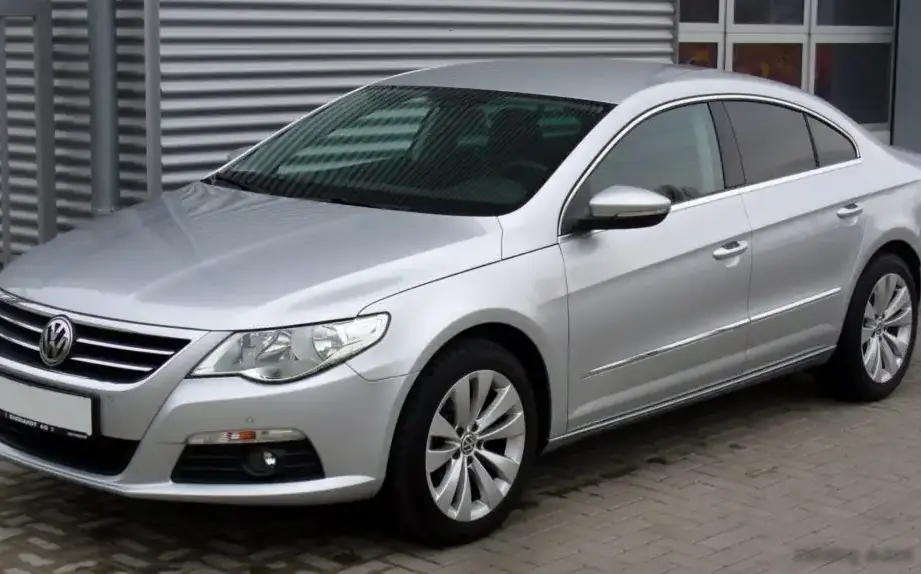
The Volkswagen Passat CC I 2.0 TSI (200 hp) Tiptronic, produced between April 2008 and October 2010, represented a significant step in Volkswagen’s design language and market positioning. This variant was part of the first generation of the Passat CC (Comfort Coupe), a four-door coupe based on the B6 Passat platform (1HX0/A3). It aimed to blend the practicality of a sedan with the sleek aesthetics of a coupe, targeting buyers seeking a more stylish and dynamic alternative to traditional mid-size sedans. The 2.0 TSI Tiptronic trim occupied a mid-to-upper position within the Passat CC lineup, offering a balance of performance and convenience.
Technical Specifications
| Brand | Volkswagen |
| Model | Passat CC |
| Generation | Passat CC I |
| Type (Engine) | 2.0 TSI (200 Hp) Tiptronic |
| Start of production | April, 2008 |
| End of production | October, 2010 |
| Powertrain Architecture | Internal Combustion engine |
| Body type | Coupe |
| Seats | 4 |
| Doors | 4 |
| Fuel consumption (urban) | 12.1 l/100 km (19.4 US mpg) |
| Fuel consumption (extra urban) | 6.4 l/100 km (36.8 US mpg) |
| Fuel consumption (combined) | 8.5 l/100 km (27.7 US mpg) |
| Fuel Type | Petrol (Gasoline) |
| Acceleration 0 – 100 km/h | 7.8 sec |
| Acceleration 0 – 62 mph | 7.8 sec |
| Acceleration 0 – 60 mph | 7.4 sec |
| Maximum speed | 232 km/h (144.16 mph) |
| Emission standard | Euro 4 |
| Weight-to-power ratio | 7.6 kg/Hp |
| Weight-to-torque ratio | 5.5 kg/Nm |
| Power | 200 Hp @ 5100 rpm |
| Torque | 280 Nm @ 1800 rpm (206.52 lb.-ft. @ 1800 rpm) |
| Engine layout | Front, Transverse |
| Engine Model/Code | CAWB, CCZA |
| Engine displacement | 1984 cm3 (121.07 cu. in.) |
| Number of cylinders | 4 |
| Engine configuration | Inline |
| Cylinder Bore | 82.5 mm (3.25 in.) |
| Piston Stroke | 92.8 mm (3.65 in.) |
| Compression ratio | 10.3:1 |
| Number of valves per cylinder | 4 |
| Fuel injection system | Direct injection |
| Engine aspiration | Turbocharger, Intercooler |
| Valvetrain | DOHC |
| Engine oil capacity | 4.7 l (4.97 US qt | 4.14 UK qt) |
| Kerb Weight | 1529 kg (3370.87 lbs.) |
| Max. weight | 1970 kg (4343.11 lbs.) |
| Max load | 441 kg (972.24 lbs.) |
| Trunk (boot) space – minimum | 532 l (18.79 cu. ft.) |
| Fuel tank capacity | 70 l (18.49 US gal | 15.4 UK gal) |
| Length | 4799 mm (188.94 in.) |
| Width | 1855 mm (73.03 in.) |
| Height | 1417 mm (55.79 in.) |
| Wheelbase | 2711 mm (106.73 in.) |
| Front track | 1552 mm (61.1 in.) |
| Rear (Back) track | 1559 mm (61.38 in.) |
| Minimum turning circle | 11.4 m (37.4 ft.) |
| Drivetrain Architecture | Front wheel drive |
| Number of gears | 6 |
| Gearbox type | automatic transmission |
| Front suspension | Independent, type McPherson with coil spring and anti-roll bar |
| Rear suspension | Coil spring |
| Front brakes | Ventilated discs |
| Rear brakes | Disc |
| Assisting systems | ABS (Anti-lock braking system) |
| Steering type | Steering rack and pinion |
| Tires size | 235/45 R17 W |
| Wheel rims size | 17 |
Powertrain & Engine Architecture
At the heart of the Passat CC I 2.0 TSI Tiptronic lies the EA888 2.0-liter turbocharged inline-four cylinder engine. Specifically, engines bearing the CAWB or CCZA codes were commonly found in this variant. This engine was a cornerstone of Volkswagen’s modern engine lineup, known for its blend of power and efficiency. It featured direct fuel injection (FSI), a sophisticated turbocharging system with an intercooler, and a double overhead camshaft (DOHC) valvetrain with four valves per cylinder. The direct injection system allowed for precise fuel delivery, optimizing combustion and contributing to improved fuel economy and reduced emissions. The turbocharger provided a significant boost in power, delivering 200 horsepower at 5100 rpm and 280 Nm (206.52 lb-ft) of torque from as low as 1800 rpm. The ‘Tiptronic’ transmission was a six-speed automatic gearbox, offering both fully automatic operation and the ability for the driver to manually select gears for more control. This transmission was known for its smooth shifts and responsiveness, though it wasn’t as sporty as a dual-clutch transmission (DSG) offered in other Passat CC trims.
Driving Characteristics
The 2.0 TSI Tiptronic Passat CC offered a comfortable and refined driving experience. While not as overtly sporty as the manual transmission or higher-output variants, the 200 hp engine provided ample power for everyday driving and confident highway cruising. The automatic transmission, while smooth, did result in a slight reduction in acceleration compared to the six-speed manual. The gear ratios were tuned for a balance of fuel efficiency and responsiveness. The engine’s strong low-end torque meant that the car felt relatively quick off the line, and the turbocharger provided a noticeable surge of power during acceleration. However, the Tiptronic transmission could sometimes feel hesitant during quick downshifts. The overall driving experience was geared towards comfort and ease of use, making it an ideal choice for drivers prioritizing a relaxed and refined ride.
Equipment & Trim Levels
The Passat CC I 2.0 TSI Tiptronic typically came well-equipped as standard. Features included automatic climate control, power windows and locks, a multi-function steering wheel, and an audio system with CD player. Upholstery was generally cloth, though leather options were available. The dashboard featured a clean and modern design, with a focus on ergonomics. Optional extras included a sunroof, navigation system, premium audio system, and parking sensors. The Passat CC aimed for a more premium feel than the standard Passat, and the 2.0 TSI Tiptronic trim level reflected this with its enhanced standard features and available options.
Chassis & Braking
The Passat CC I utilized a McPherson strut front suspension and a coil spring rear suspension. This setup provided a good balance of ride comfort and handling. The front suspension incorporated an anti-roll bar to reduce body roll during cornering. Braking duties were handled by ventilated discs at the front and solid discs at the rear. Anti-lock Braking System (ABS) was standard, enhancing safety and control during emergency braking situations. The suspension tuning was geared towards comfort, resulting in a relatively soft ride quality. The steering was precise and responsive, providing good feedback to the driver.
Market Reception & Comparison
The Passat CC I 2.0 TSI Tiptronic was generally well-received by automotive critics. It was praised for its stylish design, comfortable ride, and refined interior. However, some critics noted that the automatic transmission wasn’t as engaging as the manual option, and that the car wasn’t as sporty as some of its rivals. Compared to the 1.8-liter TSI variants, the 2.0 TSI offered significantly more power and performance. Compared to the range-topping V6 models, the 2.0 TSI provided a good balance of performance and fuel economy. Fuel economy figures were respectable for its class, averaging around 27.7 US mpg in combined driving. Reliability was generally good, though like any turbocharged engine, regular maintenance was crucial.
Legacy
The Passat CC I 2.0 TSI Tiptronic has proven to be a relatively reliable vehicle in the used car market. The EA888 engine, while requiring regular oil changes and occasional maintenance, is generally considered durable. The Tiptronic transmission, if properly maintained, can also provide years of reliable service. Today, these vehicles are often sought after by buyers looking for a stylish and comfortable coupe at an affordable price. The Passat CC I represented a significant step forward for Volkswagen in terms of design and market positioning, and the 2.0 TSI Tiptronic variant remains a popular choice among enthusiasts and everyday drivers alike.