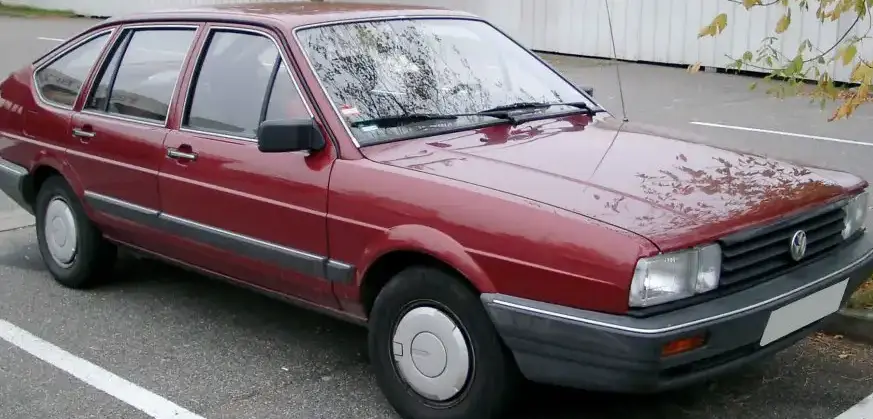
The Volkswagen Passat B2, specifically the 1.6-liter (75 hp) hatchback produced from 1985 to 1988, represents a significant iteration in Volkswagen’s mid-size offering. This variant, often overlooked in favor of its more powerful siblings, played a crucial role in providing an affordable and practical entry point into the Passat range, particularly in European markets. The B2 generation, a facelift of the original B1, aimed to modernize the design and improve overall refinement. This 1.6L model occupied the lower end of the trim spectrum, appealing to buyers prioritizing economy and functionality over outright performance.
Technical Specifications
| Brand | Volkswagen |
| Model | Passat |
| Generation | Passat Hatchback (B2; facelift 1985) |
| Type (Engine) | 1.6 (75 Hp) |
| Start of production | 1985 |
| End of production | 1988 |
| Powertrain Architecture | Internal Combustion engine |
| Body type | Hatchback |
| Seats | 5 |
| Doors | 5 |
| Fuel Type | Petrol (Gasoline) |
| Acceleration 0 – 100 km/h | 10.6 sec |
| Acceleration 0 – 62 mph | 10.6 sec |
| Acceleration 0 – 60 mph | 10.1 sec |
| Maximum speed | 167 km/h (103.77 mph) |
| Weight-to-power ratio | 13.3 kg/Hp, 74.9 Hp/tonne |
| Weight-to-torque ratio | 8.3 kg/Nm, 120.9 Nm/tonne |
| Power | 75 Hp @ 5600 rpm |
| Power per litre | 47.2 Hp/l |
| Torque | 121 Nm @ 3200 rpm (89.25 lb.-ft. @ 3200 rpm) |
| Engine layout | Front, Longitudinal |
| Engine Model/Code | DT |
| Engine displacement | 1588 cm3 (96.91 cu. in.) |
| Number of cylinders | 4 |
| Engine configuration | Inline |
| Cylinder Bore | 79.5 mm (3.13 in.) |
| Piston Stroke | 80 mm (3.15 in.) |
| Compression ratio | 8.2:1 |
| Number of valves per cylinder | 2 |
| Fuel injection system | Carburettor |
| Engine aspiration | Naturally aspirated engine |
| Valvetrain | OHC |
| Engine oil capacity | 3 l (3.17 US qt | 2.64 UK qt) |
| Coolant | 6 l (6.34 US qt | 5.28 UK qt) |
| Kerb Weight | 1001 kg (2206.83 lbs.) |
| Max. weight | 1460 kg (3218.75 lbs.) |
| Max load | 459 kg (1011.92 lbs.) |
| Trunk (boot) space – minimum | 480 l (16.95 cu. ft.) |
| Trunk (boot) space – maximum | 1542 l (54.46 cu. ft.) |
| Fuel tank capacity | 60 l (15.85 US gal | 13.2 UK gal) |
| Width | 1710 mm (67.32 in.) |
| Height | 1385 mm (54.53 in.) |
| Wheelbase | 2550 mm (100.39 in.) |
| Drivetrain Architecture | The Internal combustion engine (ICE) drives the front wheels of the vehicle. |
| Drive wheel | Front wheel drive |
| Number of gears and type of gearbox | 4 gears, manual transmission |
| Front suspension | Independent type McPherson |
| Rear suspension | Coil spring |
| Front brakes | Disc |
| Rear brakes | Drum |
| Steering type | Steering rack and pinion |
| Tires size | 175/70 R13 |
| Wheel rims size | 13 |
Powertrain & Engine Architecture
The heart of this Passat variant is the Volkswagen DT engine, a 1.6-liter inline four-cylinder unit. This engine, a staple of Volkswagen’s lineup during the 1980s, utilized a single overhead camshaft (OHC) valvetrain with two valves per cylinder. Fuel delivery was managed by a carburetor, a relatively simple and cost-effective system for the time, but less efficient and precise than fuel injection. The engine produced 75 horsepower at 5600 rpm and 121 Nm (89.25 lb-ft) of torque at 3200 rpm. The engine’s longitudinal front-engine layout was typical for Volkswagen at the time. The transmission was a four-speed manual, chosen for its simplicity and affordability. While an automatic transmission was offered on other Passat models, it wasn’t typically paired with the base 1.6L engine.
Driving Characteristics
The 1.6-liter Passat B2 with a manual transmission offered modest performance. Acceleration from 0 to 60 mph took around 10.1 seconds, and the top speed was approximately 103.77 mph. The engine felt somewhat strained at higher speeds, and overtaking required careful planning. The four-speed gearbox provided adequate spacing, but the lack of a fifth gear meant higher engine speeds at highway cruising, impacting fuel economy and noise levels. Compared to the more powerful 1.8-liter or GTI models, the 1.6 felt noticeably slower, but it provided a smoother and more relaxed driving experience, particularly in urban environments. The manual transmission offered a more engaging driving experience than the available automatic options on higher trims.
Equipment & Trim Levels
The 1.6-liter Passat B2 was generally equipped with basic features. Standard equipment typically included cloth upholstery, a simple dashboard layout, and manual windows and door locks. Power steering was often an optional extra, as was a sunroof. The interior was functional and durable, prioritizing practicality over luxury. Trim levels were relatively limited for this base model, with options primarily focused on adding convenience features like upgraded audio systems or improved interior trim materials. The focus was on providing a no-frills, affordable family car.
Chassis & Braking
The Passat B2 featured an independent McPherson strut front suspension and a coil spring rear suspension. This setup provided a reasonable balance between ride comfort and handling. Front brakes were discs, offering adequate stopping power, while the rear brakes were drums, a cost-saving measure for the base model. The steering was a rack and pinion system, providing precise and responsive steering feel. The 175/70 R13 tires offered acceptable grip in most conditions. Stabilizer bars were often omitted on the base model to further reduce costs.
Market Reception & Comparison
The 1.6-liter Passat B2 was generally well-received as an affordable and practical family car. Critics acknowledged its modest performance but praised its fuel efficiency and reliability. Compared to the more expensive 1.8-liter and GTI models, the 1.6 offered a lower price point, making it accessible to a wider range of buyers. However, it lacked the performance and features of its more upscale siblings. The 1.6L was often seen as a sensible choice for those prioritizing economy and practicality over driving excitement. Fuel economy was a key selling point, particularly in Europe where gasoline prices were high.
Legacy
The Volkswagen Passat B2 1.6-liter remains a relatively common sight on European roads today, testament to its durability and reliability. The DT engine, while not particularly powerful, is known for its longevity and relatively simple maintenance requirements. Parts availability is generally good, making it a viable option for classic car enthusiasts. In the used car market, these models are typically valued for their affordability and practicality. While not a collector’s item, the 1.6-liter Passat B2 represents a significant chapter in Volkswagen’s history, offering a glimpse into the affordable family cars of the 1980s.