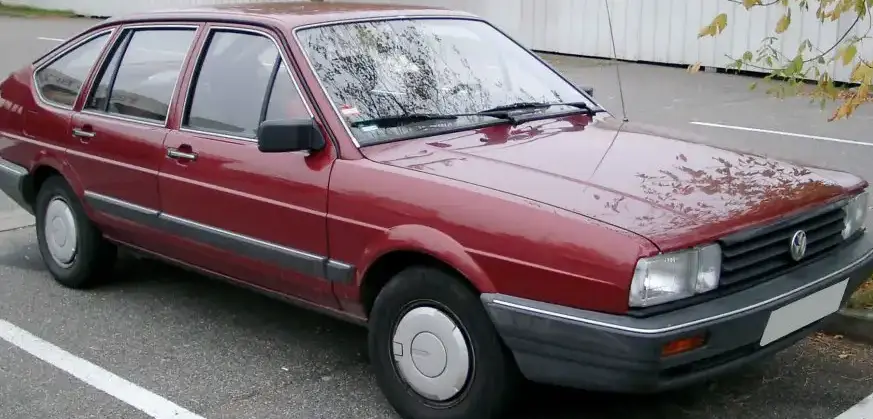
The Volkswagen Passat B2, specifically the facelifted version produced from 1985 onwards, represented a significant evolution of Volkswagen’s mid-size offering. The 1.8-liter (87 hp) variant, produced between 1986 and 1988, occupied an important position in the Passat B2 lineup, serving as an entry-level option focused on affordability and practicality. This model was primarily aimed at European markets, where fuel efficiency and reasonable running costs were highly valued. It offered a balance between passenger space, cargo capacity, and a relatively economical driving experience, making it a popular choice for families and commuters.
Technical Specifications
| Brand | Volkswagen |
| Model | Passat |
| Generation | Passat Hatchback (B2; facelift 1985) |
| Type (Engine) | 1.8 (87 Hp) |
| Start of production | 1986 |
| End of production | 1988 |
| Powertrain Architecture | Internal Combustion engine |
| Body type | Hatchback |
| Seats | 5 |
| Doors | 5 |
| Fuel Type | Petrol (Gasoline) |
| Power | 87 Hp |
| Engine Model/Code | RM |
| Engine aspiration | Naturally aspirated engine |
| Engine oil capacity | 3 l (3.17 US qt | 2.64 UK qt) |
| Coolant capacity | 4 l (4.23 US qt | 3.52 UK qt) |
| Trunk (boot) space – minimum | 480 l (16.95 cu. ft.) |
| Trunk (boot) space – maximum | 1542 l (54.46 cu. ft.) |
| Fuel tank capacity | 60 l (15.85 US gal | 13.2 UK gal) |
| Length | 4425 mm (174.21 in.) |
| Width | 1710 mm (67.32 in.) |
| Height | 1385 mm (54.53 in.) |
| Wheelbase | 2550 mm (100.39 in.) |
Powertrain & Engine Architecture
The 1.8-liter RM engine powering this Passat variant was a naturally aspirated, inline-four cylinder unit. It featured a single overhead camshaft (SOHC) valvetrain, operating two valves per cylinder. Fuel delivery was managed by Bosch mechanical fuel injection, a system common for the era, providing a balance between efficiency and performance. While not as sophisticated as later multi-point injection systems, it offered improved fuel atomization compared to carburetors. The engine produced 87 horsepower at approximately 5,200 rpm and around 138 Nm (102 lb-ft) of torque at 3,200 rpm. This power was delivered to the front wheels through a three-speed automatic transmission. This transmission, while providing convenience, was a relatively simple design, prioritizing durability over outright performance. It featured a torque converter and a limited number of gear ratios, impacting acceleration and overall responsiveness.
Driving Characteristics
The 1.8-liter automatic Passat B2 offered a comfortable, if not particularly sporty, driving experience. The three-speed automatic transmission resulted in noticeable shifts, and the relatively low horsepower output meant acceleration was modest. 0 to 60 mph times were likely in the 12-14 second range. However, the engine provided adequate power for everyday driving, especially in urban and highway environments. The automatic transmission’s gear ratios were geared towards fuel economy, making it a reasonable choice for long journeys. Compared to the manual transmission versions of the 1.8, the automatic suffered a slight performance penalty. The more powerful variants, such as the 1.8 GTI or the VR6 models, offered significantly more spirited performance, but at a higher price point. The automatic also felt less engaging to drive than its manual counterparts.
Equipment & Trim Levels
The 1.8-liter automatic Passat B2 typically came with a fairly basic level of equipment, reflecting its position as an entry-level model. Standard features generally included cloth upholstery, a basic stereo system, and manual windows and door locks. Power steering was often an optional extra, as was air conditioning. The dashboard layout was functional and straightforward, with clearly marked gauges for speed, fuel level, coolant temperature, and battery voltage. Higher trim levels offered upgrades such as upgraded upholstery, central locking, electric windows, and a more sophisticated stereo system. Alloy wheels were also available as an option, enhancing the vehicle’s aesthetic appeal.
Chassis & Braking
The Passat B2 featured a MacPherson strut front suspension and a semi-independent torsion beam rear suspension. This setup provided a reasonable balance between ride comfort and handling. The 1.8-liter models typically used smaller diameter tires and wheels compared to the higher-performance variants. Braking was typically accomplished with disc brakes on the front wheels and drum brakes on the rear. This configuration was common for vehicles in this price range during the 1980s. Anti-lock braking systems (ABS) were not standard equipment and were typically only available as an optional extra on higher trim levels.
Market Reception & Comparison
The 1.8-liter automatic Passat B2 was generally well-received as a practical and affordable family car. Critics praised its spacious interior, large trunk capacity, and reasonable fuel economy. However, the automatic transmission and relatively low horsepower output were often criticized. Compared to the manual transmission versions, the automatic offered less driver involvement and slightly lower fuel efficiency. The more powerful GTI and VR6 models were praised for their performance, but they were significantly more expensive. The 1.8-liter diesel models offered even better fuel economy, but they were generally slower and noisier. The 1.8-liter automatic struck a balance between these extremes, appealing to buyers who prioritized comfort and convenience over outright performance.
Legacy
The 1.8-liter RM engine and the three-speed automatic transmission used in the Passat B2 proved to be relatively reliable. While not without their quirks, these components were generally durable and capable of withstanding years of use. Today, the 1.8-liter automatic Passat B2 is a relatively affordable classic car. Parts availability is generally good, and maintenance is relatively straightforward. However, potential buyers should be aware of common issues such as rust, worn suspension components, and potential problems with the fuel injection system. These cars represent a piece of automotive history, offering a glimpse into the design and engineering of the 1980s. They are increasingly sought after by enthusiasts and collectors who appreciate their simplicity, practicality, and classic styling.