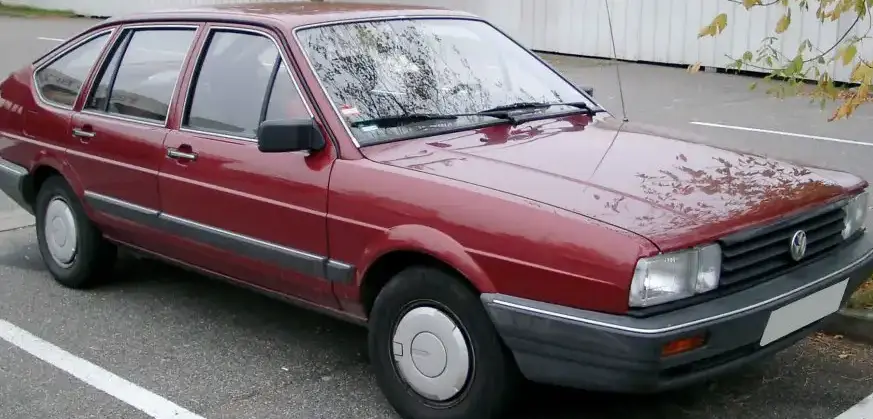
The Volkswagen Passat B2, produced from 1980 to 1988, represented a significant evolution for Volkswagen’s mid-size offering. The facelifted version introduced in 1985 brought updated styling and mechanical refinements. Among the engine options available, the 2.2-liter (115 hp) variant occupied a middle ground in the Passat B2 lineup, offering a balance between performance and economy. Produced from 1985 through 1988, this version was primarily aimed at buyers seeking a comfortable and practical family vehicle with adequate power for highway cruising. It was a popular choice in European markets, where fuel efficiency and practicality were highly valued.
Technical Specifications
| Brand | Volkswagen |
| Model | Passat |
| Generation | Passat Hatchback (B2; facelift 1985) |
| Type (Engine) | 2.2 (115 Hp) |
| Start of production | 1985 |
| End of production | 1988 |
| Powertrain Architecture | Internal Combustion engine |
| Body type | Hatchback |
| Seats | 5 |
| Doors | 5 |
| Fuel Type | Petrol (Gasoline) |
| Acceleration 0 – 100 km/h | 11.1 sec |
| Acceleration 0 – 62 mph | 11.1 sec |
| Acceleration 0 – 60 mph | 10.5 sec |
| Maximum speed | 182 km/h (113.09 mph) |
| Weight-to-power ratio | 7.9 kg/Hp, 126.4 Hp/tonne |
| Weight-to-torque ratio | 5.5 kg/Nm, 180.2 Nm/tonne |
| Power | 115 Hp @ 5500 rpm |
| Power per litre | 57.7 Hp/l |
| Torque | 164 Nm @ 3200 rpm (120.96 lb.-ft. @ 3200 rpm) |
| Engine layout | Front, Longitudinal |
| Engine Model/Code | KX |
| Engine displacement | 1994 cm3 (121.68 cu. in.) |
| Number of cylinders | 5 |
| Engine configuration | Inline |
| Cylinder Bore | 81 mm (3.19 in.) |
| Piston Stroke | 77.4 mm (3.05 in.) |
| Compression ratio | 10:1 |
| Number of valves per cylinder | 2 |
| Fuel injection system | Single-point injection |
| Engine aspiration | Naturally aspirated engine |
| Valvetrain | OHC |
| Engine oil capacity | 3 l (3.17 US qt | 2.64 UK qt) |
| Coolant | 4 l (4.23 US qt | 3.52 UK qt) |
| Kerb Weight | 910 kg (2006.21 lbs) |
| Max. weight | 1350 kg (2976.24 lbs) |
| Max load | 440 kg (970.03 lbs) |
| Trunk (boot) space – minimum | 480 l (16.95 cu. ft.) |
| Trunk (boot) space – maximum | 1542 l (54.46 cu. ft.) |
| Fuel tank capacity | 60 l (15.85 US gal | 13.2 UK gal) |
| Length | 4425 mm (174.21 in.) |
| Width | 1710 mm (67.32 in.) |
| Height | 1385 mm (54.53 in.) |
| Wheelbase | 2550 mm (100.39 in.) |
| Front track | 1414 mm (55.67 in.) |
| Rear (Back) track | 1422 mm (55.98 in.) |
| Drivetrain Architecture | The Internal combustion engine (ICE) drives the front wheels of the vehicle. |
| Drive wheel | Front wheel drive |
| Number of gears and type of gearbox | 5 gears, manual transmission |
| Front suspension | Independent type McPherson |
| Rear suspension | Coil spring |
| Front brakes | Ventilated discs |
| Rear brakes | Disc |
| Steering type | Steering rack and pinion |
| Power steering | Hydraulic Steering |
| Tires size | 195/60 R14 |
| Wheel rims size | 14 |
Powertrain & Engine Architecture
The heart of this Passat variant was the Volkswagen KX engine, a 1.994-liter inline five-cylinder gasoline engine. This engine utilized single-point fuel injection, a relatively simple system compared to multi-point injection becoming more common at the time. The single injector was positioned in the intake manifold, delivering fuel to all five cylinders. The engine featured an overhead camshaft (OHC) valvetrain with two valves per cylinder. This configuration provided a reasonable balance between simplicity, cost, and performance. The KX engine was known for its relatively robust construction and decent reliability. The five-cylinder design contributed to a smoother power delivery compared to a four-cylinder engine of similar displacement. The engine’s longitudinal front-engine layout was typical for Volkswagen vehicles of this era, contributing to a balanced weight distribution.
Driving Characteristics
The 115 hp output, coupled with the five-speed manual transmission, provided adequate performance for everyday driving. Acceleration from 0 to 60 mph took around 10.5 seconds, and the top speed was approximately 113 mph. While not a sports car, the Passat 2.2 offered sufficient power for highway overtaking and comfortable cruising. The five-speed gearbox allowed for efficient highway speeds, while the engine’s torque peak at 3200 rpm provided good responsiveness in typical driving situations. Compared to the more powerful 1.8L or 2.1L versions, the 2.2 offered a more relaxed driving experience, prioritizing fuel economy and ease of use over outright performance. The manual transmission provided a more engaging driving experience than the available automatic option, offering greater control and responsiveness.
Equipment & Trim Levels
The Passat B2 offered a range of trim levels, with the 2.2-liter variant typically falling into the mid-range. Standard equipment included cloth upholstery, a basic stereo system, and manual windows and locks. Power steering was often included, but air conditioning and central locking were typically optional extras. The interior design was functional and straightforward, reflecting the car’s practical nature. Higher trim levels offered features such as upgraded upholstery, alloy wheels, and a more comprehensive stereo system. The hatchback body style provided excellent versatility, with a spacious cargo area that could be expanded by folding down the rear seats.
Chassis & Braking
The Passat B2 featured an independent McPherson strut front suspension and a coil spring rear suspension. This setup provided a comfortable ride and decent handling characteristics. The front brakes were ventilated discs, offering good stopping power, while the rear brakes were solid discs. The steering was a rack-and-pinion system with hydraulic power assistance, providing precise and responsive steering feel. The car’s weight distribution was relatively balanced, contributing to stable handling. The 195/60 R14 tires provided adequate grip for most driving conditions.
Market Reception & Comparison
The Passat B2 2.2 was generally well-received by automotive critics. It was praised for its comfortable ride, spacious interior, and practical hatchback body style. However, some critics noted that the engine lacked the refinement and performance of some of its competitors. Compared to the more powerful Passat variants, the 2.2 offered better fuel economy, making it an attractive option for buyers prioritizing cost-effectiveness. It also proved to be a reliable and durable vehicle, with relatively low maintenance costs. The 2.2L engine was considered a good compromise between performance and economy, making it a popular choice for families and commuters.
Legacy
The Volkswagen Passat B2 2.2 has become a popular classic car among enthusiasts. The KX engine is known for its durability and relatively simple maintenance requirements. While parts availability can be a challenge, many components are still available through specialist suppliers. Today, well-maintained examples of the Passat B2 2.2 are sought after by collectors and enthusiasts who appreciate its classic styling, practical features, and reliable powertrain. The car represents a significant chapter in Volkswagen’s history, showcasing the company’s commitment to building comfortable, practical, and durable vehicles.