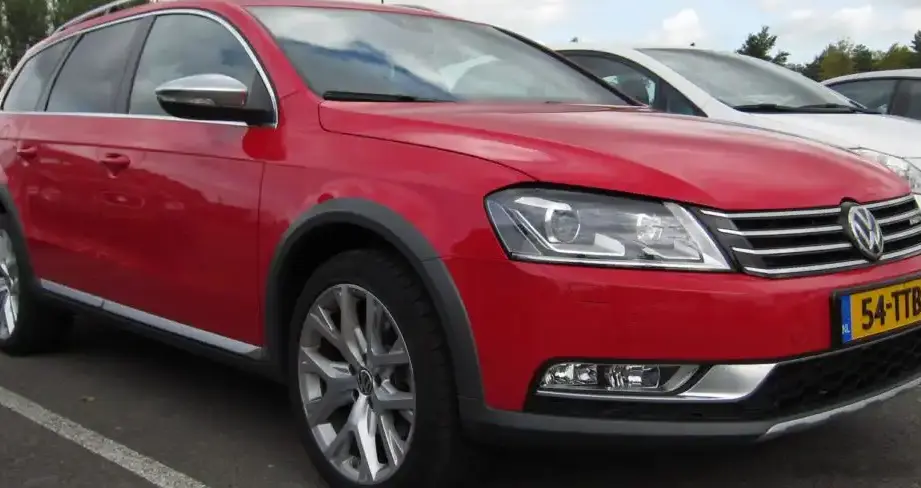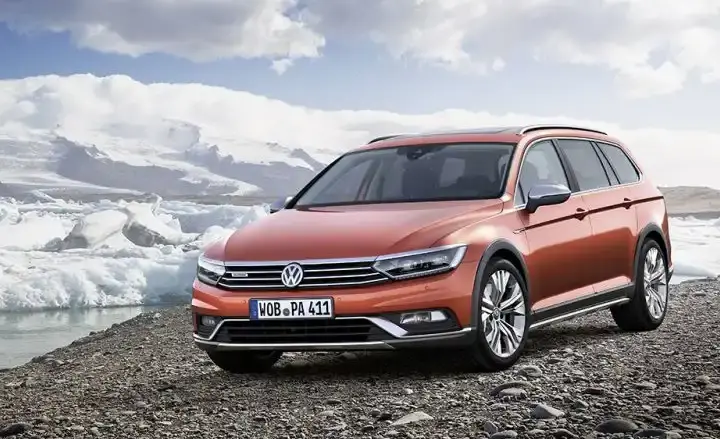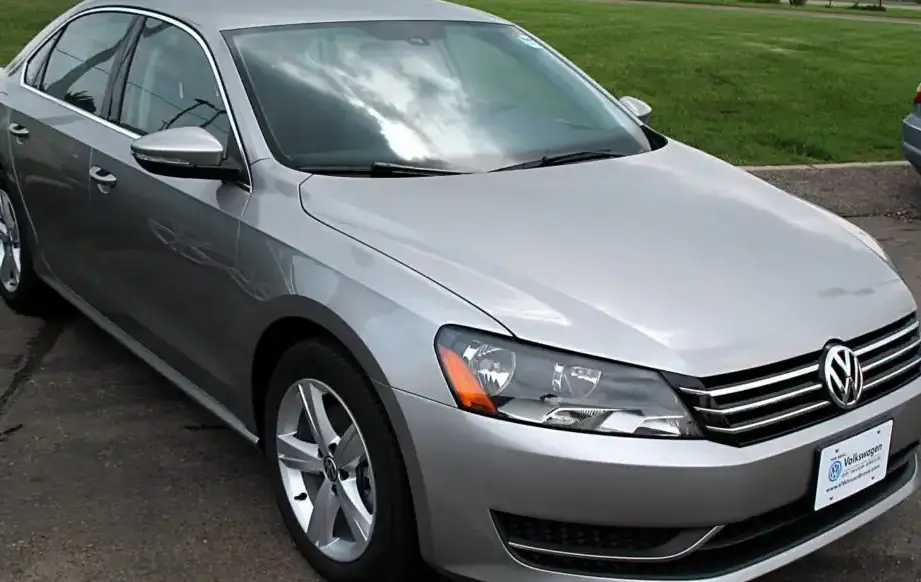
The Volkswagen Passat (North America, A32) 1.8 TSI, produced from 2013 to 2015, represented a key offering in Volkswagen’s mid-size sedan lineup for the North American market. This variant, powered by a 1.8-liter turbocharged four-cylinder engine producing 170 horsepower, occupied a middle ground in the Passat range, positioned between the base 2.5-liter model and the more powerful 3.6-liter V6. It was designed to appeal to buyers seeking a balance of fuel efficiency, performance, and features within the A32 generation of the Passat, which was specifically tailored for the North American market with a longer wheelbase and increased rear passenger space compared to its European counterpart.
Technical Specifications
| Brand | Volkswagen |
| Model | Passat |
| Generation | Passat (North America, A32) |
| Type (Engine) | 1.8 TSI (170 Hp) |
| Start of production | 2013 |
| End of production | 2015 |
| Powertrain Architecture | Internal Combustion engine |
| Body type | Sedan |
| Seats | 5 |
| Doors | 4 |
| Fuel consumption (economy) – urban | 9.8 l/100 km (24 US mpg, 28.8 UK mpg, 10.2 km/l) |
| Fuel consumption (economy) – extra urban | 6.7 l/100 km (35.1 US mpg, 42.2 UK mpg, 14.9 km/l) |
| Fuel Type | Petrol (Gasoline) |
| Weight-to-power ratio | 8.6 kg/Hp, 116 Hp/tonne |
| Weight-to-torque ratio | 5.9 kg/Nm, 170.6 Nm/tonne |
| Power | 170 Hp @ 4800 rpm |
| Power per litre | 94.5 Hp/l |
| Torque | 250 Nm @ 1500 rpm (184.39 lb.-ft. @ 1500 rpm) |
| Engine layout | Front, Transverse |
| Engine Model/Code | EA888 / CPKA, CPRA |
| Engine displacement | 1798 cm3 (109.72 cu. in.) |
| Number of cylinders | 4 |
| Engine configuration | Inline |
| Cylinder Bore | 82.5 mm (3.25 in.) |
| Piston Stroke | 84.1 mm (3.31 in.) |
| Compression ratio | 9.6:1 |
| Number of valves per cylinder | 4 |
| Fuel injection system | Direct injection |
| Engine aspiration | Turbocharger, Intercooler |
| Valvetrain | DOHC |
| Engine oil capacity | 5 l (5.28 US qt | 4.4 UK qt) |
| Coolant | 10 l (10.57 US qt | 8.8 UK qt) |
| Kerb Weight | 1465 kg (3229.77 lbs.) |
| Max. weight | 2020 kg (4453.34 lbs.) |
| Max load | 555 kg (1223.57 lbs.) |
| Trunk (boot) space – minimum | 450 l (15.89 cu. ft.) |
| Fuel tank capacity | 70 l (18.49 US gal | 15.4 UK gal) |
| Permitted trailer load without brakes | 450 kg (992.08 lbs.) |
| Permitted towbar download | 75 kg (165.35 lbs.) |
| Length | 4868 mm (191.65 in.) |
| Width | 1835 mm (72.24 in.) |
| Height | 1487 mm (58.54 in.) |
| Wheelbase | 2803 mm (110.35 in.) |
| Front track | 1577 mm (62.09 in.) |
| Rear (Back) track | 1550 mm (61.02 in.) |
| Ride height (ground clearance) | 138 mm (5.43 in.) |
| Drag coefficient (Cd) | 0.29 |
| Minimum turning circle (turning diameter) | 11.7 m (38.39 ft.) |
| Drivetrain Architecture | The Internal combustion engine (ICE) drives the front wheels of the vehicle. |
| Drive wheel | Front wheel drive |
| Number of gears and type of gearbox | 5 gears, manual transmission |
| Front suspension | Independent, type McPherson with coil spring and anti-roll bar |
| Rear suspension | Independent multi-link spring suspension with stabilizer |
| Front brakes | Ventilated discs, 312×25 mm |
| Rear brakes | Disc, 272×10 mm |
| Assisting systems | ABS (Anti-lock braking system) |
| Steering type | Steering rack and pinion |
| Power steering | Electric Steering |
| Tires size | 215/60 R16; 215/55 R17; 235/45 R18 |
| Wheel rims size | 6.5J x 16; 7J x 17; 8J x 18 |
Powertrain & Engine Architecture
The heart of the Passat 1.8 TSI is the EA888 engine, specifically the CPKA or CPRA code depending on the exact production year and market. This 1.8-liter inline-four engine utilizes direct fuel injection (FSI) and a single turbocharger with an intercooler. The direct injection system allows for precise fuel delivery, enhancing both power and fuel efficiency. The engine features a double overhead camshaft (DOHC) valvetrain with four valves per cylinder, optimizing airflow for improved performance. The turbocharger provides a significant boost in power output, overcoming the limitations of a naturally aspirated engine of similar displacement. The engine’s control unit carefully manages boost pressure, fuel injection, and ignition timing to deliver a smooth and responsive driving experience. The 5-speed manual transmission was standard, offering a direct connection between the engine and the front wheels.
Driving Characteristics
The 170-horsepower 1.8 TSI engine in the Passat provided adequate performance for everyday driving. Acceleration was respectable, though not as brisk as the V6 model. The turbocharger provided a noticeable surge of power in the mid-range, making overtaking maneuvers relatively easy. The 5-speed manual transmission offered precise shifts, allowing drivers to maintain control and optimize engine performance. While the manual transmission was the standard offering, the 6-speed automatic transmission was available as an option. The automatic transmission, while convenient, slightly diminished acceleration and fuel economy compared to the manual. The Passat’s suspension provided a comfortable ride, absorbing bumps and imperfections in the road effectively. However, the handling was not particularly sporty, prioritizing comfort over agility.
Equipment & Trim Levels
The 1.8 TSI Passat typically came standard with features such as air conditioning, power windows and locks, a basic audio system, and steel wheels with wheel covers. Higher trim levels, such as the SE and SEL, added features like alloy wheels, a more advanced audio system, heated front seats, a sunroof, and keyless entry. Optional extras included leather upholstery, navigation system, and a premium sound system. Interior upholstery was typically cloth, with leather available as an upgrade. The dashboard layout was functional and straightforward, with easy-to-read gauges and intuitive controls.
Chassis & Braking
The Passat 1.8 TSI utilized an independent McPherson strut suspension in the front and an independent multi-link suspension in the rear. This suspension setup provided a good balance of ride comfort and handling. The front brakes were ventilated discs, while the rear brakes were solid discs. Anti-lock braking system (ABS) was standard, enhancing braking performance and stability. The steering was rack-and-pinion with electric power steering, providing precise and responsive steering feel.
Market Reception & Comparison
The Passat 1.8 TSI was generally well-received by critics, who praised its fuel efficiency, comfortable ride, and spacious interior. However, some reviewers noted that the engine lacked the punch of the V6 model and that the handling was not particularly engaging. Compared to the 2.5-liter Passat, the 1.8 TSI offered significantly more power and a more refined driving experience. Compared to the V6, it provided better fuel economy but less overall performance. The 1.8 TSI represented a sweet spot for many buyers, offering a good balance of features, performance, and price.
Legacy
The EA888 1.8 TSI engine proved to be a relatively reliable powertrain, although some owners have reported issues with oil consumption and carbon buildup on the intake valves. Regular maintenance, including oil changes and fuel system cleaning, is essential to ensure long-term reliability. Today, the 2013-2015 Passat 1.8 TSI remains a popular choice in the used car market, offering a comfortable and practical mid-size sedan at an affordable price. Its blend of fuel efficiency, features, and reliability continues to appeal to a wide range of buyers.