Technical Specifications
| Brand | Volkswagen |
| Model | Passat |
| Generation | Passat (North America, A32) |
| Type (Engine) | 2.0 TDI (140 Hp) |
| Start of production | 2011 |
| End of production | 2014 |
| Powertrain Architecture | Internal Combustion engine |
| Body type | Sedan |
| Seats | 5 |
| Doors | 4 |
| Fuel consumption (urban) | 7.6 l/100 km (30.9 US mpg) |
| Fuel consumption (extra urban) | 5.5 l/100 km (42.8 US mpg) |
| Fuel Type | Diesel |
| Weight-to-power ratio | 11 kg/Hp |
| Weight-to-torque ratio | 4.8 kg/Nm |
| Power | 140 Hp @ 4000 rpm |
| Power per litre | 71.1 Hp/l |
| Torque | 320 Nm @ 1750 rpm (236.02 lb.-ft. @ 1750 rpm) |
| Engine layout | Front, Transverse |
| Engine Model/Code | EA189 / CKRA |
| Engine displacement | 1968 cm3 (120.09 cu. in.) |
| Number of cylinders | 4 |
| Engine configuration | Inline |
| Cylinder Bore | 81 mm (3.19 in.) |
| Piston Stroke | 95.5 mm (3.76 in.) |
| Compression ratio | 16.5:1 |
| Number of valves per cylinder | 4 |
| Fuel injection system | Diesel Commonrail |
| Engine aspiration | Turbocharger, Intercooler |
| Valvetrain | DOHC |
| Engine oil capacity | 4.3 l (4.54 US qt | 3.78 UK qt) |
| Coolant | 10.6 l (11.2 US qt | 9.33 UK qt) |
| Kerb Weight | 1539 kg (3392.91 lbs.) |
| Max. weight | 2100 kg (4629.71 lbs.) |
| Max load | 561 kg (1236.79 lbs.) |
| Trunk (boot) space – minimum | 450 l (15.89 cu. ft.) |
| Fuel tank capacity | 70 l (18.49 US gal | 15.4 UK gal) |
| Length | 4868 mm (191.65 in.) |
| Width | 1835 mm (72.24 in.) |
| Height | 1487 mm (58.54 in.) |
| Wheelbase | 2803 mm (110.35 in.) |
| Front track | 1577 mm (62.09 in.) |
| Rear track | 1550 mm (61.02 in.) |
| Ride height (ground clearance) | 138 mm (5.43 in.) |
| Drag coefficient (Cd) | 0.29 |
| Minimum turning circle | 11.7 m (38.39 ft.) |
| Drivetrain Architecture | Front wheel drive |
| Number of gears | 6 |
| Gearbox type | Manual transmission |
| Front suspension | Independent, McPherson with coil spring and anti-roll bar |
| Rear suspension | Independent multi-link spring suspension with stabilizer |
| Front brakes | Ventilated discs, 312×25 mm |
| Rear brakes | Disc, 272×10 mm |
| Assisting systems | ABS (Anti-lock braking system) |
| Steering type | Steering rack and pinion |
| Power steering | Electric |
| Tires size | 215/55 R17; 235/45 R18 |
| Wheel rims size | 7J x 17; 8J x 18 |
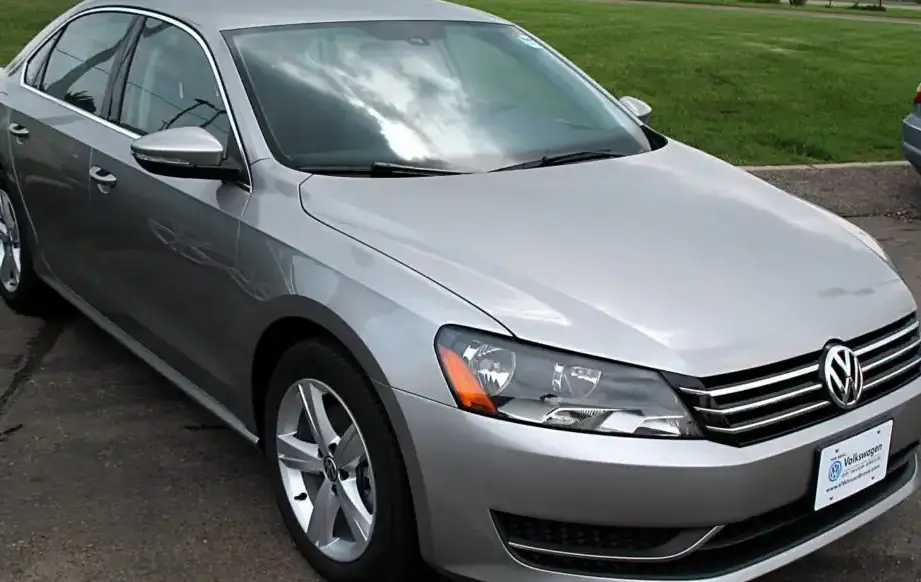
The 2011-2014 Volkswagen Passat 2.0 TDI was a key component of Volkswagen’s strategy to gain market share in the North American mid-size sedan segment. Built on the A32 platform, specifically tailored for the North American market, it offered a diesel alternative to the predominantly gasoline-powered competition. This generation Passat represented a departure from the European Passat (B7), being larger and more conservatively styled to appeal to American tastes. The 2.0 TDI variant aimed to provide a compelling combination of fuel economy and usable performance, targeting buyers seeking a more efficient and refined driving experience.
Powertrain & Engine Architecture
At the heart of the Passat 2.0 TDI lies the EA189 engine family, specifically the CKRA code. This 1968cc inline-four cylinder diesel engine utilizes common rail direct injection, delivering fuel directly into the combustion chamber at extremely high pressure. The engine features a turbocharger with an intercooler, boosting power output and improving efficiency. The DOHC (Dual Overhead Camshaft) valvetrain, with four valves per cylinder, optimizes airflow for enhanced performance. The 2.0 TDI engine boasts a high compression ratio of 16.5:1, typical for diesel engines, contributing to its efficiency. The engine was paired with a 6-speed manual transmission, offering drivers precise control over gear selection. The engine’s design incorporated a diesel particulate filter (DPF) to reduce harmful emissions, a crucial feature for meeting North American emissions standards.
Driving Characteristics
The 2.0 TDI Passat offered a distinctly different driving experience compared to its gasoline-powered siblings and higher-output TDI variants. While 140 horsepower isn’t a figure that screams performance, the 320 Nm (236 lb-ft) of torque available from just 1750 rpm provided ample low-end grunt for everyday driving. Acceleration was adequate, but not particularly brisk. The 6-speed manual transmission allowed for efficient cruising and responsive downshifts. Compared to the more powerful gasoline engines, the 2.0 TDI prioritized fuel economy over outright speed. The gear ratios were tuned to maximize efficiency, resulting in a relaxed driving experience on the highway. The manual transmission, while engaging, required more driver involvement than the available automatic options in other Passat trims.
Equipment & Trim Levels
The 2.0 TDI typically came equipped as a mid-range trim level, offering a balance of features and affordability. Standard equipment generally included air conditioning, power windows and locks, a basic audio system, and steel wheels with wheel covers. Higher trim levels added features such as alloy wheels, upgraded audio systems, sunroof, leather upholstery, and advanced safety features. Interior upholstery was typically cloth, with options for leather available on higher trims. The dashboard layout was functional and straightforward, prioritizing usability over flashy design. Optional extras included a navigation system, premium sound system, and various driver assistance technologies.
Chassis & Braking
The Passat 2.0 TDI utilized an independent suspension setup, with McPherson struts at the front and a multi-link system at the rear. This configuration provided a comfortable ride quality, absorbing bumps and irregularities in the road surface effectively. The front suspension incorporated a stabilizer bar to reduce body roll during cornering. Braking duties were handled by ventilated discs at the front and solid discs at the rear. The inclusion of ABS (Anti-lock Braking System) enhanced braking performance and stability, particularly in emergency situations. The chassis was tuned to prioritize comfort and stability over sporty handling, reflecting the Passat’s intended role as a family sedan.
Market Reception & Comparison
The 2.0 TDI Passat received generally positive reviews, with critics praising its fuel efficiency and comfortable ride. However, some reviewers noted that the engine lacked the punch of the gasoline engines and that the manual transmission could be a deterrent for some buyers. Compared to the gasoline-powered Passats, the 2.0 TDI offered significantly better fuel economy, making it an attractive option for drivers who prioritized efficiency. Compared to other diesel-powered vehicles in the segment, the Passat 2.0 TDI offered a competitive combination of performance, fuel economy, and features. Reliability was generally good, although some owners reported issues with the DPF system, a common concern with diesel vehicles.
Legacy
The Volkswagen Passat 2.0 TDI (2011-2014) remains a relatively common sight on used car lots today. The EA189 engine, while subject to some scrutiny regarding emissions, has proven to be reasonably durable with proper maintenance. The 2.0 TDI variant is often sought after by buyers looking for a fuel-efficient and reliable mid-size sedan. However, potential buyers should be aware of the potential for DPF issues and the importance of regular maintenance. The Passat 2.0 TDI represents a significant chapter in Volkswagen’s efforts to establish a foothold in the North American market with diesel technology, offering a compelling alternative to traditional gasoline-powered vehicles.