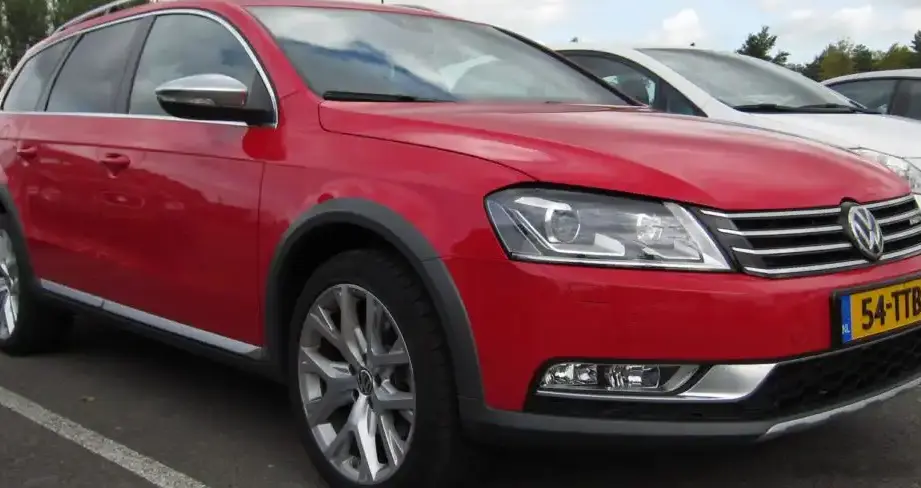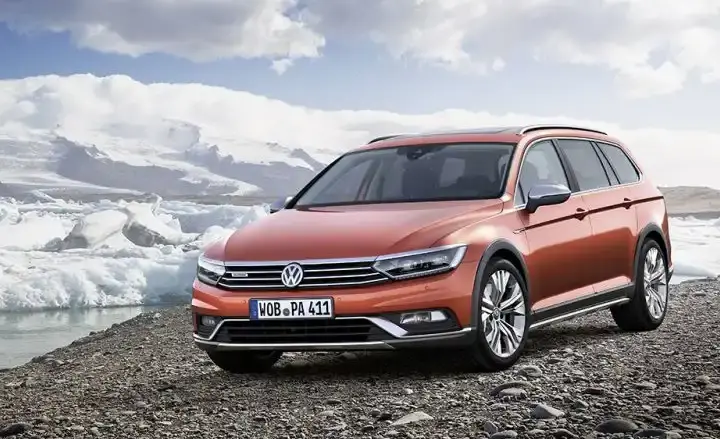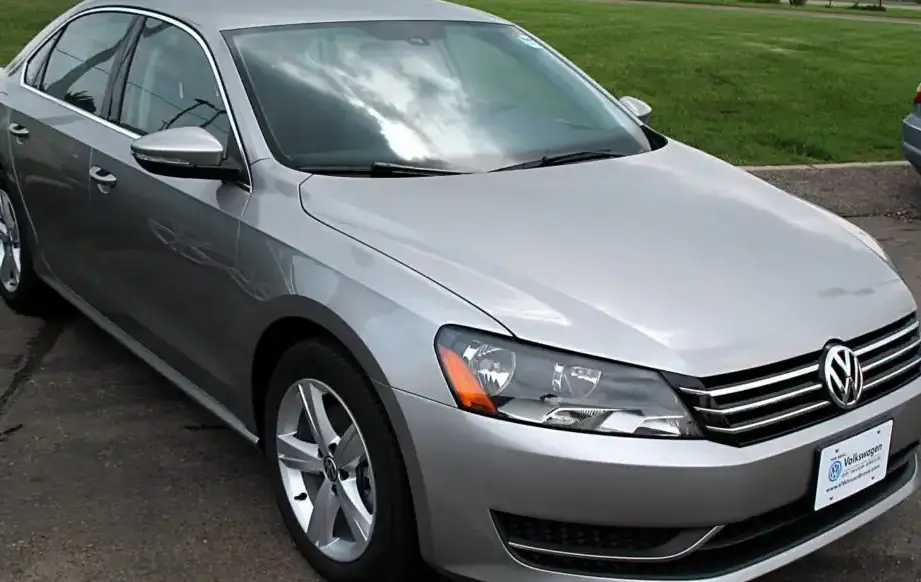
The Volkswagen Passat (North America, A32) 2.0 TDI, produced for the 2014 and 2015 model years, represented Volkswagen’s mid-size sedan offering for the North American market. This generation, known internally as the A32, was specifically designed to cater to the preferences of American buyers, offering a larger interior and more conventional styling compared to its European counterpart. The 2.0 TDI variant, equipped with a turbocharged diesel engine producing 150 horsepower, occupied a key position in the lineup, appealing to drivers seeking a balance of fuel efficiency and respectable performance. It was positioned as a more economical alternative to the gasoline-powered options, while offering more power than the base engine.
Technical Specifications
| Brand | Volkswagen |
| Model | Passat |
| Generation | Passat (North America, A32) |
| Type (Engine) | 2.0 TDI (150 Hp) |
| Start of production | 2014 |
| End of production | 2015 |
| Powertrain Architecture | Internal Combustion engine |
| Body type | Sedan |
| Seats | 5 |
| Doors | 4 |
| Fuel consumption (economy) – urban | 7.8 l/100 km (30.2 US mpg, 36.2 UK mpg, 12.8 km/l) |
| Fuel consumption (economy) – extra urban | 5.3 l/100 km (44.4 US mpg, 53.3 UK mpg, 18.9 km/l) |
| Fuel consumption (economy) – combined | 6.7 l/100 km (35.1 US mpg, 42.2 UK mpg, 14.9 km/l) |
| Fuel Type | Diesel |
| Weight-to-power ratio | 10.3 kg/Hp, 97 Hp/tonne |
| Weight-to-torque ratio | 4.8 kg/Nm, 207 Nm/tonne |
| Power | 150 Hp @ 3500 rpm |
| Power per litre | 76.2 Hp/l |
| Torque | 320 Nm @ 1750 rpm (236.02 lb.-ft. @ 1750 rpm) |
| Engine layout | Front, Transverse |
| Engine Model/Code | EA288 / CVCA |
| Engine displacement | 1968 cm3 (120.09 cu. in.) |
| Number of cylinders | 4 |
| Engine configuration | Inline |
| Cylinder Bore | 81 mm (3.19 in.) |
| Piston Stroke | 95.5 mm (3.76 in.) |
| Compression ratio | 16.2:1 |
| Number of valves per cylinder | 4 |
| Fuel injection system | Diesel Commonrail |
| Engine aspiration | Turbocharger, Intercooler |
| Valvetrain | DOHC |
| Engine oil capacity | 4.3 l (4.54 US qt | 3.78 UK qt) |
| Coolant | 8 l (8.45 US qt | 7.04 UK qt) |
| Kerb Weight | 1546 kg (3408.35 lbs.) |
| Max. weight | 2100 kg (4629.71 lbs.) |
| Max load | 554 kg (1221.36 lbs.) |
| Trunk (boot) space – minimum | 450 l (15.89 cu. ft.) |
| Fuel tank capacity | 70 l (18.49 US gal | 15.4 UK gal) |
| Permitted trailer load without brakes | 450 kg (992.08 lbs.) |
| Permitted towbar download | 75 kg (165.35 lbs.) |
| Length | 4868 mm (191.65 in.) |
| Width | 1835 mm (72.24 in.) |
| Height | 1487 mm (58.54 in.) |
| Wheelbase | 2803 mm (110.35 in.) |
| Front track | 1577 mm (62.09 in.) |
| Rear (Back) track | 1550 mm (61.02 in.) |
| Ride height (ground clearance) | 138 mm (5.43 in.) |
| Drag coefficient (Cd) | 0.29 |
| Minimum turning circle (turning diameter) | 11.7 m (38.39 ft.) |
| Drivetrain Architecture | The Internal combustion engine (ICE) drives the front wheels of the vehicle. |
| Drive wheel | Front wheel drive |
| Number of gears and type of gearbox | 6 gears, manual transmission |
| Front suspension | Independent, type McPherson with coil spring and anti-roll bar |
| Rear suspension | Independent multi-link spring suspension with stabilizer |
| Front brakes | Ventilated discs, 312×25 mm |
| Rear brakes | Disc, 272×10 mm |
| Assisting systems | ABS (Anti-lock braking system) |
| Steering type | Steering rack and pinion |
| Power steering | Electric Steering |
| Tires size | 215/55 R17; 235/45 R18 |
| Wheel rims size | 7J x 17; 8J x 18 |
Powertrain & Engine Architecture
The heart of the Passat 2.0 TDI was the EA288 series engine, specifically the CVCA code. This 1.968-liter inline-four cylinder diesel engine utilized common rail direct injection, delivering fuel directly into the combustion chamber at extremely high pressure. This, combined with a variable geometry turbocharger and intercooler, allowed for a good balance of power and efficiency. The engine featured a double overhead camshaft (DOHC) valvetrain with four valves per cylinder, optimizing airflow for improved performance. The 6-speed manual transmission was standard, providing drivers with full control over gear selection. The engine was transversely mounted, driving the front wheels.
Driving Characteristics
The 2.0 TDI with the manual transmission offered a reasonably engaging driving experience. While not a sports sedan, the 150 horsepower and 320 Nm (236 lb-ft) of torque provided adequate acceleration for everyday driving and highway merging. The turbocharger provided a noticeable boost in power, particularly in the mid-range. The manual gearbox was well-matched to the engine’s characteristics, with gear ratios designed to maximize fuel economy and provide responsive acceleration. Compared to the base gasoline engine, the TDI offered significantly more torque, resulting in stronger low-end pull. However, it lacked the outright horsepower of the larger gasoline engines available in the Passat lineup.
Equipment & Trim Levels
The 2.0 TDI typically came with a respectable level of standard equipment. This included air conditioning, power windows and locks, a basic audio system, and alloy wheels. Higher trim levels added features such as leather upholstery, a sunroof, upgraded audio systems, and advanced safety features like blind-spot monitoring. The interior design was functional and comfortable, with a focus on practicality. The dashboard layout was straightforward and easy to use, with clearly labeled controls.
Chassis & Braking
The Passat A32 featured an independent suspension system at all four wheels. The front suspension utilized a McPherson strut design, while the rear employed a multi-link setup. This configuration provided a comfortable ride and good handling characteristics. The braking system consisted of ventilated discs at the front and solid discs at the rear, providing adequate stopping power. Anti-lock brakes (ABS) were standard, enhancing safety and control during emergency braking situations.
Market Reception & Comparison
The Passat 2.0 TDI was generally well-received by automotive critics. It was praised for its fuel efficiency, comfortable ride, and spacious interior. However, some reviewers noted that the engine could be somewhat noisy and that the performance was not as exhilarating as some of its competitors. Compared to the gasoline-powered Passat models, the TDI offered significantly better fuel economy, making it an attractive option for drivers who prioritized efficiency. It also provided more torque than the base gasoline engine, resulting in stronger acceleration. However, the TDI was typically more expensive than the gasoline models.
Legacy
The Volkswagen Passat 2.0 TDI (A32) has proven to be a relatively reliable vehicle, although, like all diesel engines, it requires regular maintenance. The EA288 engine is known for its durability, but issues with the diesel particulate filter (DPF) and fuel injectors can occur. In the used car market, these Passats represent a good value for buyers seeking a fuel-efficient and comfortable mid-size sedan. However, potential buyers should be aware of the potential maintenance costs associated with diesel engines and ensure that the vehicle has been properly maintained.