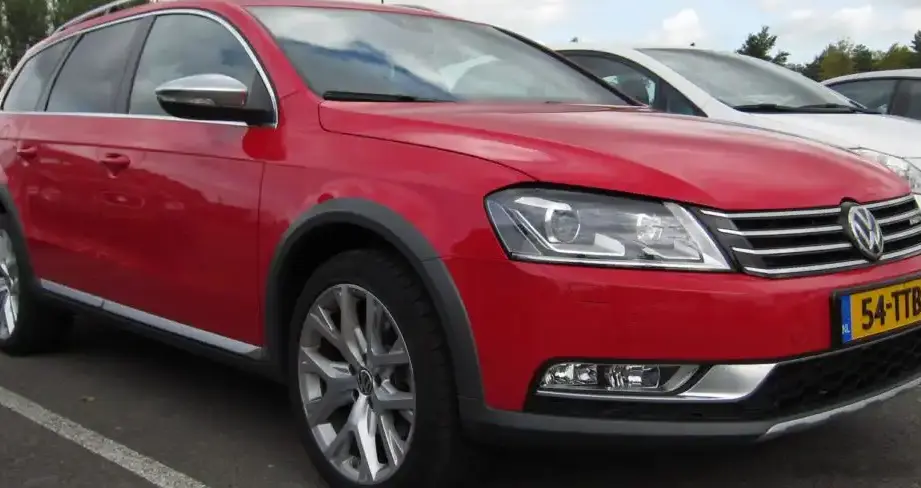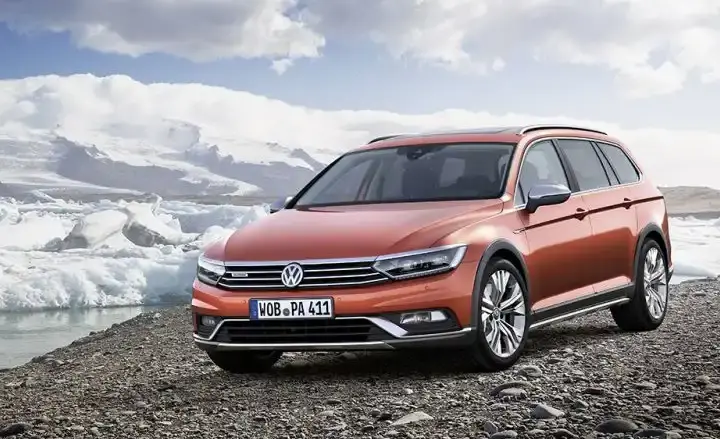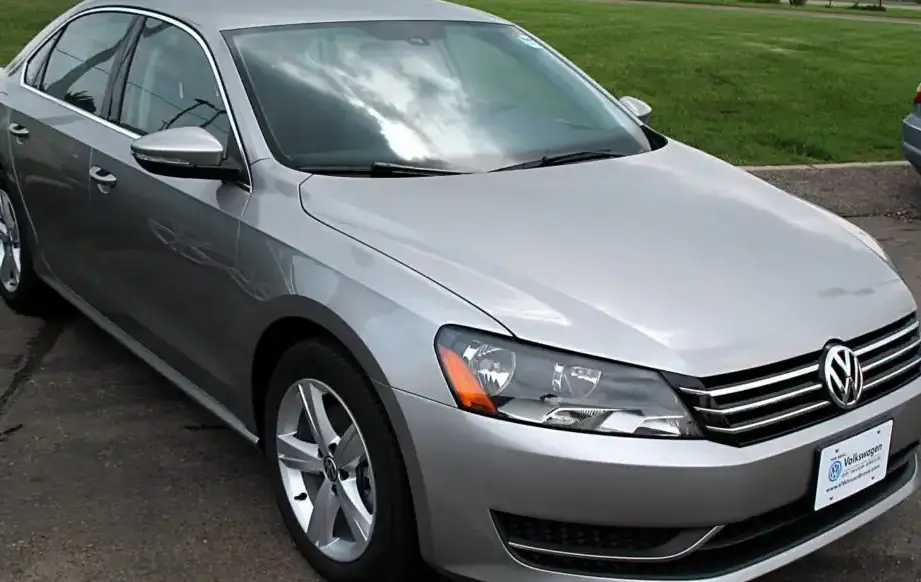
The Volkswagen Passat (North America, A32) 2.0 TDI with the 150 horsepower (Hp) DSG transmission was a key offering in the North American Passat lineup from 2014 to 2015. Representing a blend of fuel efficiency and reasonable performance, this variant occupied a middle ground within the broader Passat range, positioned between the base gasoline engine options and the more powerful, though not offered in North America, higher-output diesel trims. It was designed to appeal to buyers seeking a comfortable, spacious sedan with the benefits of diesel technology – namely, improved fuel economy and torque – coupled with the convenience of an automatic transmission. This model was part of the A32 generation, specifically tailored for the North American market, differing in styling and features from its European counterpart.
Technical Specifications
| Brand | Volkswagen |
| Model | Passat |
| Generation | Passat (North America, A32) |
| Type (Engine) | 2.0 TDI (150 Hp) DSG |
| Start of production | 2014 |
| End of production | 2015 |
| Powertrain Architecture | Internal Combustion engine |
| Body type | Sedan |
| Seats | 5 |
| Doors | 4 |
| Fuel consumption (economy) – urban | 7.8 l/100 km (30.2 US mpg, 36.2 UK mpg, 12.8 km/l) |
| Fuel consumption (economy) – extra urban | 5.6 l/100 km (42 US mpg, 50.4 UK mpg, 17.9 km/l) |
| Fuel consumption (economy) – combined | 6.9 l/100 km (34.1 US mpg, 40.9 UK mpg, 14.5 km/l) |
| Fuel Type | Diesel |
| Weight-to-power ratio | 10.6 kg/Hp, 94.6 Hp/tonne |
| Weight-to-torque ratio | 5 kg/Nm, 201.8 Nm/tonne |
| Power | 150 Hp @ 3500 rpm |
| Power per litre | 76.2 Hp/l |
| Torque | 320 Nm @ 1750 rpm (236.02 lb.-ft. @ 1750 rpm) |
| Engine layout | Front, Transverse |
| Engine Model/Code | EA288 / CVCA |
| Engine displacement | 1968 cm3 (120.09 cu. in.) |
| Number of cylinders | 4 |
| Engine configuration | Inline |
| Cylinder Bore | 81 mm (3.19 in.) |
| Piston Stroke | 95.5 mm (3.76 in.) |
| Compression ratio | 16.2:1 |
| Number of valves per cylinder | 4 |
| Fuel injection system | Diesel Commonrail |
| Engine aspiration | Turbocharger, Intercooler |
| Valvetrain | DOHC |
| Engine oil capacity | 4.3 l (4.54 US qt | 3.78 UK qt) |
| Coolant | 8 l (8.45 US qt | 7.04 UK qt) |
| Kerb Weight | 1586 kg (3496.53 lbs.) |
| Max. weight | 2120 kg (4673.8 lbs.) |
| Max load | 534 kg (1177.27 lbs.) |
| Trunk (boot) space – minimum | 450 l (15.89 cu. ft.) |
| Fuel tank capacity | 70 l (18.49 US gal | 15.4 UK gal) |
| Permitted trailer load without brakes | 450 kg (992.08 lbs.) |
| Permitted towbar download | 75 kg (165.35 lbs.) |
| Length | 4868 mm (191.65 in.) |
| Width | 1835 mm (72.24 in.) |
| Height | 1487 mm (58.54 in.) |
| Wheelbase | 2803 mm (110.35 in.) |
| Front track | 1577 mm (62.09 in.) |
| Rear (Back) track | 1550 mm (61.02 in.) |
| Ride height (ground clearance) | 138 mm (5.43 in.) |
| Drag coefficient (Cd) | 0.29 |
| Minimum turning circle (turning diameter) | 11.7 m (38.39 ft.) |
| Drivetrain Architecture | The Internal combustion engine (ICE) drives the front wheels of the vehicle. |
| Drive wheel | Front wheel drive |
| Number of gears and type of gearbox | 6 gears, automatic transmission DSG |
| Front suspension | Independent, type McPherson with coil spring and anti-roll bar |
| Rear suspension | Independent multi-link spring suspension with stabilizer |
| Front brakes | Ventilated discs, 312×25 mm |
| Rear brakes | Disc, 272×10 mm |
| Assisting systems | ABS (Anti-lock braking system) |
| Steering type | Steering rack and pinion |
| Power steering | Electric Steering |
| Tires size | 215/55 R17; 235/45 R18 |
| Wheel rims size | 7J x 17; 8J x 18 |
Powertrain & Engine Architecture
The heart of this Passat variant was the EA288 series 2.0-liter inline-four cylinder diesel engine, specifically coded CVCA for the North American market. This engine utilized a common rail direct injection system, delivering fuel at extremely high pressures for optimized combustion. The engine featured a turbocharger with an intercooler, boosting power output and improving efficiency. The double overhead camshaft (DOHC) valvetrain, with four valves per cylinder, further enhanced breathing and performance. The 16.2:1 compression ratio was typical for a diesel engine, contributing to its thermal efficiency. The engine was transversely mounted in the front of the vehicle.
Paired with the engine was Volkswagen’s renowned 6-speed Dual Clutch Gearbox (DSG). This transmission offered both the efficiency of a manual gearbox and the convenience of an automatic. The DSG’s quick and smooth shifts contributed to a more engaging driving experience compared to traditional automatic transmissions. The transmission was tuned to prioritize fuel economy and smooth operation, rather than outright performance.
Driving Characteristics
The 2.0 TDI with the DSG transmission provided a comfortable and refined driving experience. While not a sports sedan, the 150 hp and 320 Nm (236 lb-ft) of torque offered adequate acceleration for everyday driving situations. The DSG transmission allowed for quick downshifts when needed, providing responsive power delivery. Compared to the base gasoline engines, the diesel offered significantly more torque, making it feel more effortless when merging onto highways or climbing hills. However, it wasn’t as quick as potential European market Passats equipped with higher-output diesel engines or the VR6 gasoline engine. The gear ratios were optimized for fuel efficiency, meaning the engine didn’t rev as high as some competitors.
Equipment & Trim Levels
The 2.0 TDI DSG typically came with a reasonable level of standard equipment. This included features like air conditioning, power windows and locks, a basic audio system, and alloy wheels. Higher trim levels offered upgrades such as leather upholstery, a sunroof, a more advanced infotainment system with navigation, and heated front seats. Safety features like ABS, electronic stability control, and multiple airbags were standard across the range. The specific trim level (e.g., Trendline, Comfortline, Highline) dictated the level of standard and optional equipment available.
Chassis & Braking
The North American Passat A32 featured an independent suspension setup. The front utilized a McPherson strut design with coil springs and an anti-roll bar, while the rear employed a multi-link suspension, also with a stabilizer bar. This setup provided a comfortable ride quality, absorbing bumps and imperfections in the road effectively. Braking duties were handled by ventilated discs at the front and solid discs at the rear. ABS (Anti-lock Braking System) was standard, enhancing braking performance and stability. The steering was a rack and pinion system with electric power assistance.
Market Reception & Comparison
The 2.0 TDI DSG Passat was generally well-received by automotive critics. It was praised for its fuel efficiency, comfortable ride, and spacious interior. However, some reviewers noted that the engine wasn’t particularly exciting and that the performance was adequate but not thrilling. Compared to the gasoline-powered Passats, the TDI offered superior fuel economy and torque. Compared to other mid-size sedans in the US market, the Passat TDI stood out for its diesel engine option, which was relatively uncommon at the time. Reliability was generally good, although, like all diesel engines, it required regular maintenance and the use of high-quality diesel fuel.
Legacy
The 2.0 TDI DSG Passat has become a popular choice in the used car market, particularly for buyers seeking a fuel-efficient and reliable sedan. The EA288 engine, when properly maintained, has proven to be durable. However, potential buyers should be aware of the potential for diesel particulate filter (DPF) issues, especially if the vehicle has been primarily used for short trips. The Passat TDI represents a unique chapter in Volkswagen’s North American history, offering a diesel-powered alternative in a market dominated by gasoline engines. Its blend of practicality, efficiency, and comfort continues to appeal to a wide range of buyers today.