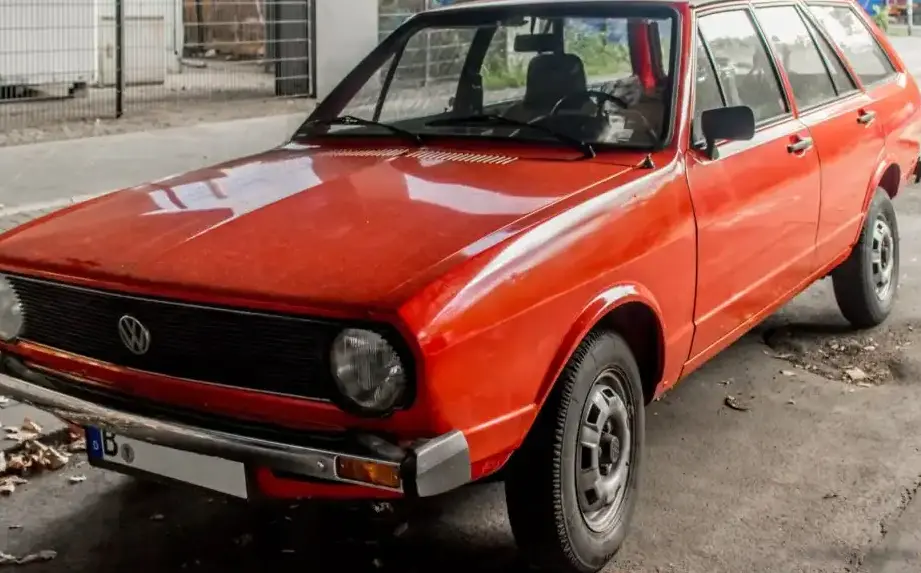
The Volkswagen Passat Variant (B1) 1.6, producing 85 horsepower, was a mainstay of the first-generation Passat lineup, manufactured between 1975 and 1980. Positioned as an entry-level to mid-range offering, this variant catered to buyers seeking a practical and economical family vehicle within the burgeoning European station wagon market. It was a key component of Volkswagen’s strategy to offer a modern, front-wheel-drive alternative to traditional rear-wheel-drive estates. The B1 Passat, and its Variant (station wagon) body style, represented a significant departure for Volkswagen, moving away from the Beetle-based designs and embracing a more contemporary approach to automotive engineering.
Technical Specifications
| Brand | Volkswagen |
| Model | Passat |
| Generation | Passat Variant (B1) |
| Type (Engine) | 1.6 (85 Hp) |
| Start of production | 1975 |
| End of production | 1980 |
| Powertrain Architecture | Internal Combustion engine |
| Body type | Station wagon (estate) |
| Seats | 5 |
| Doors | 5 |
| Fuel consumption (economy) – urban | 11.1 l/100 km (21.2 US mpg) |
| Fuel consumption (economy) – extra urban | 7.2 l/100 km (32.7 US mpg) |
| Fuel Type | Petrol (Gasoline) |
| Acceleration 0 – 60 mph | 12.6 sec |
| Maximum speed | 172 km/h (106.88 mph) |
| Weight-to-power ratio | 10.8 kg/Hp |
| Weight-to-torque ratio | 7.2 kg/Nm |
| Power | 85 Hp @ 5600 rpm |
| Power per litre | 53.5 Hp/l |
| Torque | 127 Nm @ 3500 rpm (93.67 lb.-ft. @ 3500 rpm) |
| Engine layout | Front, Longitudinal |
| Engine Model/Code | YP |
| Engine displacement | 1588 cm3 (96.91 cu. in.) |
| Number of cylinders | 4 |
| Engine configuration | Inline |
| Cylinder Bore | 79.5 mm (3.13 in.) |
| Piston Stroke | 80 mm (3.15 in.) |
| Compression ratio | 8.2:1 |
| Number of valves per cylinder | 2 |
| Fuel injection system | Carburettor |
| Engine aspiration | Naturally aspirated engine |
| Valvetrain | SOHC |
| Engine oil capacity | 3 l (3.17 US qt | 2.64 UK qt) |
| Coolant | 4 l (4.23 US qt | 3.52 UK qt) |
| Kerb Weight | 920 kg (2028.25 lbs.) |
| Max. weight | 1420 kg (3130.56 lbs.) |
| Max load | 500 kg (1102.31 lbs.) |
| Trunk (boot) space – minimum | 699 l (24.68 cu. ft.) |
| Trunk (boot) space – maximum | 1461 l (51.59 cu. ft.) |
| Fuel tank capacity | 45 l (11.89 US gal | 9.9 UK gal) |
| Permitted trailer load with brakes (12%) | 1200 kg (2645.55 lbs.) |
| Permitted trailer load without brakes | 450 kg (992.08 lbs.) |
| Length | 4265 mm (167.91 in.) |
| Width | 1615 mm (63.58 in.) |
| Height | 1359 mm (53.5 in.) |
| Wheelbase | 2469 mm (97.2 in.) |
| Front track | 1341 mm (52.8 in.) |
| Rear (Back) track | 1349 mm (53.11 in.) |
| Ride height (ground clearance) | 122 mm (4.8 in.) |
| Minimum turning circle (turning diameter) | 10.3 m (33.79 ft.) |
| Drivetrain Architecture | The Internal combustion engine (ICE) drives the front wheels of the vehicle. |
| Drive wheel | Front wheel drive |
| Number of gears and type of gearbox | 4 gears, manual transmission |
| Front suspension | Wishbone, Transverse stabilizer |
| Rear suspension | Transverse stabilizer, Trailing arm |
| Front brakes | Disc, 238.76 mm |
| Rear brakes | Drum, 180.34 mm |
| Steering type | Steering rack and pinion |
| Tires size | Front wheel tires: 175/70 R13Rear wheel tires: 175/70 R13 |
| Wheel rims size | Front wheel rims: 5J x 13Rear wheel rims: 5J x 13 |
Powertrain & Engine Architecture
The heart of the Passat Variant 1.6 was the YP engine, a 1588cc inline four-cylinder unit. This engine utilized a single overhead camshaft (SOHC) valvetrain with two valves per cylinder. Fuel delivery was managed by a carburetor, a common feature for the time, rather than fuel injection. The YP engine was known for its relative simplicity and ease of maintenance. The engine was mounted longitudinally in the front of the vehicle, driving the front wheels. The four-speed manual transmission was the standard offering, providing a straightforward driving experience. The engine produced 85 horsepower at 5600 rpm and 127 Nm (93.67 lb-ft) of torque at 3500 rpm. This configuration, while not particularly powerful, was designed for fuel efficiency and everyday usability.
Driving Characteristics
The 1.6-liter engine, paired with the four-speed manual gearbox, delivered modest performance. Acceleration from 0 to 60 mph took approximately 12.6 seconds, and the top speed was around 106.88 mph. Compared to the later GTI models or even the diesel variants, the 1.6 felt noticeably slower. However, the engine was reasonably responsive in everyday driving situations, particularly at lower speeds. The gear ratios were spaced to prioritize fuel economy over outright acceleration. The front-wheel-drive layout provided predictable handling, although it lacked the dynamic finesse of more modern vehicles. The relatively light weight of the vehicle (920 kg / 2028.25 lbs) helped to mitigate the lack of horsepower.
Equipment & Trim Levels
The Passat Variant 1.6 typically came with a fairly basic level of equipment. Standard features included cloth upholstery, a simple dashboard layout, and manual windows and door locks. Optional extras included a sunroof, upgraded audio systems, and more comfortable seating. The trim level was generally considered entry-level, appealing to buyers prioritizing practicality and affordability. The interior was functional and durable, reflecting the car’s intended purpose as a family vehicle. The spaciousness of the Variant body style was a key selling point, offering ample cargo capacity for luggage, groceries, or other items.
Chassis & Braking
The Passat B1 featured an independent front suspension with wishbones and a transverse stabilizer, providing a reasonable level of ride comfort and handling. The rear suspension utilized a trailing arm setup with a transverse stabilizer. Braking was accomplished via disc brakes on the front wheels and drum brakes on the rear. The braking system was adequate for the vehicle’s weight and performance, but it lacked the stopping power of more advanced systems. The steering was rack and pinion, providing reasonably precise control.
Market Reception & Comparison
The Passat Variant 1.6 was generally well-received as a practical and affordable family car. Critics praised its spacious interior, comfortable ride, and fuel efficiency. However, the engine’s lack of power was a common criticism. Compared to the more powerful Passat GL models (often equipped with larger engines), the 1.6 felt underpowered. The diesel variants offered better fuel economy, but at the expense of performance. The 1.6 appealed to buyers who prioritized economy and practicality over sporty driving dynamics.
Legacy
The Volkswagen Passat Variant (B1) 1.6, while not the most powerful or technologically advanced version of the B1 Passat, remains a fondly remembered classic. The YP engine, while simple, proved to be relatively reliable. Today, well-maintained examples are sought after by classic car enthusiasts. The 1.6 engine is generally considered easy to work on, making it a popular choice for those interested in DIY maintenance. The Passat B1, in all its variants, played a crucial role in establishing Volkswagen as a major player in the European family car market, and the 1.6 version offered an accessible entry point to the modern Volkswagen experience.