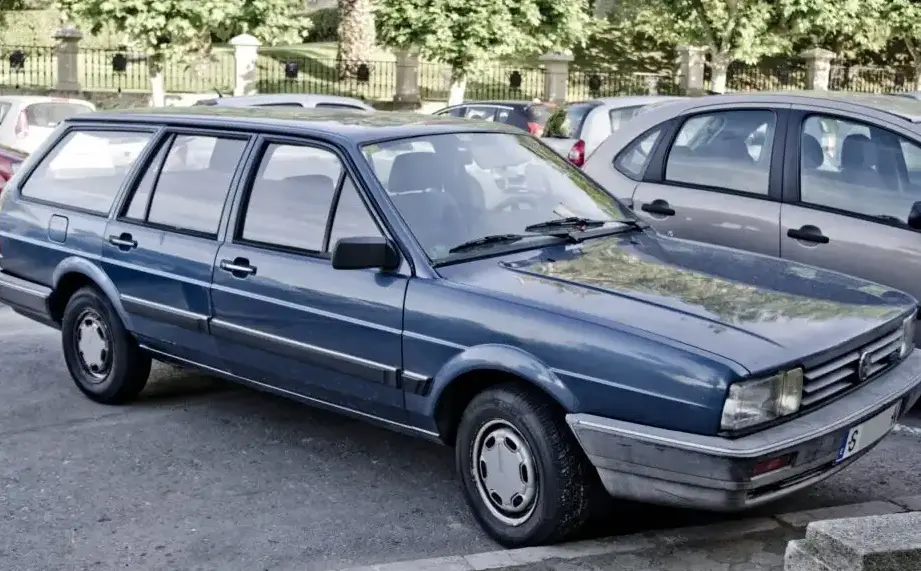
The Volkswagen Passat Variant (B2) 1.3, produced between 1980 and 1983, represented the entry point into the second-generation Passat lineup, specifically the versatile station wagon (estate) body style. This model, designated internally as the B2, was a significant evolution from the original Passat, offering increased interior space, improved comfort, and a more modern design. The 1.3-liter engine variant served as a fuel-efficient and affordable option for families and those prioritizing practicality over outright performance. It played a crucial role in establishing the Passat Variant as a popular choice in the European market, where station wagons held a strong appeal.
Technical Specifications
| Brand | Volkswagen |
| Model | Passat |
| Generation | Passat Variant (B2) |
| Type (Engine) | 1.3 (55 Hp) |
| Start of production | 1980 |
| End of production | 1983 |
| Powertrain Architecture | Internal Combustion engine |
| Body type | Station wagon (estate) |
| Seats | 5 |
| Doors | 5 |
| Fuel Type | Petrol (Gasoline) |
| Acceleration 0 – 100 km/h | 18 sec |
| Acceleration 0 – 62 mph | 18 sec |
| Acceleration 0 – 60 mph | 17.1 sec |
| Maximum speed | 144 km/h (89.48 mph) |
| Weight-to-power ratio | 16.7 kg/Hp, 59.8 Hp/tonne |
| Weight-to-torque ratio | 9 kg/Nm, 110.9 Nm/tonne |
| Power | 55 Hp @ 5800 rpm |
| Power per litre | 43.2 Hp/l |
| Torque | 102 Nm @ 2000 rpm (75.23 lb.-ft. @ 2000 rpm) |
| Engine layout | Front, Longitudinal |
| Engine Model/Code | FY |
| Engine displacement | 1272 cm3 (77.62 cu. in.) |
| Number of cylinders | 4 |
| Engine configuration | Inline |
| Compression ratio | 8.2:1 |
| Number of valves per cylinder | 2 |
| Fuel injection system | Carburettor |
| Engine aspiration | Naturally aspirated engine |
| Valvetrain | OHC |
| Engine oil capacity | 3 l (3.17 US qt | 2.64 UK qt) |
| Coolant capacity | 4 l (4.23 US qt | 3.52 UK qt) |
| Kerb Weight | 920 kg (2028.25 lbs) |
| Max. weight | 1400 kg (3086.47 lbs) |
| Max load | 480 kg (1058.22 lbs) |
| Trunk (boot) space – minimum | 540 l (19.07 cu. ft.) |
| Trunk (boot) space – maximum | 1811 l (63.95 cu. ft.) |
| Fuel tank capacity | 70 l (18.49 US gal | 15.4 UK gal) |
| Length | 4545 mm (178.94 in.) |
| Width | 1695 mm (66.73 in.) |
| Height | 1385 mm (54.53 in.) |
| Wheelbase | 2555 mm (100.59 in.) |
| Front track | 1400 mm (55.12 in.) |
| Rear (Back) track | 1408 mm (55.43 in.) |
| Drivetrain Architecture | The Internal combustion engine (ICE) drives the front wheels of the vehicle. |
| Drive wheel | Front wheel drive |
| Number of gears and type of gearbox | 4 gears, manual transmission |
| Front suspension | Independent type McPherson |
| Rear suspension | Coil spring |
| Front brakes | Disc |
| Rear brakes | Drum |
| Steering type | Steering rack and pinion |
| Tires size | 175/70 R13 |
| Wheel rims size | 13 |
Powertrain & Engine Architecture
The heart of the Passat Variant (B2) 1.3 was the FY engine code, a 1.272-liter (77.62 cubic inches) inline-four cylinder petrol engine. This engine utilized a relatively simple, yet robust, design featuring a single overhead camshaft (OHC) operating two valves per cylinder. Fuel delivery was managed by a carburetor, a common setup for vehicles of this era, prioritizing simplicity and cost-effectiveness over the precision of fuel injection. The engine produced 55 horsepower at 5800 rpm and 75.23 lb-ft of torque at 2000 rpm. The engine was mounted longitudinally in the front of the vehicle, driving the front wheels. The four-speed manual transmission was the standard offering, providing a straightforward driving experience.
Driving Characteristics
The 1.3-liter engine in the Passat Variant (B2) delivered modest performance. Acceleration was leisurely, taking approximately 18 seconds to reach 62 mph (100 km/h). Top speed was around 89.48 mph (144 km/h). Compared to the more powerful engine options available in the B2 Passat range, such as the 1.6-liter or the later GTI models, the 1.3 felt noticeably underpowered, especially when fully loaded with passengers and cargo. The four-speed manual transmission offered a reasonable spread of gears, but required frequent shifting to maintain momentum, particularly on inclines. The focus was on fuel economy and ease of driving rather than sporty performance.
Equipment & Trim Levels
The 1.3-liter Passat Variant (B2) typically represented the base trim level. Standard equipment included basic cloth upholstery, a simple dashboard layout, and manual windows and door locks. Features like a radio, upgraded interior trim, and a sunroof were usually offered as optional extras. The interior was functional and durable, prioritizing practicality over luxury. The exterior trim was also relatively basic, with steel wheels and minimal chrome accents.
Chassis & Braking
The Passat Variant (B2) featured an independent McPherson strut suspension at the front, providing a comfortable ride and reasonable handling. The rear suspension utilized a coil spring setup. Braking was accomplished via disc brakes on the front wheels and drum brakes on the rear. The braking system was adequate for the vehicle’s weight and performance, but lacked the stopping power of more modern systems. The steering was a rack and pinion system, offering precise control and a relatively light feel.
Market Reception & Comparison
The Passat Variant (B2) 1.3 was generally well-received as an affordable and practical family car. Critics praised its spacious interior, comfortable ride, and fuel efficiency. However, the engine’s lack of power was a common criticism. Compared to the higher-spec Passat variants, such as those equipped with the 1.6-liter engine, the 1.3 offered significantly less performance. The 1.6-liter provided a noticeable improvement in acceleration and overall drivability, making it a more popular choice for those willing to spend a bit more. However, the 1.3’s lower price point and fuel economy made it an attractive option for budget-conscious buyers.
Legacy
The Volkswagen Passat Variant (B2) 1.3, while not the most powerful or exciting version of the B2 Passat, remains a fondly remembered classic. The FY engine, while simple, proved to be relatively reliable, and many examples are still on the road today. The 1.3 variant is often sought after by enthusiasts looking for a classic Volkswagen estate car that is affordable to maintain and operate. Its simplicity and durability make it a good candidate for restoration projects. In the used car market, these models typically command lower prices than the higher-spec variants, making them an accessible entry point into classic Volkswagen ownership.