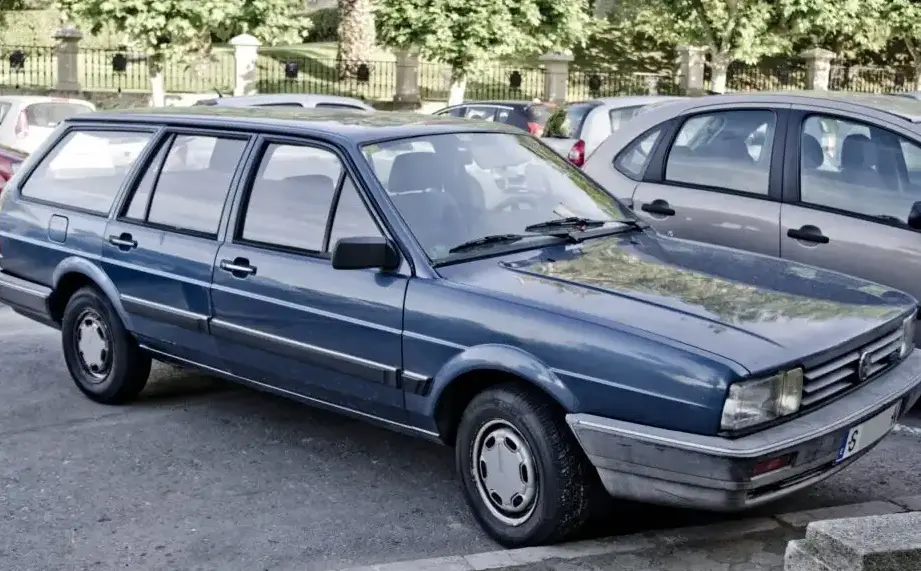
The Volkswagen Passat Variant (B2) 1.3, produced between 1980 and 1986, represented Volkswagen’s entry-level offering within the broader B2 Passat range. This variant, powered by a 1.3-liter gasoline engine producing 60 horsepower, was primarily aimed at buyers seeking an affordable and practical family vehicle. The B2 generation Passat, and specifically the Variant (estate/wagon) body style, was a significant model for Volkswagen, building upon the success of the original Passat (Type 32) and establishing a strong presence in the European mid-size family car segment. The 1.3-liter engine and manual transmission combination positioned this trim as the most economical option in the lineup, prioritizing fuel efficiency over outright performance.
Technical Specifications
| Brand | Volkswagen |
| Model | Passat |
| Generation | Passat Variant (B2) |
| Type (Engine) | 1.3 (60 Hp) |
| Start of production | 1980 |
| End of production | 1986 |
| Powertrain Architecture | Internal Combustion engine |
| Body type | Station wagon (estate) |
| Seats | 5 |
| Doors | 5 |
| Fuel consumption (urban) | 8.9 l/100 km (26.4 US mpg) |
| Fuel consumption (extra urban) | 5.7 l/100 km (41.3 US mpg) |
| Fuel consumption (combined) | 7.7 l/100 km (30.5 US mpg) |
| Fuel Type | Petrol (Gasoline) |
| Acceleration 0 – 100 km/h | 10.4 sec |
| Acceleration 0 – 62 mph | 10.4 sec |
| Acceleration 0 – 60 mph | 9.9 sec |
| Maximum speed | 152 km/h (94.45 mph) |
| Weight-to-power ratio | 15.1 kg/Hp |
| Weight-to-torque ratio | 9.1 kg/Nm |
| Power | 60 Hp @ 5600 rpm |
| Torque | 100 Nm @ 3500 rpm (73.76 lb.-ft. @ 3500 rpm) |
| Engine layout | Front, Longitudinal |
| Engine Model/Code | EP |
| Engine displacement | 1296 cm3 (79.09 cu. in.) |
| Number of cylinders | 4 |
| Engine configuration | Inline |
| Cylinder Bore | 75 mm (2.95 in.) |
| Piston Stroke | 73.4 mm (2.89 in.) |
| Compression ratio | 9:1 |
| Number of valves per cylinder | 2 |
| Fuel injection system | Carburettor |
| Engine aspiration | Naturally aspirated |
| Engine oil capacity | 3 l (3.17 US qt | 2.64 UK qt) |
| Coolant capacity | 6 l (6.34 US qt | 5.28 UK qt) |
| Kerb Weight | 905 kg (1995.18 lbs.) |
| Max. weight | 1305 kg (2877.03 lbs.) |
| Max load | 400 kg (881.85 lbs.) |
| Trunk (boot) space – minimum | 540 l (19.07 cu. ft.) |
| Trunk (boot) space – maximum | 1811 l (63.95 cu. ft.) |
| Fuel tank capacity | 70 l (18.49 US gal | 15.4 UK gal) |
| Length | 4545 mm (178.94 in.) |
| Width | 1695 mm (66.73 in.) |
| Height | 1385 mm (54.53 in.) |
| Wheelbase | 2555 mm (100.59 in.) |
| Front track | 1400 mm (55.12 in.) |
| Rear track | 1408 mm (55.43 in.) |
| Drivetrain Architecture | Front wheel drive |
| Number of gears | 4 |
| Gearbox type | Manual transmission |
| Front suspension | Independent type McPherson |
| Rear suspension | Coil spring |
| Front brakes | Disc |
| Rear brakes | Drum |
| Steering type | Steering rack and pinion |
| Tires size | 175/70 R13 |
| Wheel rims size | 13 |
Powertrain & Engine Architecture
The heart of the Passat Variant 1.3 was the EP engine, a 1.3-liter inline-four cylinder gasoline engine. This engine utilized a single overhead camshaft (OHC) valvetrain with two valves per cylinder. Fuel delivery was managed by a carburetor, a common feature for engines of this era, prioritizing simplicity and cost-effectiveness. The engine produced 60 horsepower at 5600 rpm and 100 Nm (73.76 lb-ft) of torque at 3500 rpm. The engine was mounted longitudinally in the front of the vehicle, driving the front wheels. The four-speed manual transmission was the standard offering for this variant, providing a relatively simple and direct driving experience. The transmission’s gear ratios were geared towards fuel economy rather than rapid acceleration.
Driving Characteristics
The 1.3-liter Passat Variant, with its 60 horsepower, offered modest performance. Acceleration from 0 to 60 mph took approximately 9.9 seconds, and the top speed was around 94.45 mph. Compared to higher-spec Passat variants, such as those equipped with the 1.6-liter or 1.8-liter engines, the 1.3 felt noticeably slower, particularly when fully loaded or climbing hills. However, the lower power output also contributed to better fuel economy. The four-speed manual transmission provided a reasonable level of control, but the relatively wide gear ratios meant that frequent shifting was often necessary to maintain optimal engine speed. The front-wheel-drive configuration offered predictable handling, but lacked the dynamic capabilities of more sophisticated all-wheel-drive systems.
Equipment & Trim Levels
The Passat Variant 1.3 was typically equipped with basic, yet functional, features. Standard equipment generally included cloth upholstery, a simple dashboard layout, and manual windows and door locks. Options were available, such as a sunroof, upgraded audio systems, and more comfortable seating. The interior trim was generally utilitarian, reflecting the car’s positioning as an affordable family vehicle. The exterior featured basic steel wheels with hubcaps, and limited chrome trim. The focus was on practicality and durability rather than luxury.
Chassis & Braking
The B2 Passat Variant featured an independent McPherson strut front suspension and a coil spring rear suspension. This setup provided a reasonable level of ride comfort and handling. The front brakes were disc brakes, offering adequate stopping power, while the rear brakes were drum brakes, a cost-saving measure common in this class of vehicle. The steering was a rack and pinion system, providing precise and responsive steering feel. The tires were typically 175/70 R13, offering a balance of grip and fuel efficiency.
Market Reception & Comparison
The Passat Variant 1.3 was well-received in markets where affordability and practicality were prioritized. Critics acknowledged its spacious interior, good fuel economy, and reasonable reliability. However, the engine’s lack of power was often noted as a drawback. Compared to other trims in the Passat lineup, such as the 1.6 or 1.8-liter versions, the 1.3 offered a more economical option, but at the expense of performance. It competed with other European family wagons, such as the Ford Sierra Estate and the Opel Ascona Caravan, offering a similar blend of practicality and affordability.
Legacy
The Volkswagen Passat Variant (B2) 1.3, while not the most powerful or technologically advanced version of the B2 Passat, remains a popular choice among classic car enthusiasts and collectors. The EP engine, while simple in design, proved to be relatively reliable when properly maintained. Today, well-preserved examples of the 1.3-liter Passat Variant are sought after for their affordability, practicality, and classic Volkswagen charm. Parts availability can be a challenge, but a dedicated community of enthusiasts ensures that these cars continue to be enjoyed for years to come. The 1.3 variant represents a significant chapter in Volkswagen’s history, demonstrating the company’s commitment to providing affordable and reliable transportation to a wide range of customers.