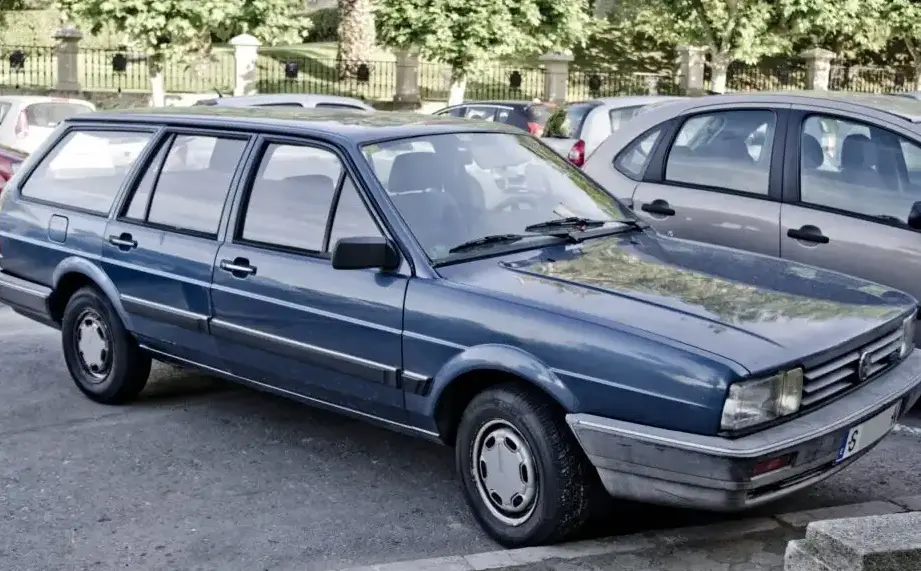
The Volkswagen Passat Variant (B2) 1.6, produced between 1986 and 1988, represents an entry-level offering within the broader B2 Passat lineup. This variant, a five-door station wagon (estate), was aimed at buyers prioritizing practicality and fuel economy over outright performance. It occupied the lower end of the engine range, serving as a more affordable alternative to the larger, more powerful engine options available in the B2 Passat series. The B2 generation, launched in 1981, was a significant step forward for Volkswagen, offering a more modern and spacious design compared to its predecessor, the B1 Passat. The Variant (estate) body style further enhanced the car’s appeal to families and those requiring substantial cargo capacity.
Technical Specifications
| Brand | Volkswagen |
| Model | Passat |
| Generation | Passat Variant (B2) |
| Type (Engine) | 1.6 (72 Hp) |
| Start of production | 1986 |
| End of production | 1988 |
| Powertrain Architecture | Internal Combustion engine |
| Body type | Station wagon (estate) |
| Seats | 5 |
| Doors | 5 |
| Fuel Type | Petrol (Gasoline) |
| Power | 72 Hp |
| Engine Model/Code | RL |
| Engine aspiration | Naturally aspirated engine |
| Engine oil capacity | 3 l (3.17 US qt | 2.64 UK qt) |
| Trunk (boot) space – minimum | 540 l (19.07 cu. ft.) |
| Trunk (boot) space – maximum | 1811 l (63.95 cu. ft.) |
| Fuel tank capacity | 70 l (18.49 US gal | 15.4 UK gal) |
| Length | 4545 mm (178.94 in.) |
| Width | 1695 mm (66.73 in.) |
| Wheelbase | 2555 mm (100.59 in.) |
Powertrain & Engine Architecture
The Passat Variant 1.6 utilized the Volkswagen RL engine code, a 1.6-liter inline-four cylinder engine. This engine was a naturally aspirated unit, meaning it did not employ a turbocharger or supercharger. It featured a single overhead camshaft (SOHC) valvetrain, operating two valves per cylinder. Fuel delivery was managed by a Bosch mechanical fuel injection system, a common setup for vehicles of this era. While not particularly powerful by modern standards, the RL engine was known for its reliability and relatively simple maintenance requirements. The engine produced 72 horsepower and approximately 98 lb-ft of torque. This power was delivered to the front wheels through a four-speed automatic transmission. This transmission, while providing convenience, was not known for its sporty performance or efficiency. It was a fairly basic automatic, prioritizing smooth operation over rapid gear changes.
Driving Characteristics
The driving experience in the 1.6L Passat Variant was characterized by its relaxed and comfortable nature. Acceleration was modest, with the 0-60 mph time estimated to be around 14-16 seconds. The automatic transmission contributed to a smooth, if somewhat sluggish, driving experience. The gear ratios were geared towards fuel economy rather than performance. Compared to the more powerful 1.8 and 2.0-liter versions of the B2 Passat, the 1.6 felt noticeably slower, especially when fully loaded or climbing hills. However, for everyday commuting and general transportation, the 1.6 provided adequate power. The suspension, while comfortable, wasn’t particularly sporty, resulting in some body roll during cornering. Steering was light and easy, making it well-suited for urban driving.
Equipment & Trim Levels
The 1.6 Passat Variant typically represented the base trim level. Standard equipment generally included cloth upholstery, basic instrumentation, and manual windows and door locks. Air conditioning was often an optional extra, as were features like a sunroof and upgraded audio systems. The interior design was functional and straightforward, prioritizing practicality over luxury. The dashboard layout was typical of European cars of the period, with a clear and concise arrangement of controls. The level of equipment was deliberately kept minimal to keep the price point attractive to budget-conscious buyers. Optional extras could include upgraded wheel covers, a rear window wiper, and a more sophisticated radio.
Chassis & Braking
The B2 Passat Variant featured a MacPherson strut front suspension and a semi-independent torsion beam rear suspension. This setup provided a reasonable balance between ride comfort and handling. The 1.6 variant typically used drum brakes on the rear wheels and disc brakes on the front. This configuration was common for vehicles in this price range during the 1980s. The braking system was adequate for normal driving conditions, but lacked the stopping power of more advanced systems found on higher-end vehicles. Stabilizer bars were often fitted to improve handling, but their thickness could vary depending on the specific market and optional equipment.
Market Reception & Comparison
The 1.6 Passat Variant was generally well-received as a practical and affordable family car. Critics praised its spacious interior, large cargo capacity, and fuel efficiency. However, the engine’s lack of power was often noted as a drawback. Compared to the 1.8 and 2.0-liter versions, the 1.6 offered significantly less performance. The 1.8-liter engine, in particular, provided a noticeable improvement in acceleration and overall driving enjoyment. The 1.6’s fuel economy was a strong point, typically achieving around 28-32 mpg in mixed driving conditions. Reliability was generally good, although the automatic transmission could be prone to issues if not properly maintained. The 1.6 was often seen as a sensible choice for buyers who prioritized practicality and economy over performance.
Legacy
The Volkswagen Passat Variant (B2) 1.6, while not the most powerful or exciting version of the B2 Passat, remains a popular choice among classic car enthusiasts. The RL engine is known for its durability, and parts availability is generally good. The automatic transmission, however, can be a potential weak point, requiring regular servicing to prevent issues. Today, well-maintained examples of the 1.6 Passat Variant are sought after by collectors and those looking for a classic European wagon. Its simple design, reliable engine, and spacious interior continue to appeal to a wide range of buyers. The B2 Passat, in general, is remembered as a significant milestone in Volkswagen’s history, representing a move towards more modern and sophisticated vehicle design.